


 GPS & GNSS
 Lidar scanning
 Total Station


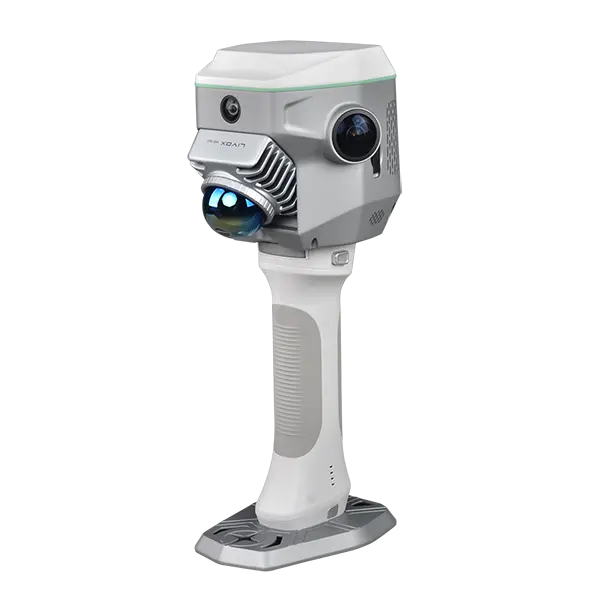

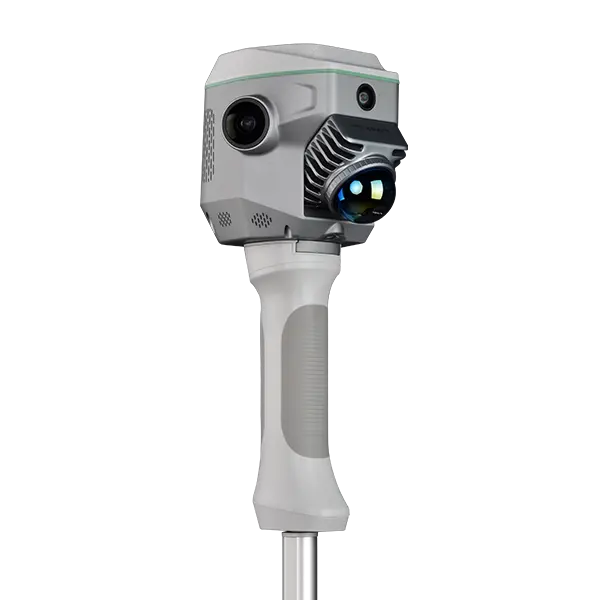
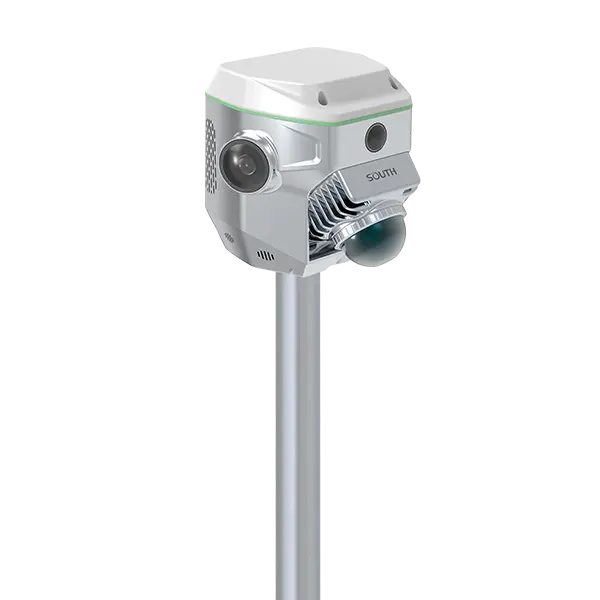


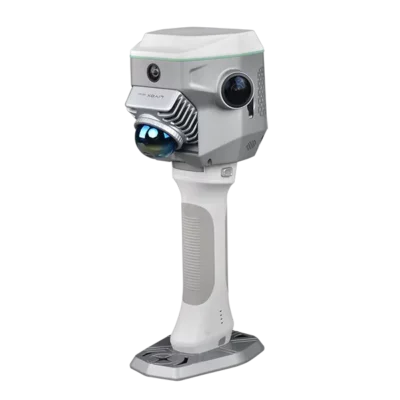
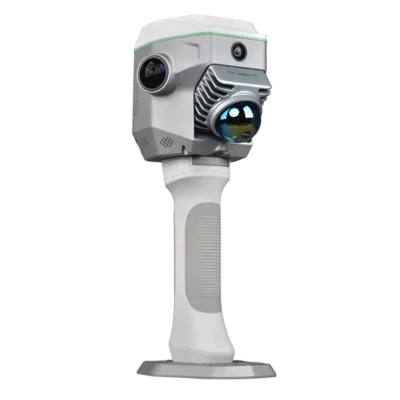
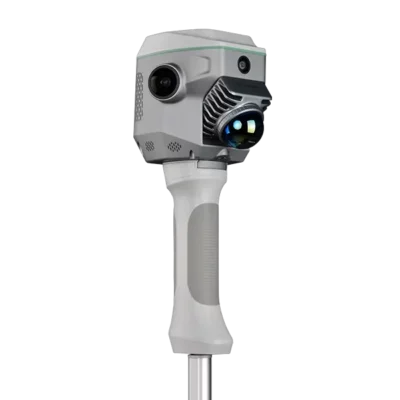

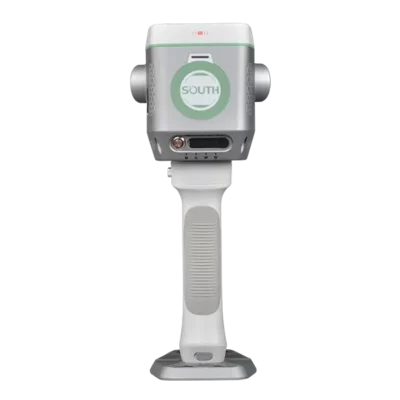
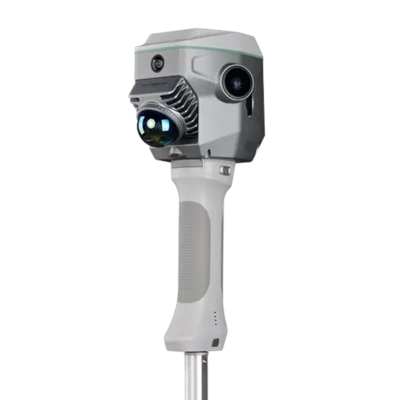
South Supreme ME Rover Set | Visual-LiDAR RTK GNSS
Get the best price for your setup
Contact our experts for the best possible price and configuration.
- Fast response
- Expert configuration advice
- No overpaying for features you do not need
The South Supreme ME Rover Set is a hybrid Visual-LiDAR RTK GNSS system for surveyors, construction teams, GIS users and mapping professionals who need more than a standard GNSS rover. It combines RTK positioning, SLAM LiDAR, cameras, IMU tilt measurement and visual stakeout tools to support accurate fieldwork in open-sky areas, obstructed sites, indoor-outdoor transitions, tunnels, garages, bridges and urban projects.
With 1,698 GNSS channels, full-constellation tracking, fast LiDAR scanning and contactless measurement, the Supreme ME helps field crews measure points, capture point clouds, create 3D documentation and stake out designs in locations where traditional pole-only GNSS work can be slow or difficult.
South Supreme ME Rover Set Highlights
| Positioning technology | RTK GNSS, SLAM LiDAR, IMU tilt, visual measurement and AR/CAD stakeout |
|---|---|
| GNSS channels | 1,698 channels with GPS, GLONASS, BeiDou, Galileo, QZSS, NavIC/IRNSS and SBAS support |
| LiDAR scanner | Livox Mid-360, up to 200,000 points per second |
| LiDAR range | Up to 40 m at 10% reflectivity and 70 m at 80% reflectivity |
| Contactless measurement | Air Meas. visual-LiDAR measurement, listed accuracy up to 5 cm at 15 m |
| Camera system | Dual 12 MP SLAM colorization cameras, 8 MP forward camera and 2 MP downward AR stakeout camera |
| RTK accuracy | 8 mm + 1 ppm horizontal and 15 mm + 1 ppm vertical |
| Included workflow | Supreme ME receiver, H9 controller, SurvStar field software and AcuteLas Studio processing software |
You may also like…

Valued customers:






Find RTK Networks
Search NTRIP providers and connect to reliable RTK correction services.
Description
South Supreme ME Rover Set Product Description
The South Supreme ME Rover Set is built for professionals who need reliable measurement tools across both normal GNSS conditions and more complex job sites. Instead of working only as a conventional RTK rover, the Supreme ME brings together RTK GNSS, SLAM LiDAR, visual measurement, IMU tilt compensation, camera-based workflows and point cloud processing in one portable field system.
This makes it useful for surveyors, construction workers, engineers, drone and mapping teams, GIS departments, municipalities, utility companies and infrastructure contractors who need to collect accurate field data without constantly changing equipment. It is especially practical when work moves between open areas, buildings, bridges, underpasses, garages, industrial sites, urban streets or other places where GNSS signals can be blocked or unstable.
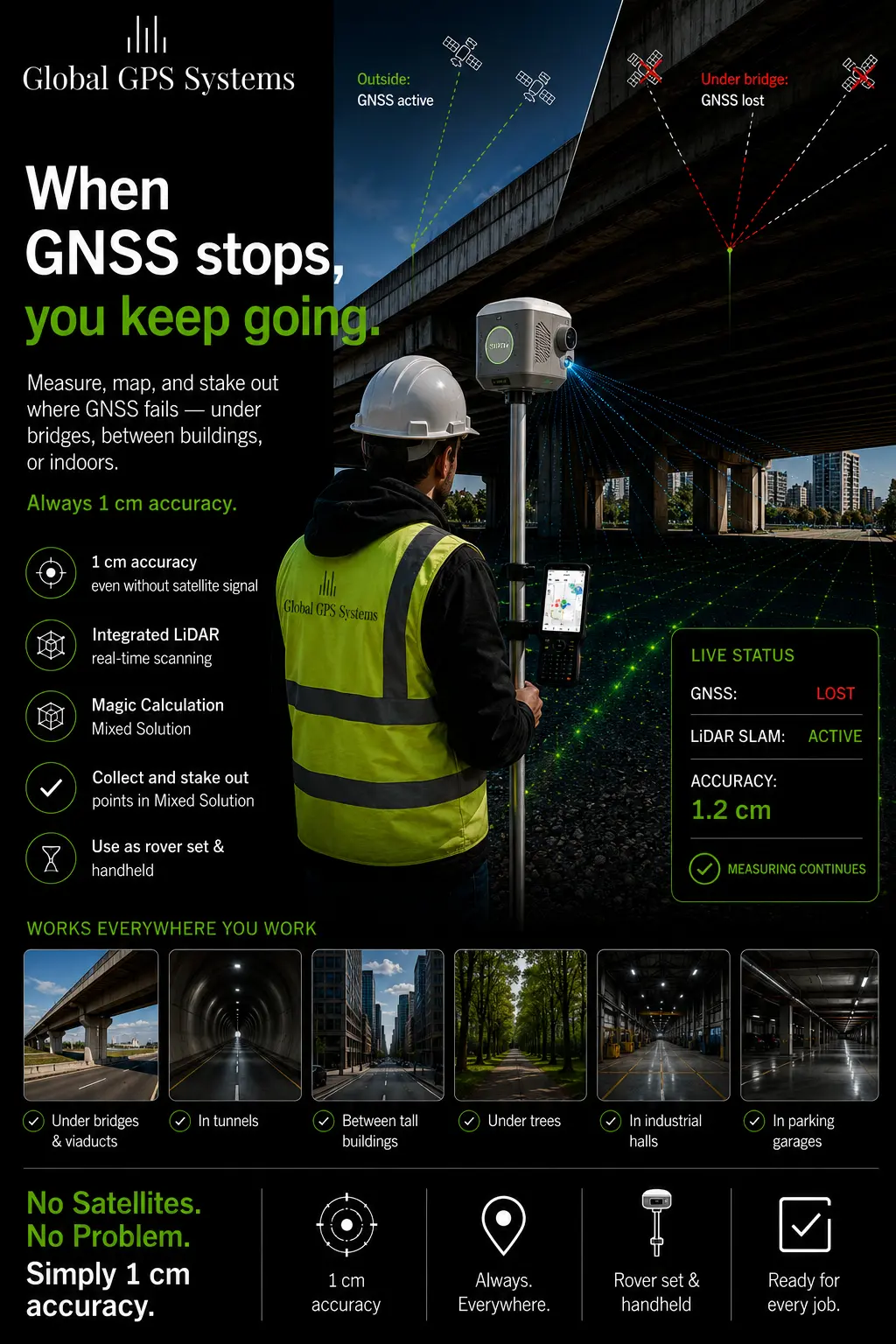
Hybrid RTK GNSS and SLAM LiDAR for difficult sites
Standard GNSS rovers work best with a clear view of the sky. On real projects, that is not always possible. Buildings, roofs, trees, tunnels, bridges and machinery can interrupt satellite signals and slow down field crews. The South Supreme ME is designed to reduce that problem by combining RTK GNSS positioning with SLAM LiDAR and mixed-solution positioning.
In practical fieldwork, this means the user can collect conventional RTK points when satellite conditions are strong, then use LiDAR-assisted measurement and SLAM workflows when moving through obstructed or partly covered areas. For surveyors and construction teams, this can reduce the amount of time spent trying to force a GNSS fix in locations where a normal rover is not the right tool.

Visual-LiDAR measurement without occupying every point
The Air Meas. function is one of the main reasons buyers compare the Supreme ME with standard RTK rovers. It allows the operator to measure selected points using laser sensing and image matching, without placing the pole directly on every target. This is useful for points on façades, across small gaps, near traffic, behind obstacles, on stockpiles, around utilities or in other areas where direct access is unsafe or inefficient.
The integrated LiDAR scanner captures up to 200,000 points per second and supports a working range of up to 40 m on low-reflectivity surfaces and up to 70 m on higher-reflectivity targets. For everyday use, that means the system can collect dense 3D information while the operator walks through or around the project area at a normal field pace.
Point clouds for mapping, modelling and volume work
The Supreme ME is suitable for teams that need more than single survey points. It can be used to capture point cloud data for topographic surveys, indoor mapping, façade documentation, earthwork checks, stockpile measurement, as-built surveys, bridge areas, industrial environments and infrastructure corridors.
Collected data can be processed with AcuteLas Studio, while SurvStar supports field collection and measurement workflows. This gives crews a connected workflow from field capture to point cloud processing, helping them document site conditions, check surfaces, calculate quantities and prepare data for CAD, GIS or modelling tasks.
Camera system for visual fieldwork and AR stakeout
The South Supreme ME uses four cameras for different parts of the workflow. Two 12 MP side cameras support colorized SLAM point clouds, an 8 MP forward camera supports contactless visual measurement, and a 2 MP downward camera supports AR visual stakeout. These cameras help make field data easier to understand, because the operator is not only collecting coordinates but also visual context.
For construction layout and verification, AR/CAD stakeout can help crews connect design information with the real site environment. This is useful for setting out design points, checking positions, locating features and explaining work clearly to site teams who may not work with survey drawings every day.
IMU tilt measurement for faster RTK work
The built-in IMU helps users measure points without needing to keep the pole perfectly vertical for every observation. On construction sites, road edges, slopes, trenches or busy urban projects, this can make routine RTK work faster and more comfortable. Tilt measurement is especially useful when points are close to walls, fences, vehicles, materials or other obstacles that make straight pole placement difficult.
Made for survey, construction, GIS and infrastructure users
The South Supreme ME Rover Set fits a wide range of professional field applications. Land surveyors can use it for topographic work, point collection, stakeout and point cloud capture. Construction teams can use it for layout, surface checks, earthwork quantities and as-built documentation. GIS users can collect asset positions with richer site context. Infrastructure teams can document bridges, underpasses, tunnels, utilities, roads and industrial areas where conventional GNSS-only workflows may be limited.
Typical applications include:
- Topographic surveying and site measurement
- Construction layout and CAD/AR stakeout
- Indoor, garage, tunnel and underpass mapping
- Bridge, façade and infrastructure documentation
- Point cloud capture for 3D modelling and as-built checks
- Stockpile, earthwork and volume calculation workflows
- Utility, municipal and GIS asset mapping
Complete rover set workflow
The South Supreme ME Rover Set is supplied as a complete measurement workflow with the Supreme ME receiver, H9 data collector, SurvStar field software and AcuteLas Studio post-processing software. The H9 controller is used for field operation, while SurvStar supports project setup, RTK measurement, visual workflows, stakeout and data collection. AcuteLas Studio supports point cloud and SLAM processing after field capture.
This combination is useful for companies that want one system for both conventional RTK work and more advanced LiDAR-assisted measurement. Instead of buying a rover for GNSS tasks and a separate handheld scanner for basic point cloud work, the Supreme ME gives field crews a hybrid tool for mixed site conditions.
Why buy the South Supreme ME Rover Set from Global GPS Systems?
Global GPS Systems supplies GNSS, LiDAR and surveying equipment to professionals worldwide from the Netherlands. When buying a hybrid system such as the South Supreme ME Rover Set, practical support matters. The team can help you check whether this Visual-LiDAR RTK workflow is suitable for your surveying, construction, GIS or mapping projects, and can advise on correction services, field software, accessories and day-to-day use.
For buyers comparing modern RTK GNSS equipment, the Supreme ME is best suited to users who regularly work in mixed environments and want one rover set that can handle RTK points, visual measurement, SLAM LiDAR, point clouds and AR/CAD stakeout in a single workflow.
Specifications
South Supreme ME Rover Set Specifications
Product Overview
| Product Name | South Supreme ME Rover Set |
|---|---|
| Product Type | Hybrid Visual-LiDAR RTK GNSS rover set |
| Manufacturer | SOUTH Surveying & Mapping Technology Co., Ltd. |
| Model Family | GNSS RTK Hybrid Supreme ME / ME Plus |
| Main Technologies | RTK GNSS, SLAM LiDAR, IMU tilt measurement, visual measurement, point cloud capture and AR/CAD stakeout |
| Typical Users | Land surveyors, construction teams, civil engineers, GIS teams, municipalities, infrastructure contractors, utility companies and mapping professionals |
| Typical Applications | Outdoor mapping, indoor mapping, laser scanning, visual measuring, visual stakeout, 3D modelling, volume calculation, utility mapping, facade measurement, under-bridge surveying and GNSS-obstructed surveying |
GNSS Features
| GNSS Channels | 1698 channels |
|---|---|
| GPS Signals | L1C, L1C/A, L2C, L2P(Y), L5 |
| GLONASS Signals | G1, G2, G3 |
| BeiDou / BDS Signals | B1I, B2I, B3I, B1C, B2a, B2b |
| Galileo Signals | E1, E5a, E5b, E6, AltBOC* |
| SBAS | L1* |
| IRNSS / NavIC | L5* |
| QZSS | L1, L2C, L5* |
| MSS L-Band | B2b-PPP, E6B HAS |
| GNSS Features | Full constellation tracking and smart dynamic sensitivity positioning technology |
| Positioning Output Rate | 1 Hz to 20 Hz |
| Initialization Time | < 10 s |
| Initialization Reliability | > 99.99% |
| RTK Initialization Time | 2 to 8 s |
| Time to First Fixed Solution | Cold start: 45 s; hot start: 10 s; single repeat: 1 s |
Positioning Accuracy
| Code Differential GNSS Positioning | Horizontal: 0.25 m + 1 ppm RMS; Vertical: 0.50 m + 1 ppm RMS |
|---|---|
| Single Point Positioning | Horizontal: 1.5 m RMS; Vertical: 2.5 m RMS |
| DGPS | Horizontal: 0.4 m RMS; Vertical: 0.8 m RMS |
| GNSS Static | Horizontal: 2.5 mm + 0.5 ppm RMS; Vertical: 3.5 mm + 0.5 ppm RMS |
| Static Long Observation | Horizontal: 2.5 mm + 0.1 ppm RMS; Vertical: 3 mm + 0.4 ppm RMS |
| Rapid Static | Horizontal: 2.5 mm + 0.5 ppm RMS; Vertical: 5 mm + 0.5 ppm RMS |
| PPK | Horizontal: 3 mm + 1 ppm RMS; Vertical: 5 mm + 1 ppm RMS |
| RTK UHF | Horizontal: 8 mm + 1 ppm RMS; Vertical: 15 mm + 1 ppm RMS |
| RTK NTRIP | Horizontal: 8 mm + 0.5 ppm RMS; Vertical: 15 mm + 0.5 ppm RMS |
| SBAS Positioning | Typically < 5 m 3DRMS |
| Precise Point Positioning | Supports PPP-B2b; Horizontal: 10 cm; Vertical: 20 cm |
| MagiCalc / Mixed Solution Positioning | Designed to maintain positioning when GNSS satellite signals are temporarily unavailable; listed positioning accuracy while satellites are unlocked: 3 to 5 cm at 20 m radius, with error increasing approximately 3 cm per additional 10 m |
IMU and Tilt Measurement
| IMU Module | Built in for GNSS measurement and tilt survey workflows |
|---|---|
| IMU Accuracy | 8 mm + 0.7 mm/° tilt |
| Tilt Angle | Optimal accuracy within 60° |
| IMU Refresh Rate | 200 Hz |
| Electronic Bubble | Controller software can display electronic bubble and real-time carbon pole leveling status |
SLAM LiDAR Performance
| Laser Scanner | Livox Mid-360 |
|---|---|
| LiDAR Range | 40 m at 10% reflectivity; 70 m at 80% reflectivity |
| Scanning Range | 0.1 m to 70 m |
| Field of View | Horizontal: 360°; Vertical: 59° |
| Measurement Rate / Point Frequency | 200,000 points per second |
| Laser Wavelength | 905 nm |
| Laser Safety Class | Class 1, IEC 60825-1:2014, eye-safe |
| Loop Closure Free Operation | Available when RTK is enabled outdoors |
| PPK Mode | Available |
| Real-Time Assessment | Available |
| SLAM Relative Accuracy | ≤ 1 cm |
| SLAM Absolute Accuracy with RTK | Down to 3 to 5 cm |
| SLAM Absolute Accuracy with PPK | Down to 2 to 4 cm |
| Range Noise | Approximately 5 to 20 mm, optimized |
Visual Measurement and Cameras
| Total Camera System | 4 cameras |
|---|---|
| SLAM LiDAR Colorization Cameras | 12 MP x 2, left and right panoramic cameras |
| Contactless Visual-LiDAR Survey Camera | 8 MP forward camera |
| AR Visual Stakeout Camera | 2 MP downward camera |
| Air Meas. Function | Contactless Visual-LiDAR measurement using laser sensing and image matching |
| Contactless Measurement Accuracy | 5 cm at 15 m range |
| Visual Stakeout Accuracy | Optimal: Horizontal 8 mm + 1 ppm RMS; Vertical 15 mm + 1 ppm RMS; Typical: Horizontal 10 mm + 1 ppm RMS; Vertical 20 mm + 1 ppm RMS |
| Super Stakeout Accuracy | Optimal: Horizontal 8 mm + 1 ppm RMS; Vertical 15 mm + 1 ppm RMS; Typical: Horizontal 10 mm + 1 ppm RMS; Vertical 20 mm + 1 ppm RMS |
| Color Point Cloud | Supported |
| Graphics Processing | NVIDIA graphics processor for real-time true-color image processing |
Communications
| SIM Card Slot | Built-in Nano SIM slot |
|---|---|
| Cellular / Network Use | Supports CORS and NTRIP correction workflows through compatible network services |
| Wi-Fi / WLAN | 802.11 b/g/n standard; can serve as hotspot source |
| Bluetooth | Bluetooth 5.0; Bluetooth 3.0/4.2 standard; Bluetooth 2.1 + EDR |
| NFC | Wireless automatic pairing between device and controller by touch |
| I/O Port | Type-C interface for charging, OTG and Ethernet |
| UHF Antenna Interface | Available on ME Plus configuration |
| Internal UHF | ME: not available; ME Plus: built-in receiving module |
| UHF Frequency Range | 410 to 470 MHz |
| UHF Communication Protocols | Farlink, Trimtalk, SOUTH |
| Voice Guidance | Chinese, English, Korean, Spanish, Portuguese, Russian, Turkish, French, Italian and Arabic |
| Audio Messaging | iVoice smart audio for status broadcasting and instructions |
Data Storage and Data Formats
| Internal Storage | 64 GB SSD internal storage |
|---|---|
| External Storage | Supports external USB storage via OTG |
| Storage Management | Supports automatic cycling storage |
| Sample Interval | Customizable sample interval up to 20 Hz |
| USB Data Transfer | Plug-and-play USB data transmission |
| FTP / HTTP Download | Supported |
| Static Data Formats | STH, RINEX 2.01, RINEX 3.02 and other supported formats |
| Differential Data Formats | RTCM 2.1, RTCM 2.3, RTCM 3.0, RTCM 3.1, RTCM 3.2 |
| GNSS Output Formats | NMEA 0183, PJK plane coordinate, binary code |
| Network Modes | VRS, FKP, MAC and NTRIP protocol support |
| Point Cloud Output | Post-processing free LAS point cloud output with GEO coordinates |
| Point Cloud Export Formats | Raw format exportable to .LAS or .LAZ directly or through included software |
Software and Workflow
| Field Software | SurvStar Android field software |
|---|---|
| Field Software Functions | Data collection control, project management, real-time point cloud browsing and processing, visual positioning, CAD and AR stakeout, measurement and calculation workflows |
| Post-Processing Software | AcuteLas Studio for Windows |
| Post-Processing Functions | Trajectory processing, LiDAR data processing and fusion, point cloud classification, data quality check, quality report output, coordinate system conversion, topographic survey module and point cloud processing |
| Mobile App License | Android license and driver included; listed as lifetime / perpetual license in supplied documentation |
| Post-Processing Software License | Windows post-processing license included; listed as lifetime / perpetual license in supplied documentation |
| Web Interaction | Web UI access via Wi-Fi or USB connection for status monitoring and configuration changes |
| Secondary Development | Provides secondary development package, OpenSIC observation data format and interaction interface definition |
| Cloud Service | Supports online services such as remote management, firmware updates and online registration |
Power and Battery
| Power Design | Internal battery, handgrip battery and external power supply support |
|---|---|
| Internal Battery | 7.4 V, 5000 mAh rechargeable lithium-ion battery |
| Handgrip Battery | Hot-swappable 7.4 V, 6800 mAh handgrip battery, 87.32 Wh |
| Power Supply Configuration | Built-in battery plus handgrip battery |
| Battery Life - Air Meas. / Indoor Mapping / Point Cloud Scan | > 3 hours |
| Battery Life - GNSS Rover Mode and Static Mode | > 24 hours |
| Internal Battery Endurance | ≥ 0.5 hours |
| Handgrip Battery Endurance | ≥ 2 hours |
| Power Consumption | 26 W |
| Charging Time | 1 to 2 hours for ME system battery configuration |
| Input Voltage | 14.4 V |
| Power Output | 30 W |
| Uninterruptible Power Supply | Designed to support continuous operation without system restart or reinitialization when switching supported power sources |
Physical and Environmental Specifications
| Dimensions | 134 mm x 147 mm x 138 mm |
|---|---|
| Weight | 1.38 kg |
| Housing Material | Magnesium aluminum alloy shell |
| Operating Temperature | -20°C to +55°C |
| Storage Temperature | -40°C to +80°C |
| Operating Humidity | 80% non-condensing |
| Waterproof / Dustproof Rating | IP64 standard |
| Temperature Sensor | Built-in thermometer sensor with intelligent temperature control technology |
| Interface to Pole / Grip | Connector for telescopic pole or battery handle grip |
User Interaction
| Receiver Operating System | Linux |
|---|---|
| Buttons | Single button |
| Indicators | Satellite, data and power indicators |
| Power Indicator | Red light stays on when powered on and turns off after shutdown |
| SLAM Indicator | Red: starting; green: started successfully; blue: scanning |
| Data Indicator | Not fixed: red light flashes; fixed solution: green light flashes |
| Satellite Indicator | Green light flashes when receiving satellites |
| Charging Indicator | Red light stays on while charging and turns off after fully charged |
| Magnetic Phone Attachment | Built-in magnet patch supports magnetic attachment for mobile phones |
H9 Data Collector Specifications
| Data Collector Model | SOUTH H9 rugged collector |
|---|---|
| Operating System | Android 12 |
| Processor | 8-core CPU, 2.0 GHz; UNISOC 7863 processor listed in datasheet |
| RAM | 4 GB |
| ROM | 64 GB |
| Display | 6.0-inch CTP display, 720 x 1440 resolution, 500 cd/m² brightness |
| Keyboard | Full QWERTY keyboard with silicone backlight |
| Camera | 13 MP autofocus camera |
| Flashlight | Supported |
| GNSS | GPS, GLONASS, BDS, Galileo |
| Cellular Bands | GSM B2/B3/B5/B8; WCDMA B1/B2/B4/B5/B8; LTE-TDD B34/B38/B39/B40/B41; LTE-FDD B1/B2/B3/B4/B5/B7/B8/B20/B28 |
| Bluetooth | BT5.0, 2402 to 2480 MHz |
| Wi-Fi | 802.11a/b/g/n/ac, 2412 to 2484 MHz and 4915 to 5925 MHz |
| NFC | Supported |
| Sensors | Light sensor, geomagnetic sensor and 3D acceleration sensor supported |
| SIM Slot | 2 x Nano SIM |
| SD Slot | MicroSD slot, expandable up to 256 GB |
| USB Slot | USB Type-C, USB 3.0, supports OTG |
| Notification Method | Sound, vibration and LED prompt |
| Battery | 7700 mAh |
| Operating Time | Up to 20 hours |
| Operating Temperature | -20°C to +55°C |
| Storage Temperature | -30°C to +70°C |
| Waterproof / Dustproof Rating | IP68 |
| Size and Weight | 244.5 mm x 84.5 mm x 18.5 mm; 409 g |
| Shockproof Rating | 1.5 m |
| Charging | PD fast charging; fully charged in less than 4.5 hours |
Included Items and Workflow Components
| Item | Quantity | Notes |
|---|---|---|
| South Supreme ME Main Unit | 1 | Model ME / ME Plus depending on configuration |
| H9 Data Collector | 1 | Rugged Android field controller for SurvStar workflows |
| Laser Scanner Protective Cover | 1 | Removed only when SLAM is enabled |
| Camera Lens Protective Cover | 1 | Removed only when SLAM is enabled |
| Handgrip Battery Unit | 1 | Model iGrip; listed as 49 W, 3400 mAh in the user manual configuration table |
| Base Stand | 1 | Installed when SLAM handheld mode is in use |
| Charger Adapter | 1 | For charging supported system batteries |
| Charging Cable | 1 | Included with standard configuration |
| Data Transfer Cable | 1 | 1 m |
| TF Card | 1 | 256 GB |
| TF Card Reader | 1 | Included with standard configuration |
| Cleaning Cloth | 1 | For instrument cleaning |
| Magnet Ring | 1 | Installed when SLAM handheld mode is in use |
| SurvStar Fieldwork Software License | 1 | Code registration; perpetual license listed in manual |
| AcuteLas Studio SLAM Processing Software License | 1 | Code registration; perpetual license listed in manual |
| RX Radio Antenna | Configuration dependent | ME Plus configuration includes RX radio antenna due to built-in radio module |
Specifications and package contents may vary by configuration, region or manufacturer update. Always check the current configuration before ordering.
Reviews (3)
3 reviews for South Supreme ME Rover Set | Visual-LiDAR RTK GNSS
Only logged in customers who have purchased this product may leave a review.
FAQ
South Supreme ME Rover Set FAQ
Product Overview
What is the South Supreme ME Rover Set?
The South Supreme ME Rover Set is a hybrid Visual-LiDAR RTK GNSS surveying system that combines GNSS RTK positioning, SLAM LiDAR scanning, IMU tilt compensation, cameras, visual measurement and point cloud workflows in one field-ready rover set.Who is the South Supreme ME designed for?
It is designed for professional surveyors, construction teams, civil engineers, GIS teams, municipalities, utility companies, infrastructure contractors and mapping professionals who need reliable measurements in both open-sky and obstructed environments.What makes the South Supreme ME different from a standard RTK GNSS rover?
Unlike a standard RTK GNSS rover, the Supreme ME also includes SLAM LiDAR, visual measurement, AR stakeout and Mixed Solution positioning. This helps users continue working in areas where satellite signals are limited, such as under bridges, near buildings, in tunnels or indoors.Can the South Supreme ME be used outdoors and indoors?
Yes. The system is built for outdoor RTK GNSS surveying as well as indoor and obstructed mapping workflows using SLAM LiDAR and visual measurement functions.What is included in the South Supreme ME Rover Set workflow?
The workflow includes the Supreme ME receiver, H9 data collector, SurvStar field software and AcuteLas Studio post-processing software for field collection, point cloud work and office processing.GNSS, RTK and Mixed Solution Positioning
How many GNSS channels does the South Supreme ME have?
The South Supreme ME has a 1698-channel GNSS engine for tracking multiple satellite constellations and supporting professional RTK surveying workflows.Which GNSS constellations does it support?
The receiver supports major GNSS constellations and signals including GPS, GLONASS, BeiDou, Galileo, SBAS, QZSS and other signals listed in the technical specifications.What RTK accuracy can the South Supreme ME achieve?
The listed RTK precision is 8 mm + 1 ppm horizontal and 15 mm + 1 ppm vertical for UHF RTK, and 8 mm + 0.5 ppm horizontal and 15 mm + 0.5 ppm vertical for NTRIP RTK, depending on field conditions and correction quality.Does the South Supreme ME support NTRIP correction services?
Yes. The system supports NTRIP workflows and can be used with compatible RTK correction networks for real-time positioning.What is MagiCalc or Mixed Solution positioning?
MagiCalc, also described as Mixed Solution, allows the system to continue positioning for short periods when GNSS satellite signals are unavailable or unreliable by using LiDAR and inertial data.Where is Mixed Solution positioning most useful?
Mixed Solution is useful in GNSS-challenged areas such as tunnels, overpasses, underground garages, urban canyons, industrial sites and covered construction areas where a conventional RTK rover may lose fixed solution.LiDAR, Visual Measurement and Point Clouds
What is Visual-LiDAR RTK?
Visual-LiDAR RTK combines GNSS RTK positioning, LiDAR scanning, camera imagery and inertial measurement to support surveying, mapping, visual measurement, point cloud capture and stakeout workflows.How fast does the LiDAR scanner collect data?
The integrated LiDAR scanner collects up to 200,000 points per second, allowing users to capture dense point cloud data for mapping, modelling, measurement and documentation.What is the LiDAR range of the South Supreme ME?
The LiDAR range is listed as 40 m at 10% reflectivity and 70 m at 80% reflectivity, depending on the target surface and field conditions.What is Air Meas.?
Air Meas. is a contactless Visual-LiDAR measurement function that uses laser sensing and image matching to collect 3D coordinates without physically occupying every point with the pole.How accurate is Air Meas.?
Air Meas. contactless measurement accuracy is listed as 5 cm at a 15 m range, making it useful for hard-to-reach, unsafe or time-consuming measurement points.Can the South Supreme ME create colorized point clouds?
Yes. The system includes panoramic cameras for SLAM LiDAR colorization, helping users create visual point clouds that are easier to interpret for mapping, modelling and documentation.Can it be used for earthwork volume calculations?
Yes. The South Supreme ME can capture 3D point clouds for earthwork volume calculation, stockpile measurement, excavation work, mining and construction quantity workflows.Software, Field Work and Applications
What field software is used with the South Supreme ME?
The rover set uses SurvStar field software for data collection, project management, real-time point cloud viewing, visual positioning, CAD and AR stakeout, measurement and calculation workflows.What post-processing software is included?
AcuteLas Studio is included for post-processing workflows such as trajectory processing, LiDAR data processing and fusion, point cloud classification, quality checks, reporting and coordinate transformation.Does the system support CAD and AR stakeout?
Yes. The South Supreme ME supports CAD and AR visual stakeout workflows, helping field crews connect design data with the real site environment during layout and verification tasks.What is the H9 data collector used for?
The H9 data collector is used to control field workflows. It features an Android operating system, touchscreen, keyboard and hardware designed for SLAM, photogrammetry and survey data collection.Which applications is the South Supreme ME suitable for?
Typical applications include topographic surveying, construction layout, indoor mapping, tunnel and underpass surveys, bridge and infrastructure work, façade scanning, pipeline and utility asset capture, stockpile measurement, earthwork calculation and 3D modelling.Can it export point cloud data for other software?
Yes. The system supports point cloud workflows and can output LAS or LAZ point cloud data through the included software environment for use in compatible CAD, mapping and modelling software.How long can the South Supreme ME operate in the field?
Battery life depends on the workflow. The listed battery life is more than 3 hours for Air Meas., indoor mapping and point cloud scanning, and more than 24 hours for GNSS rover mode and static mode.

 GPS & GNSS
 Total Stations
 Data collectors
 Software
 Correction services
 Machine control
 External radio
 Marine
 Accessories
Yousef M. (verified owner) –
What a machine! Just tested the mixed solution. Was able to measure points under a roof because of the built in lidar! Sick!
antonio zani (verified owner) –
First tests look good, was able to measure inside a garage. Amazing how these receivers are evolving haha!
Bert Rupke (verified owner) –
Echt een aanrader! sta gewoon punten te meten nu onder een viaduct