


 GPS & GNSS
 Lidar scanning
 Total Station

GPS & GNSS
GNSS Antennas for Surveying and Accurate Positioning
A GNSS antenna is the part of a positioning system that receives signals from navigation satellites. The quality, placement and design of the antenna can directly affect signal availability and measurement stability. Professional GNSS antennas are used with receivers, reference stations and other positioning equipment in land surveying, construction, GIS data collection, drone operations, machine positioning and infrastructure monitoring.
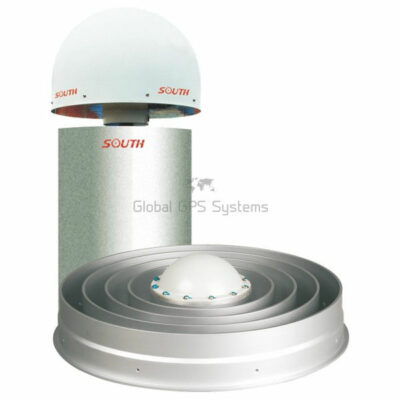
This category includes antennas for different working environments and accuracy requirements. Compact antennas are practical for mobile equipment and straightforward field installations, while larger geodetic or choke ring antennas are intended for permanent reference stations and other demanding applications. The available range can also include replacement GNSS, GSM and radio antennas for compatible surveying equipment.
Common Applications for GNSS Antennas
Surveyors and construction teams use external GNSS antennas where a receiver needs a clear and stable view of the sky. They can be mounted on survey poles, tripods, vehicles, machinery, fixed structures or reference-station monuments. GIS professionals may use them to improve the positioning performance of mobile mapping systems, while drone operators can use suitable antennas as part of a base station or ground-control workflow.
- Permanent CORS and RTK reference stations
- Land surveying and construction layout
- GIS mapping and asset registration
- Machine, vehicle and marine positioning
- Monitoring and deformation measurement
- Replacement antennas for GNSS receivers and communication equipment
Important GNSS Antenna Features
Supported frequencies and constellations determine which satellite signals the antenna can receive. A multi-frequency, multi-constellation antenna can support signals from systems such as GPS, GLONASS, Galileo and BeiDou. This gives the connected receiver access to more satellites and can help maintain positioning performance when part of the sky is obstructed.
Multipath rejection is especially important around buildings, metal surfaces, vehicles and other reflective objects. Multipath occurs when satellite signals reflect from nearby surfaces before reaching the antenna. Choke ring designs and other ground-plane technologies help suppress these reflected signals, making them useful for reference stations and precision monitoring.
Phase-centre stability describes how consistently the antenna measures signals from different directions and frequencies. Stable and repeatable phase-centre behaviour is important for geodetic work, permanent reference stations and applications where small position changes must be measured reliably over time.
Environmental protection matters when an antenna will remain outdoors. Check the operating-temperature range, resistance to water and dust, vibration performance and the durability of the housing. A permanently installed antenna must be suitable for continuous exposure to weather and changing field conditions.
Connector, mounting thread and power requirements must match the receiver and installation. Common considerations include the coaxial connector type, cable length, female or male mounting thread and the voltage supplied by the receiver. Longer cables introduce signal loss, so the antenna gain and cable specification should be assessed together.
Compact Antennas and Choke Ring Antennas
A compact antenna is normally the practical choice for portable surveying, mobile mapping, vehicle installation or replacement use. Its lower weight and smaller size make it easier to mount and transport. For routine RTK fieldwork, compatibility with the receiver and support for the required satellite bands are usually the main considerations.
A choke ring antenna is designed for installations where measurement stability and multipath suppression have priority over size and weight. It uses concentric rings around the antenna element to reduce signals arriving from undesirable angles. This type of antenna is commonly selected for CORS stations, VRS network infrastructure, monitoring projects and scientific or geodetic observations.
How to Choose the Right GNSS Antenna
Start by identifying how the antenna will be used. A temporary survey setup has different requirements from a permanent rooftop reference station. Confirm which GNSS frequencies your receiver supports, because the antenna must cover the same signal bands. Also check the connector, mounting system, cable type and available antenna power before ordering.
Consider the conditions around the planned installation. Open rural sites generally present fewer reflection problems than urban construction sites, industrial areas or locations near metal roofs. For a fixed reference station, prioritise phase-centre stability, multipath rejection, weather resistance and a secure mounting arrangement. For a rover, vehicle or mobile GIS system, size, weight and straightforward installation may be more important.
Related equipment may include GNSS receivers with an external antenna connection, RTK GNSS receivers, CORS reference-station hardware, antenna cables, survey poles, tripods, tribrachs and communication radios. Global GPS Systems can help verify receiver compatibility and select an antenna, cable and mounting configuration suited to the intended fieldwork.
GNSS Antennas FAQ
GNSS Antenna Basics
What does a GNSS antenna do?
A GNSS antenna receives satellite signals and passes them to a compatible receiver. The receiver uses these signals to calculate its position. Antenna design and placement influence how reliably the system can track satellites.
What is the difference between a GPS antenna and a GNSS antenna?
A GPS antenna may be designed primarily for signals from the GPS constellation. A GNSS antenna can support several navigation systems, such as GPS, GLONASS, Galileo and BeiDou, depending on its specified frequency range.
Can an external antenna improve GNSS reception?
An external antenna can improve signal reception when it is positioned with a clearer view of the sky than the receiver’s internal antenna. The result also depends on receiver compatibility, antenna quality, cable loss and the surrounding environment.
Choosing an Antenna
How do I know whether an antenna is compatible with my receiver?
Check the supported frequency bands, connector type, required supply voltage and impedance. The mounting thread and cable connection must also match the planned installation.
Do I need a multi-frequency GNSS antenna?
A multi-frequency antenna is required when the connected receiver uses multiple GNSS frequency bands. It is commonly chosen for RTK, surveying and reference-station systems that process several frequencies to improve measurement reliability.
Should I choose a compact or choke ring antenna?
Choose a compact antenna for portable, vehicle-mounted or general field applications where size and weight matter. Choose a choke ring antenna for permanent reference stations, monitoring and other installations where multipath rejection and phase-centre stability are priorities.
Installation and Field Use
Where should a GNSS antenna be installed?
Install it where it has a wide, unobstructed view of the sky. Keep it away from walls, metal roofs, machinery and other surfaces that can reflect satellite signals. Permanent installations should use a stable mount that cannot move over time.
Does antenna cable length affect performance?
Yes. Longer coaxial cables cause more signal loss. Use the correct cable type and keep the cable as short as practical. For long cable runs, select an antenna and cable combination designed to maintain adequate signal strength.
Can a GNSS antenna remain outdoors permanently?
Only when it is designed for permanent outdoor use. Check its weather sealing, operating-temperature range, corrosion resistance and mounting requirements. Cable connections should also be protected against moisture.
Accuracy and Signal Quality
Does a better GNSS antenna automatically provide centimetre accuracy?
No. Centimetre-level positioning also requires a suitable RTK or surveying receiver, correction data, correct configuration and good field conditions. The antenna supports accurate measurements by receiving stable, high-quality satellite signals.
What is multipath interference?
Multipath occurs when a satellite signal reflects from a nearby surface before reaching the antenna. These delayed signals can reduce measurement quality. Careful antenna placement and multipath-rejection technology help limit the effect.
Why is phase-centre stability important?
The electrical measurement point of an antenna can vary slightly as signals arrive from different directions. A stable phase centre helps produce consistent measurements, which is particularly important for reference stations, monitoring and geodetic surveying.
 GPS & GNSS
 Total Stations
 Data collectors
 Software
 Correction services
 Machine control
 External radio
 Marine
 Accessories