

 GPS & GNSS
 Lidar scanning
 Total Station
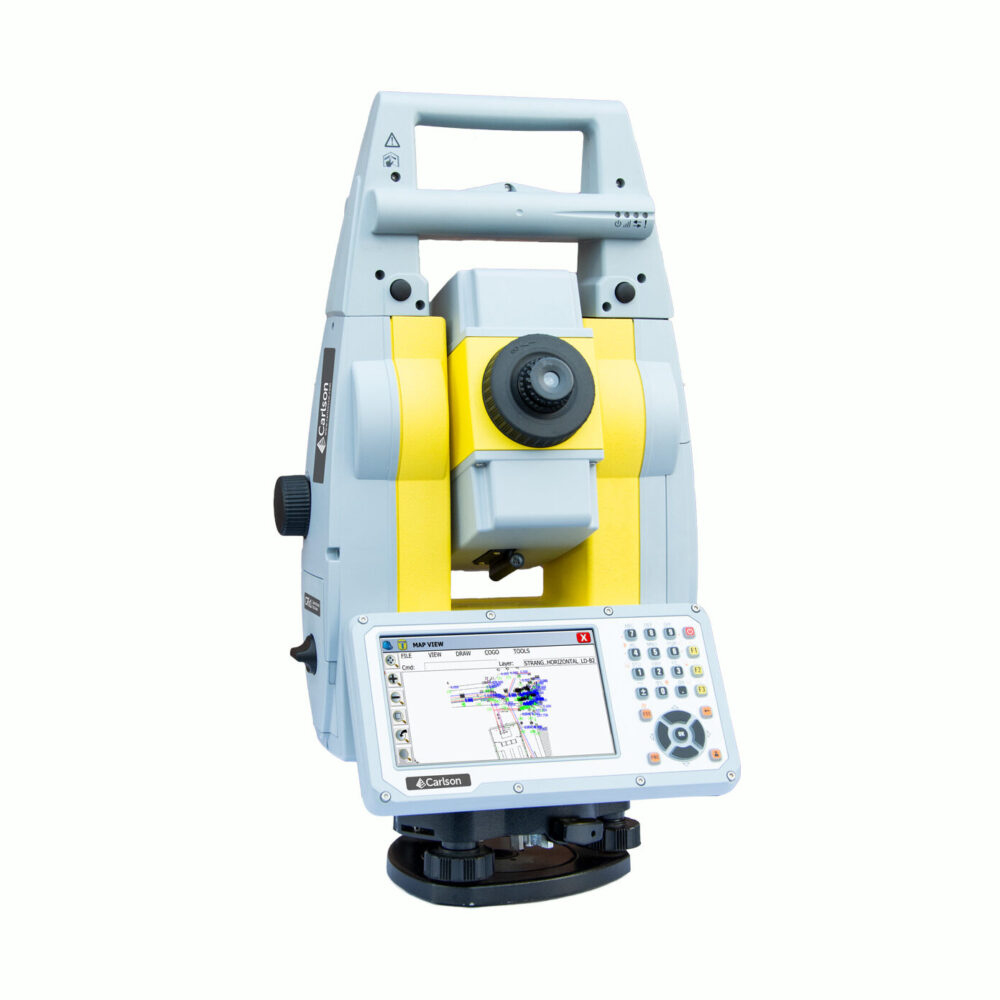
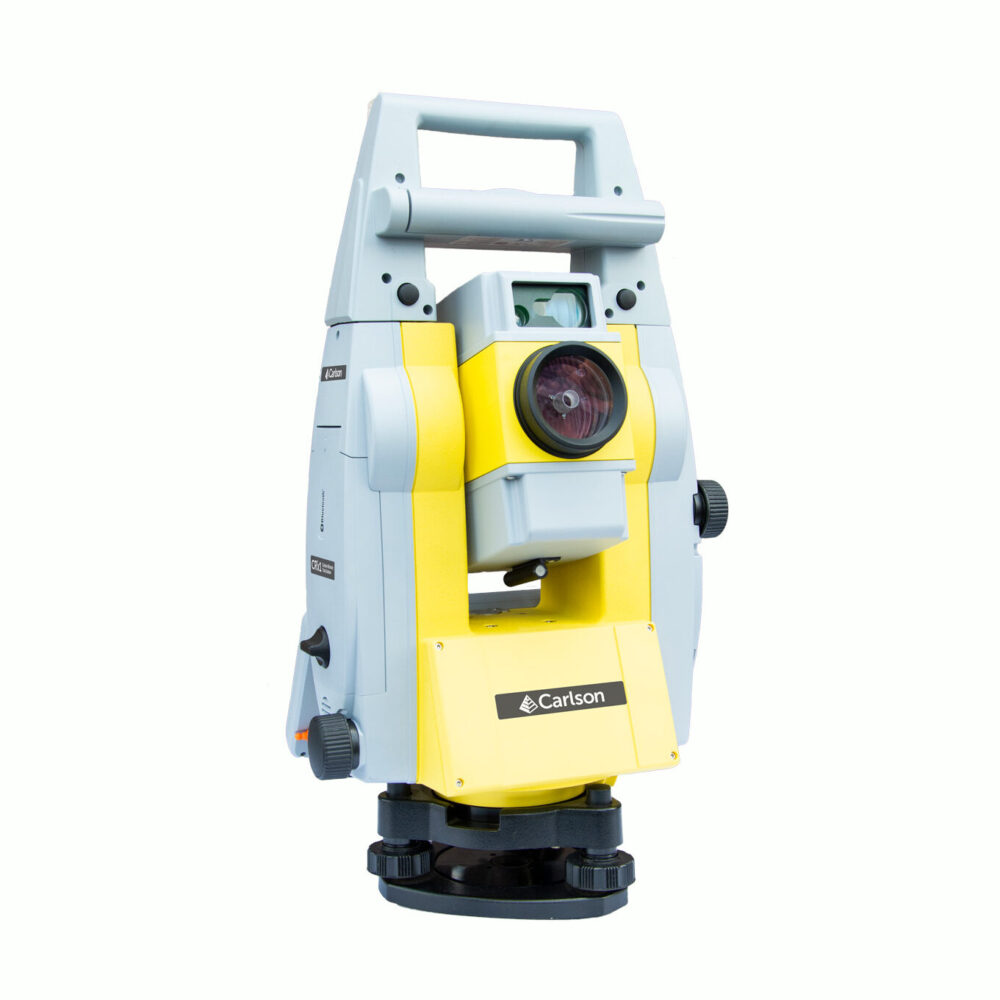
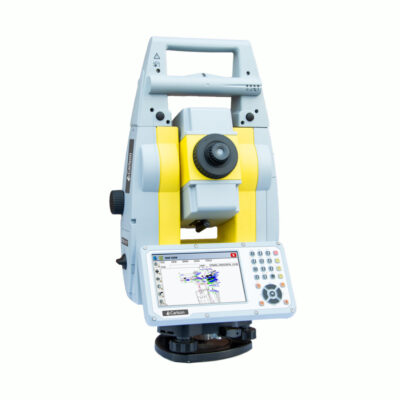
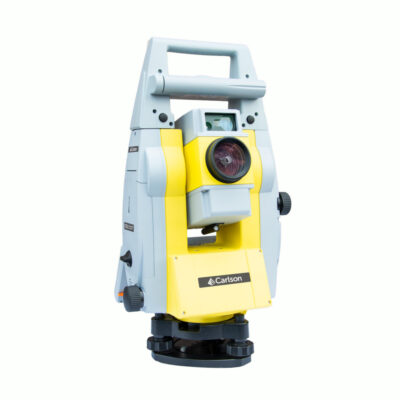
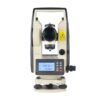
Carlson CRx Series Robotic Total Station with Automatic Prism Tracking
Get the best price for your setup
Contact our experts for the best possible price and configuration.
- Fast response
- Expert configuration advice
- No overpaying for features you do not need
The Carlson CRx Series is a robotic total station designed for professional surveying, construction layout and engineering work. Available in 1″, 2″, 3″ and 5″ accuracy versions, the CRx combines automatic prism search, tracking and fine aiming with long-range distance measurement and Carlson SurvCE and SurvPC field workflows. Its robotic operation and long-range Bluetooth connectivity make it well suited to efficient one-person surveying.
X-MOTION™ Hybrid Drives and STReAM360 technology support fast automated positioning, while Scout helps locate a prism, TRack follows a moving target and AIM automatically performs precise prism aiming. For points where placing a prism is difficult or unsafe, accXess™ EDM provides reflectorless distance measurement.
Carlson CRx Series Highlights
| Angular accuracy | 1″, 2″, 3″ or 5″ models |
|---|---|
| Prism measurement range | Up to 3500 m |
| Reflectorless range | Up to 500 m or 1000 m depending on EDM configuration |
| Robotic automation | Scout prism search up to 300 m, TRack up to 800 m and AIM up to 1000 m |
| Field software | Designed for Carlson SurvCE and SurvPC workflows with Hybrid+ support |
| Field protection | IP55 with operating range from -20°C to +50°C |
Valued customers:









Find RTK Networks
Search NTRIP providers and connect to reliable RTK correction services.
Description
Carlson CRx Series Robotic Total Station for Surveying and Construction
The Carlson CRx Series is built for surveyors, construction professionals and engineers who need accurate angle and distance measurements without requiring a second person to operate the total station. The series is available as the CRx-1, CRx-2, CRx-3 and CRx-5, giving you a choice of 1″, 2″, 3″ or 5″ angular accuracy while keeping the same familiar robotic workflow across the range.
In everyday fieldwork, the CRx can be used for topographic surveys, construction stakeout, setting out foundations and structures, checking positions, collecting as-built measurements and other jobs where reliable coordinate measurement is required. Automatic target functions reduce the amount of manual aiming needed and make the instrument particularly useful for one-person surveying.
Automatic Prism Search Tracking and Aiming
The CRx Series combines Carlson’s robotic workflow with STReAM360 positioning technology. Scout searches the working area for a passive prism, helping the instrument recover the target when line of sight has been interrupted or when you move to a new position. Once the prism is acquired, TRack continuously follows the moving target, while AIM automatically performs the fine aiming required for accurate measurements.
This is useful on construction sites and larger survey projects where the operator regularly moves between points. Instead of repeatedly returning to the total station to manually turn and aim the telescope, the surveyor can work from the prism pole and field controller while the instrument follows the target.
X-MOTION Hybrid Drives for Robotic Fieldwork
X-MOTION™ Hybrid Drives provide the motorisation required for fast robotic movement and target tracking. The system is designed to react quickly as the operator changes position, which helps keep stakeout and data collection moving when many points need to be measured during the day.
The telescope provides 30x magnification, while the robotic system combines automatic prism search, tracking and image-based fine aiming. NavLight™ also gives the person at the prism a visual alignment aid, making it easier to move onto the instrument’s line of sight during setting-out work.
Prism and Reflectorless Distance Measurement
For conventional prism measurements, the Carlson CRx Series provides a range of up to 3500 metres. Standard prism measurements can achieve 1 mm + 1.5 ppm accuracy, making the instrument suitable for precise control, detail surveys and construction positioning.
accXess™ EDM technology also allows measurements without a reflector. Depending on the CRx configuration, reflectorless range is available up to 500 or 1000 metres. Reflectorless measurement is especially useful when a prism cannot easily be positioned, such as on building façades, elevated structures, inaccessible corners, stockpiles or objects across restricted areas. The small measurement footprint also helps when selecting individual surfaces or details at distance.
Designed for Carlson SurvCE and SurvPC
The CRx Series is designed around Carlson SurvCE and SurvPC field workflows. A compatible data collector or tablet can be connected to the instrument so survey measurements, stakeout routines, coordinate geometry and project data can be managed from the same field software environment.
Internal Bluetooth is available for normal wireless communication, while the ZRT82 long-range Bluetooth radio handle supports remote robotic operation over greater working distances. This is particularly valuable for one-person crews because the operator can control the total station from the prism pole rather than remaining beside the instrument.
The instrument also provides internal data storage together with SD card and USB storage options. This gives field crews several ways to manage and transfer project files instead of depending on a single storage method.
Combine Total Station and GNSS Measurements
The CRx Series can also be used with Carlson’s Hybrid+ workflow, allowing a robotic total station and a compatible GNSS receiver such as the Carlson BRx7 to be used within the same field project. This can be useful on sites where neither measurement technology is ideal everywhere.
GNSS can be efficient across open areas, while a robotic total station is often more practical close to buildings, beneath structures or at locations where satellite visibility is limited. A combined workflow allows the field crew to select the measurement method that suits the point without unnecessarily separating the work into different projects.
Built for Outdoor Survey Conditions
Survey instruments need to deal with more than laboratory conditions. The Carlson CRx Series has an IP55 protection rating and is specified for operation from -20°C to +50°C. The removable 4.4 Ah Li-Ion battery provides up to eight hours of operation depending on working conditions and instrument use.
A 5-inch colour touchscreen provides access to onboard functions and project information, while the full alphanumeric keyboard remains practical when physical keys are preferred. The instrument also includes a laser plummet to assist with accurate setup over a known survey point.
Where the Carlson CRx Series Fits
The CRx is suitable for professional workflows where repeatable angle and distance measurement, robotic tracking and one-person operation are important. Typical applications include:
- Construction layout and stakeout
- Topographic and detail surveying
- Engineering and infrastructure surveys
- As-built measurement and position checks
- Control, traversing and site measurement
The choice between the CRx-1, CRx-2, CRx-3 and CRx-5 mainly depends on the angular accuracy required for your work. Higher-accuracy versions are suited to applications with tighter measurement tolerances, while other models can provide a more appropriate configuration for routine construction and general survey work.
Choosing Your Carlson CRx Configuration
When selecting a CRx Series instrument, consider the angular accuracy required, expected working distances, reflectorless measurement needs and the field controller or Carlson software already used by your crew. The correct configuration depends on the type of work being carried out rather than simply choosing the highest specification available.
Global GPS Systems can help match the Carlson CRx configuration to your existing survey equipment and field workflow, including data collectors, prisms, poles, tripods and compatible GNSS equipment. This helps ensure the complete system is suitable for the way your team actually measures and sets out points in the field.
Datasheets & Manuals
Specifications
Carlson CRx Series Robotic Total Station Specifications
Product Overview
| Product type | Professional robotic total station |
|---|---|
| Series models | CRx-1, CRx-2, CRx-3 and CRx-5 |
| Available angular accuracies | 1″, 2″, 3″ and 5″ |
| Primary applications | Land surveying, engineering, construction layout, stakeout, topographic surveying and other applications requiring precise angle and distance measurement |
| Robotic operation | Fully robotic operation using Carlson STReAM360 positioning technology |
| Field software compatibility | Carlson SurvCE and Carlson SurvPC |
| Onboard field software | Supports onboard Carlson SurvCE / SurvCE Basic operation depending on configuration |
| One-person surveying | Supported through robotic prism tracking and long-range Bluetooth communication |
| Hybrid surveying | Compatible with Carlson Hybrid+ workflows combining the robotic total station with a supported GNSS receiver such as the Carlson BRx7 |
Model Comparison
| Model | Angular Accuracy | Angular Accuracy (mgon) |
|---|---|---|
| CRx-1 | 1″ | 0.3 mgon |
| CRx-2 | 2″ | 0.6 mgon |
| CRx-3 | 3″ | 1.0 mgon |
| CRx-5 | 5″ | 1.5 mgon |
Angle Measurement
| Angular accuracy | 1″ (0.3 mgon), 2″ (0.6 mgon), 3″ (1.0 mgon) or 5″ (1.5 mgon), depending on model |
|---|---|
| Display resolution | 0.1″ (0.1 mgon) |
| Angle measurement method | Absolute, continuous, diametrical |
| Compensation | Quadruple-axis compensation |
| Compensator control | Can be enabled or disabled through supported field software; normal operation with compensation enabled is recommended |
Telescope
| Magnification | 30× |
|---|---|
| Automatic aiming | AiM automatic prism fine aiming |
| Automatic target tracking | TRack robotic prism tracking |
| Prism search | Scout opto-electronic prism search |
| Alignment aid | Integrated NavLight™ alignment aid |
Distance Measurement to Standard Prism
| Measurement Mode | Accuracy | Typical Measurement Time |
|---|---|---|
| Single / Fast | 2 mm + 1.5 ppm | 0.8 sec |
| Standard | 1 mm + 1.5 ppm | 2.4 sec |
| Continuous | 3 mm + 1.5 ppm | <0.15 sec |
Prism Distance Range
| Standard prism range | Up to 3,500 m |
|---|---|
| Tracking measurement | Continuous high-speed EDM measurements supported |
Reflectorless Distance Measurement
| Specification | accXess5 | accXess10 |
|---|---|---|
| Maximum reflectorless range | 500 m | 1,000 m |
| Accuracy up to 500 m | 2 mm + 2 ppm | 2 mm + 2 ppm |
| Accuracy beyond 500 m | Not applicable to published 500 m range | 4 mm + 2 ppm |
| Typical measurement time | 2–6 sec | 2–6 sec |
| Laser footprint / precise capture | 8 × 20 mm at 50 m | 8 × 20 mm at 50 m |
accXess™ EDM Technology
| EDM technology | Carlson accXess™ reflectorless electronic distance measurement technology |
|---|---|
| Reflectorless operation | Measures inaccessible or difficult targets without requiring a prism |
| Laser spot | Small laser footprint designed for precise target capture |
| Signal processing | Advanced signal processing for accurate reflectorless measurements at varying distances and surface conditions |
STReAM360 Robotic Positioning
| Robotic positioning technology | STReAM360 |
|---|---|
| Scout | Automatically scans the working area to locate a prism target |
| TRack | Continuously follows and tracks a moving prism after target lock |
| AiM | Automatically performs precise fine aiming at the prism without requiring manual telescope sighting |
| Image processing | Used for automatic fine aiming |
Scout Prism Search
| Technology | Opto-electronic prism search |
|---|---|
| Search range | 300 m with round prism |
| 360° search | Supported |
| Search window | Configurable through supported Carlson field software |
| Purpose | Rapidly relocates a reflective target after loss of lock or during robotic setup |
TRack Automatic Prism Tracking
| Tracking range | 800 m with round prism |
|---|---|
| Maximum target speed | 90 km/h at 100 m |
| Tracking operation | Automatically maintains instrument alignment to the moving prism after target lock |
AiM Automatic Fine Aiming
| Fine-aiming range | 1,000 m with round prism |
|---|---|
| Horizontal / vertical aiming accuracy | 1″ |
| Fine-aiming technique | Image processing |
| Automatic measurement | Instrument can automatically fine-aim and measure the prism without manual telescope sighting |
X-MOTION™ Hybrid Drives
| Motorization technology | X-MOTION™ Hybrid Drives |
|---|---|
| Robotic movement | High-speed motorized horizontal and vertical instrument rotation |
| Published automation improvement | Up to 20% faster automation performance compared with conventional drive technology, according to Carlson |
| Moving target capability | Tracks targets moving at up to 90 km/h at a distance of 100 m |
NavLight™ Alignment Aid
| Alignment system | Integrated NavLight™ |
|---|---|
| Maximum alignment range | 5 m lateral indication at 150 m |
| Published alignment accuracy | 5 cm at 100 m |
| Visual indication | Flashing red and yellow guidance lights |
| Primary use | Guides the prism operator toward the instrument line of sight during stakeout and alignment |
| Guidelight control | On, Off or Auto through supported Carlson field software |
| Guidelight intensity | Low, Medium or High |
Display and Keyboard
| Display size | 5 in |
|---|---|
| Display resolution | WVGA 800 × 480 pixels |
| Display type | Color touchscreen |
| Display backlight | LED |
| Keyboard | Full alphanumeric keyboard |
| Keyboard keys | 25 |
| Keyboard illumination | Yes |
| Second keyboard | Optional |
| Reticle illumination | Off, Low, Medium or High through supported instrument settings |
Operating System and Data Storage
| Operating system | Microsoft Windows Embedded Compact 7.0 |
|---|---|
| Internal memory | 2 GB |
| Removable storage | SD memory card |
| USB storage | USB flash drive support |
| Automatic data backup | Supported |
Connectivity and Interfaces
| Serial interface | Supported |
|---|---|
| USB | Supported |
| Internal Bluetooth | Integrated standard-range Bluetooth module |
| Long-range Bluetooth | Supported through the removable LRBT / ZRT82 radio handle |
| Bluetooth modules | 2 communication options: internal Bluetooth and long-range Bluetooth through the radio handle |
| WLAN | Supported |
| External power connection | Supported |
| External field controller communication | Compatible with supported Windows field controllers running Carlson SurvCE or SurvPC |
Long-Range Bluetooth Radio Handle
| Radio handle | LRBT / ZRT82 long-range Bluetooth radio handle |
|---|---|
| Function | Long-range wireless communication between the CRx and a compatible Carlson field data collector |
| Default communication configuration | Long-range Bluetooth handle is selected by default in the Carlson CRx configuration documented by Carlson |
| Standard Bluetooth fallback | Internal Bluetooth module remains available for shorter-range communication |
| Robotic survey use | Designed to support one-person robotic total station workflows |
Carlson SurvCE and SurvPC Integration
| Supported field software | Carlson SurvCE and Carlson SurvPC |
|---|---|
| SurvPC instrument driver | Carlson Robotic / CRx |
| SurvPC compatibility documented by Quick Start Guide | SurvPC 6.17 or higher |
| EDM mode control | Supported through Carlson field software |
| Foresight / backsight target configuration | Supported |
| Compensator control | Supported |
| Guidelight control | Supported |
| Prism search configuration | Supported |
| Automatic stakeout turning | Instrument can automatically turn toward a selected stakeout point |
| Measurement averaging | User-configurable number of readings can be averaged |
| Post-measurement robotic state | Configurable as Standby, Lock, Track or previous state |
Prism Search Options in Carlson Field Software
| Power Search / Scout | Rapid wide-area search for a reflective prism target |
|---|---|
| ATR Search | Automatic target recognition search within a configurable horizontal and vertical range |
| Search on Read | Can initiate None, Power Search, ATR Search or GPS Search when a measurement is requested and the prism is not locked |
| GPS Search | Uses GNSS position near or attached to the prism pole to guide the total station toward the target |
| Hybrid requirement | GPS Search can operate through Carlson Hybrid workflows or a compatible NMEA GNSS stream depending on configuration |
| Joystick speed | Low, Medium or High |
Hybrid+ GNSS Integration
| Hybrid+ compatibility | Supported with an appropriate Carlson SurvCE or SurvPC Hybrid+ configuration |
|---|---|
| Example GNSS receiver | Carlson BRx7 |
| Combined workflow | Allows robotic total station and GNSS measurements to be used within the same field workflow |
| GPS-assisted prism search | Supported with compatible GNSS position input |
Laser Plummet
| Plummet type | Laser point |
|---|---|
| Brightness | Adjustable |
| Plummet accuracy | 1.5 mm at 1.5 m instrument height |
| Purpose | Precise centering of the total station over the survey point |
Physical Specifications
| Instrument weight | 5.0–5.3 kg (11–11.7 lb), excluding battery and tribrach |
|---|---|
| Construction | Rugged field-proven robotic total station enclosure |
| Tripod interface | Survey tribrach mounting system |
| Tribrach | Removable tribrach supplied in the listed Global GPS Systems package |
Environmental Specifications
| Ingress protection | IP55 |
|---|---|
| Dust protection | Protected against dust ingress to IP55 requirements |
| Water protection | Protected against water jets to IP55 requirements |
| Operating temperature | -20°C to +50°C (-4°F to +122°F) |
| Storage temperature | -40°C to +70°C (-40°F to +158°F) |
| Relative humidity | Up to 95%, non-condensing |
Battery and Power
| Battery type | Removable rechargeable Li-Ion battery |
|---|---|
| Battery capacity | 4.4 Ah |
| Battery voltage | 7.4 V |
| Published operating time | Up to 8 hours |
| Battery replacement | Removable |
| External power | Supported |
| Runtime note | Actual operating time can be shorter depending on robotic activity, communication use, temperature and other operating conditions |
Laser Classification
| Prism-mode distance meter | Laser Class 1 according to IEC 60825-1 / EN 60825-1 |
|---|---|
| Laser plummet | Laser Class 2 according to IEC 60825-1 / EN 60825-1 |
| Reflectorless accXess distance meter | Laser Class 3R according to IEC 60825-1 / EN 60825-1 |
Included Package Contents
| Item | Quantity | Notes |
|---|---|---|
| Carlson CRx Robotic Total Station | 1 | CRx-1, CRx-2, CRx-3 or CRx-5 depending on selected model |
| Long-Range Bluetooth Radio Handle | 1 | LRBT radio handle for robotic communication |
| Rechargeable Li-Ion Battery | 1 | 4.4 Ah rechargeable battery |
| Tribrach | 1 | Tribrach without optical plummet |
| Battery Charger | 1 | For supplied rechargeable battery |
| USB Cable | 1 | For compatible data transfer / connection |
Specifications and package contents may vary by configuration, region or manufacturer update. Always check the current configuration before ordering.
Reviews (0)
Only logged in customers who have purchased this product may leave a review.
FAQ
Carlson CRx Series Robotic Total Station FAQ
Models, Applications & Surveying
What is the Carlson CRx Series?
The Carlson CRx Series is a range of professional robotic total stations designed for high-precision surveying, engineering and construction work. The instruments combine automatic prism tracking, motorised operation, reflectorless distance measurement and integration with Carlson SurvCE and SurvPC field software.
What Carlson CRx models are available?
The series consists of the Carlson CRx-1, CRx-2, CRx-3 and CRx-5. The model number represents the instrument's angular accuracy: 1, 2, 3 or 5 arc-seconds. The models share the same main robotic technologies and workflow, allowing users to select the angular accuracy required for their application.
What is the Carlson CRx robotic total station used for?
The CRx Series can be used for applications including topographic surveying, construction layout, setting out, as-built surveys, boundary and cadastral fieldwork, engineering surveys, road and infrastructure projects, monitoring, control surveys and other work requiring precise angle and distance measurements.
Can one person operate a Carlson CRx robotic total station?
Yes. The CRx is designed for robotic surveying, allowing a surveyor to operate the instrument remotely from the prism position using a compatible field controller running Carlson SurvCE or SurvPC. Automatic prism search, aiming and tracking technologies help support efficient one-person survey workflows.
What is the difference between a robotic total station and a manual total station?
A manual total station normally requires an operator at the instrument to aim at the prism for each measurement. A robotic total station such as the Carlson CRx can automatically search for, aim at and track a prism while being controlled remotely. This makes single-person surveying and continuous stakeout workflows possible.
Which Carlson CRx angular accuracy should I choose?
The CRx-1 provides 1-second angular accuracy, followed by 2 seconds for the CRx-2, 3 seconds for the CRx-3 and 5 seconds for the CRx-5. Higher angular accuracy is especially important for precision engineering, control and longer-distance measurements, while 3- or 5-second instruments can be suitable for many general surveying and construction applications. The appropriate model depends on the accuracy requirements of the project.
Measurement Accuracy, Prism Tracking & EDM
How accurately can the Carlson CRx measure distances to a prism?
For measurements to a standard prism, Carlson specifies typical accuracy of 1 mm + 1.5 ppm in standard mode, 2 mm + 1.5 ppm in fast single-measurement mode and 3 mm + 1.5 ppm during continuous measurement. The maximum specified prism measurement range is up to approximately 3,500 metres under suitable conditions.
Can the Carlson CRx measure without a prism?
Yes. The CRx Series supports reflectorless distance measurement using Carlson's accXess EDM technology. Depending on the configuration, reflectorless ranges of up to approximately 500 metres or 1,000 metres are available, allowing measurements to surfaces that cannot conveniently be occupied with a prism.
What is Carlson accXess EDM technology?
accXess is the electronic distance measurement technology used by the CRx Series for reflectorless measurements. Carlson specifies reflectorless accuracy of approximately 2 mm + 2 ppm under suitable conditions, enabling precise measurements to buildings, structures, façades, inaccessible points and other suitable surfaces without placing a prism directly on the target.
What is Scout technology on the Carlson CRx?
Scout is the CRx Series' opto-electronic prism search system. It is designed to quickly locate a passive prism when the robotic total station has lost the target or needs to acquire it. Carlson specifies a Scout search range of up to approximately 300 metres when using a round prism.
How far can the Carlson CRx automatically track a prism?
Carlson specifies automatic prism tracking at distances up to approximately 800 metres with a round prism under suitable conditions. The tracking system is designed to follow a moving prism during surveying and stakeout operations.
Does the Carlson CRx automatically aim at the prism?
Yes. The CRx includes automatic fine-aiming technology that uses image processing to precisely aim at a round prism. Carlson specifies an automatic aiming range of up to approximately 1,000 metres and an aiming accuracy of 1 arc-second under suitable conditions.
SurvPC, SurvCE, Hybrid+ & Connectivity
Does the Carlson CRx work with Carlson SurvPC and SurvCE?
Yes. The CRx Series is designed specifically for use with Carlson SurvPC and SurvCE field software. These applications provide the surveying and stakeout routines used to control the robotic total station, collect measurements, calculate coordinates and manage field projects.
Can the Carlson CRx be operated without an external data collector?
Yes. Carlson provides the option to install SurvCE Basic directly on the CRx for onboard operation. The instrument has a 5-inch colour touchscreen and full alphanumeric keyboard. For full robotic surveying workflows, a separate field controller running Carlson SurvCE or SurvPC is commonly used.
What is Carlson Hybrid+ and does the CRx support it?
Yes. The CRx Series is compatible with the Hybrid+ module available for Carlson SurvCE and SurvPC. Hybrid+ allows a robotic total station and compatible GNSS receiver to be used within the same field workflow, making it easier to switch between optical and GNSS measurements as site conditions change.
Can I use a Carlson CRx together with a GNSS receiver?
Yes. With Carlson's Hybrid+ workflow, the CRx can be used together with a compatible GNSS receiver such as a Carlson BRx7. GNSS can be used where satellite visibility is suitable, while the robotic total station can be used around buildings, beneath obstructions or wherever an optical measurement is preferable.
How does a field controller communicate with the Carlson CRx?
The CRx provides internal Bluetooth connectivity and supports a long-range Bluetooth radio handle for remote robotic operation. It also provides interfaces including serial, USB, external power and WLAN connectivity for supported data-transfer and field workflows.
How is survey data stored on the Carlson CRx?
The CRx has approximately 2 GB of internal memory and supports removable storage using an SD card and USB memory device. When the instrument is operated with Carlson SurvCE or SurvPC on a field controller, project data can also be managed directly through the field software.
Display, Battery, Durability & Package
What type of display does the Carlson CRx have?
The CRx Series has a 5-inch WVGA colour touchscreen with an 800 x 480 resolution and LED backlight. It also includes an illuminated full alphanumeric keyboard, providing both touchscreen and physical-key operation in the field.
What are X-MOTION Hybrid Drives?
X-MOTION Hybrid Drives are the motorisation technology used by the CRx robotic total station. They provide the movement required for automatic turning, prism searching, aiming and tracking, helping the instrument respond quickly during robotic surveying and stakeout.
How long does the Carlson CRx battery last?
The Carlson CRx uses a removable 4.4 Ah, 7.4 V lithium-ion battery. Carlson specifies operating time of up to approximately 8 hours under suitable conditions. Actual battery life depends on factors such as robotic motor use, tracking, wireless communication, temperature and measurement frequency.
Is the Carlson CRx suitable for outdoor surveying?
Yes. The CRx Series is designed as a rugged professional field instrument and has an IP55 protection rating against dust and water. Carlson specifies an operating temperature range of approximately -20°C to +50°C and a storage range of -40°C to +70°C.
How much does a Carlson CRx robotic total station weigh?
Depending on the configuration, the CRx weighs approximately 5.0 to 5.3 kg without the battery and tribrach. The complete field setup will weigh more once the battery, tribrach and other required accessories are installed.
What is included with the Carlson CRx Series?
The listed package includes the Carlson CRx robotic total station, long-range Bluetooth radio handle, rechargeable 4.4 Ah lithium-ion battery, tribrach without optical plummet, charger and USB cable. The exact configuration, model-specific equipment and optional accessories should always be checked when ordering.

 GPS & GNSS
 Total Stations
 Data collectors
 Software
 Correction services
 Machine control
 External radio
 Marine
 Accessories
Reviews
There are no reviews yet