


 GPS & GNSS
 Lidar scanning
 Total Station


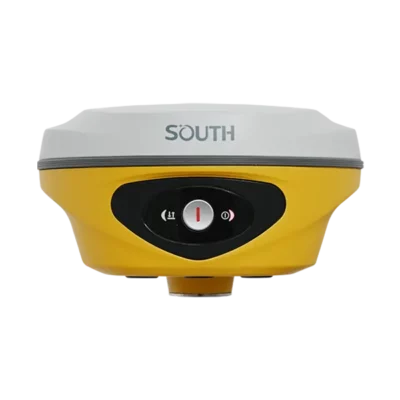
South ALPS2 Rover Base Set Laser RTK GNSS with Camera
Get the best price for your setup
Contact our experts for the best possible price and configuration.
- Fast response
- Expert configuration advice
- No overpaying for features you do not need
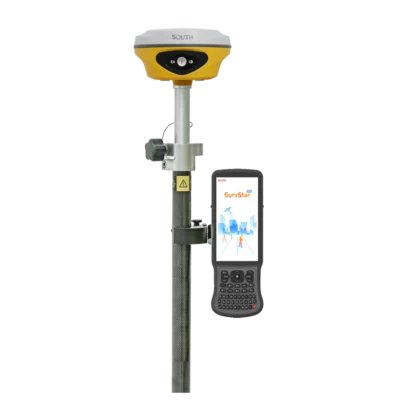
The South ALPS2 Rover Base Set is a complete RTK GNSS system for surveyors, construction teams, GIS professionals, engineers and drone mapping crews who need accurate positioning without depending only on an RTK network. The set includes the ALPS2 receiver, South H9 data collector, SurvStar software, telescopic pole, controller bracket, tripod, tribrach and adapter.
With laser measurement, camera-assisted stakeout and IMU tilt compensation, the ALPS2 helps field crews measure and stake points in places where a standard RTK pole setup can be slow, difficult or unsafe. It is suitable for topographic surveys, construction layout, road work, utilities, earthworks, boundary surveys and ground control points.
South ALPS2 Rover Base Set Highlights
| Set Configuration | Complete rover and base setup with receiver, H9 controller, SurvStar software, pole, bracket, tripod, tribrach and adapter |
|---|---|
| Laser Measurement | 3R green laser for remote point measurement and laser stakeout |
| Visual Stakeout | 8 MP front camera and 2 MP bottom camera for live-view AR stakeout |
| IMU Tilt | Calibration-free IMU tilt compensation for faster measuring without constantly levelling the pole |
| GNSS Channels | 1698 channels with GPS, GLONASS, BeiDou, Galileo, SBAS, IRNSS and QZSS support |
| Correction Options | UHF radio and NTRIP support for flexible RTK workflows |
| Field Durability | IP68 waterproof and dustproof housing with rugged site-ready construction |

Valued customers:









Find RTK Networks
Search NTRIP providers and connect to reliable RTK correction services.
Description
South ALPS2 Rover Base Set for Independent RTK Surveying
The South ALPS2 Rover Base Set is a complete RTK GNSS solution for field teams that need their own rover and base setup. It is designed for surveyors, construction professionals, GIS users, engineers and drone mapping crews who need accurate positioning on jobsites where RTK network coverage is not always available or reliable.
This set combines the South ALPS2 laser RTK receiver with the South H9 data collector, SurvStar field software and the main accessories needed for a practical rover and base workflow. With the tripod, tribrach, adapter, telescopic pole and controller bracket included, the system is ready for typical base-and-rover field operation.
Why Choose a Rover and Base Set?
A rover and base set is useful when you want to work independently from local RTK networks. Instead of relying only on mobile internet, CORS coverage or an NTRIP service, you can set up your own base station on a known point or suitable project control point and work with the rover across the site.
This is especially valuable for rural areas, infrastructure projects, construction sites, earthworks, roads, utilities, agricultural land, drone mapping jobs and locations where correction services are unavailable, unstable or inconvenient. For companies that work across different regions, a complete rover and base system offers more control over the RTK workflow.
Laser Measurement for Hard-to-Reach Points
The South ALPS2 includes laser measurement to help collect points that are difficult, unsafe or impossible to occupy directly with a survey pole. This can include points near traffic, trenches, water, steep slopes, walls, fences, roof edges, building corners, piles, window sills and other obstructions.
In practical fieldwork, this means the operator does not always need to stand exactly on the target point. The laser workflow can help crews measure from a safer or more convenient position, reducing delays and making the receiver more useful in complex site conditions.
Camera Assisted AR Stakeout
The ALPS2 uses dual cameras to support visual stakeout in the field. The front camera helps guide the operator toward the target area, while the bottom camera supports closer positioning near the point. This makes stakeout work easier to follow, especially on busy construction sites or projects with many points to mark.
For construction layout, utility work and site engineering, visual guidance can help reduce searching time and make the process clearer for both experienced surveyors and less experienced GNSS users. The camera view gives the operator a more direct understanding of where the target point is located in relation to the real site.
IMU Tilt Compensation for Faster Fieldwork
IMU tilt compensation helps the operator measure points without carefully levelling the pole for every observation. This is useful on slopes, rough terrain, road edges, trenches, stockpiles and areas where holding the pole perfectly vertical is difficult or slow.
For repetitive measuring and stakeout tasks, this can make a real difference in daily productivity. Crews can move more naturally through the site while still following proper RTK procedures and working within the receiver’s operating limits.
Strong GNSS Tracking and RTK Connectivity
The South ALPS2 tracks 1698 channels and supports major satellite constellations including GPS, GLONASS, BeiDou, Galileo, SBAS, IRNSS and QZSS. This wide signal support helps the receiver maintain a strong positioning solution across different job environments, from open fields to more obstructed construction and infrastructure sites.
The receiver supports UHF RTK and NTRIP workflows. In a rover and base setup, the UHF radio is useful for local corrections between the base and rover. When network corrections are available, NTRIP can also be used depending on the project workflow and local correction service.
Built for Outdoor Surveying and Construction Sites
The ALPS2 receiver is designed for demanding field use, with an IP68-rated housing for protection against water and dust. Its rugged construction makes it suitable for daily work on construction sites, roads, open land, utilities, engineering projects and mapping jobs.
Battery performance depends on the selected working mode. Base operation, rover operation, laser measurement and camera stakeout each place different demands on the system. The receiver supports Type-C charging, which makes charging and field preparation practical for modern survey crews.
Included Field Components
The South ALPS2 Rover Base Set includes the key components needed for a complete RTK field workflow. The South H9 data collector runs the field software and is used for project setup, data collection and stakeout. SurvStar software supports common surveying tasks such as measuring points, setting out designs and managing field data.
The included telescopic pole and controller bracket are used for rover operation, while the tripod, tribrach and adapter support stable base station setup. This makes the set suitable for users who want one complete package instead of sourcing each accessory separately.
Who Uses the South ALPS2 Rover Base Set?
Land surveyors can use the South ALPS2 Rover Base Set for topographic surveys, control work, cadastral projects, site plans and stakeout. Construction crews can use it for foundations, road construction, earthworks, utilities, drainage, machine control checks and general layout tasks.
GIS teams can use the system for accurate asset mapping and field data collection, while drone pilots can use it to measure ground control points and check points for photogrammetry projects. Engineering and infrastructure teams benefit from the combination of independent RTK corrections, laser measurement and camera-assisted workflows.
Practical Advantages in the Field
- Complete rover and base set for independent RTK surveying.
- Useful when RTK network coverage is unavailable or unreliable.
- Laser measurement for hard-to-reach or unsafe points.
- Dual-camera AR stakeout for clearer visual guidance.
- IMU tilt compensation for faster measuring on uneven ground.
- UHF and NTRIP support for flexible correction workflows.
Buying the South ALPS2 Rover Base Set from Global GPS Systems
Global GPS Systems supplies the South ALPS2 Rover Base Set to surveyors, construction companies, GIS teams, drone pilots and engineering professionals worldwide. Our team can help you decide whether a rover and base set is the right choice for your work, or whether a rover-only configuration with network RTK access would be enough.
If you need a complete RTK GNSS system with laser measurement, visual stakeout, IMU tilt compensation and independent base-rover capability, the South ALPS2 Rover Base Set is a practical and flexible choice for modern field surveying.
Specifications
South ALPS2 Rover Base Set Specifications
Product Overview
| Product Name | South ALPS2 Rover Base Set |
|---|---|
| Product Type | GNSS RTK rover and base set with laser measurement, IMU tilt compensation and camera-assisted stakeout |
| Receiver Model | South ALPS2 Laser RTK |
| Receiver Configuration | Rover and base setup using ALPS2 GNSS receivers |
| Controller Model | South H9 data collector |
| Field Software | SurvStar surveying software |
| Typical Applications | Land surveying, construction layout, civil engineering, topographic surveys, utility and infrastructure projects, RTK base-rover work, laser measurement, remote point measurement and AR stakeout |
| Main Technologies | Multi-constellation GNSS, RTK, internal UHF radio, NTRIP, laser measurement, calibration-free IMU, front and bottom cameras, live-view AR stakeout and CAD AR stakeout |
GNSS Receiver Features
| GNSS Channels | 1698 |
|---|---|
| GPS Signals | L1C, L1C/A, L2C, L2P(Y), L5 |
| GLONASS Signals | G1, G2, G3 |
| BeiDou / BDS Signals | B1I, B2I, B3I, B1C, B2a, B2b |
| Galileo Signals | E1, E5a, E5b, E6, AltBOC* |
| SBAS | L1* |
| IRNSS | L5* |
| QZSS | L1, L2C, L5* |
| MSS L-Band | Reserved |
| Positioning Output Rate | 1 Hz to 20 Hz |
| Initialization Time | < 10 seconds |
| Initialization Reliability | > 99.99% |
| RTK Initialization Time | 2 to 8 seconds |
Positioning Accuracy
| Positioning Mode | Horizontal Accuracy | Vertical Accuracy |
|---|---|---|
| Code Differential GNSS | 0.25 m + 1 ppm RMS | 0.50 m + 1 ppm RMS |
| GNSS Static | 2.5 mm + 0.5 ppm RMS | 3.5 mm + 0.5 ppm RMS |
| Static Long Observation | 2.5 mm + 0.1 ppm RMS | 3 mm + 0.4 ppm RMS |
| Rapid Static | 2.5 mm + 0.5 ppm RMS | 5 mm + 0.5 ppm RMS |
| PPK | 3 mm + 1 ppm RMS | 5 mm + 1 ppm RMS |
| RTK UHF | 8 mm + 1 ppm RMS | 15 mm + 1 ppm RMS |
| RTK NTRIP | 8 mm + 0.5 ppm RMS | 15 mm + 0.5 ppm RMS |
| SBAS Positioning | Typically < 5 m 3DRMS | |
| BDPPP | 10–20 cm after approximately 20 minutes in open environment, where available | 20–40 cm after approximately 20 minutes in open environment, where available |
Laser, IMU and Camera
| Laser Type | Class 3R green laser |
|---|---|
| Laser Working Range | 30 m |
| Laser Accuracy | 3 cm within 10 m; 5 cm within 20 m; or 1 cm + 2 mm/m |
| Laser Functions | Laser measurement, laser survey, laser point survey, laser distance measurement, Laser AR, laser intersection and laser stakeout |
| IMU | Built-in calibration-free IMU module |
| IMU Accuracy | 8 mm + 0.7 mm/° tilt |
| IMU Tilt Angle | Optimal accuracy within 120° according to current SOUTH datasheet; Global GPS Systems page lists 60° |
| IMU Initialization | Approximately 2–5 seconds by shaking or walking |
| Front Camera | 8 MP |
| Bottom Camera | 2 MP |
| Camera Functions | Live-view AR stakeout, CAD AR stakeout, visual direction guidance and close-range target locating |
| Electronic Bubble | Supported |
| Thermometer | Built-in thermometer sensor with intelligent temperature control technology |
Receiver Hardware
| Receiver Dimensions | 134 mm diameter × 79 mm height |
|---|---|
| Receiver Weight | 860 g, battery included |
| Housing Material | Magnesium-aluminum alloy shell |
| Operating System | Linux |
| Operating Temperature | -45°C to +75°C |
| Storage Temperature | -55°C to +85°C |
| Humidity | 100% non-condensing |
| Waterproof / Dustproof Rating | IP68 |
| Shock / Drop Resistance | Withstands natural 2 m pole drop onto cement ground |
| Buttons | Single-button operation according to datasheet; some manual references may vary by hardware revision |
| Indicators | Data and power indicators; manual also references satellite, data and power indicators |
| Voice Guidance Languages | Chinese, English, Korean, Spanish, Arabic, Portuguese, Russian, Turkish, French and Italian |
Receiver Power
| Power Supply | 6–28 V DC with overvoltage protection |
|---|---|
| Internal Battery | Built-in 7.4 V 6800 mAh rechargeable lithium-ion battery |
| Charging Method | USB Type-C cable with PD adapter |
| Battery Life - Static | Up to 25 hours |
| Battery Life - UHF RTK Rover without Camera | Up to 20 hours |
| Battery Life - Laser Survey | Up to 15 hours |
| Battery Life - Visual Stakeout | Up to 15 hours |
| Battery Life - UHF RTK Base | Up to 12 hours |
Receiver Communication
| I/O Ports | 5-pin LEMO interface, USB Type-C interface and UHF antenna interface |
|---|---|
| 5-Pin LEMO Interface | External power port and RS232 serial communication |
| USB Type-C Interface | Charging, OTG, Ethernet, static data download, Web UI access and firmware update |
| Internal UHF Radio | 2 W transmit and receive |
| UHF Frequency Range | 410–470 MHz |
| UHF Protocols | Farlink, Trimtalk and SOUTH |
| UHF Communication Range | Typically 8–10 km with Farlink protocol; 12–15 km in optimal conditions |
| Bluetooth | Bluetooth 5.0, Bluetooth 3.0/4.2 standard and Bluetooth 2.1 + EDR |
| NFC Communication | Supported |
| Wi-Fi | 802.11 b/g/n standard |
| Wi-Fi Modes | Access point mode and client mode |
| Web UI Access | Via Wi-Fi or USB connection |
| Cellular / SIM Support | Retail page lists 4G internet modem; ALPS2 user manual states the receiver does not support SIM card. Verify current regional configuration before ordering. |
Base and Rover Operation
| Supported Working Modes | Rover, base and static |
|---|---|
| Base-Rover Correction Method | Internal UHF radio or network-based RTK workflows depending on configuration |
| Internal Radio Base Operation | ALPS2 can transmit corrections using internal UHF radio in base mode |
| Rover Operation | ALPS2 can receive corrections by UHF radio, NTRIP/network, external source, Bluetooth or Wi-Fi depending on setup |
| Radio Transfer / Repeater | Supported for transferring corrections from base station to other rovers with internal UHF |
| Base Setup Accessories | Tripod, tribrach and adapter included according to retailer product page |
| Rover Setup Accessories | Surveying pole and data collector bracket included according to retailer product page |
| RTK Record | Supports raw data recording in base mode or rover mode for post-processing |
| 1 PPS Output | Supported |
| EVENT Marker Input | Supported |
Data Storage and Transmission
| Internal Storage | 16 GB SSD internal storage |
|---|---|
| External Storage | Supports external USB storage via OTG |
| Automatic Cycling Storage | Supported |
| Custom Sample Interval | Up to 20 Hz |
| Static Recording Interval | User manual indicates 50 Hz / 0.02 s sampling interval is available for static data recording |
| USB Data Transmission | Plug-and-play USB data transmission |
| FTP / HTTP Download | Supported |
| NTRIP | Supports NTRIP Client, NTRIP Server and NTRIP Caster |
| Multiple NTRIP | Supports transmitting corrections to different servers at the same time through NTRIP protocol |
| Track Recording | Supported, with track data download and server upload options through Web UI |
Supported Data Formats
| Static Data Formats | STH, RINEX 2.01, RINEX 3.02 and other supported formats |
|---|---|
| Differential Data Formats | RTCM 2.1, RTCM 2.3, RTCM 3.0, RTCM 3.1 and RTCM 3.2 |
| GPS Output Data Formats | NMEA 0183, PJK plane coordinate and binary code |
| Network RTK Formats | VRS, FKP, MAC and full NTRIP protocol support |
| Other Data Streams | Raw observation data, correction data, navigation data, SIC observation data, OpenSIC observation data, external sensor input, user-defined data stream and UAV data format |
Receiver Software and Management
| Internal Web UI | Supports receiver monitoring, configuration, data management, log download and firmware update via Wi-Fi or USB |
|---|---|
| Default Wi-Fi Web UI Address | 10.1.1.1 |
| USB Network Web UI Address | 192.168.155.155 |
| Default Web UI Username | admin |
| Default Web UI Password | admin |
| Firmware Update | Online firmware update and local firmware update through Web UI |
| Secondary Development | Provides secondary development package and opens OpenSIC observation data format and interaction interface definition |
| Cloud Service | Supports online services such as remote management, firmware updates and online registration |
| Self-Check | Supports self-check of OEM board, UHF module, sensors, Wi-Fi module, Bluetooth module and EEPROM |
| Factory Reset | Supported by button operation and Web UI receiver controls |
Measurement and Stakeout Functions
| AR Stakeout | Real-scene augmented reality stakeout using visual and voice guidance |
|---|---|
| CAD AR Stakeout | Supports integration of CAD drawings with real-world scenes for target stakeout |
| Dual-Camera Stakeout Workflow | Front camera assists with general direction from a distance; bottom camera supports precise target finding near the point |
| Laser Survey | Point acquisition based on laser point position |
| Laser Distance Survey | Supported for indoor and outdoor distance measurement |
| Laser Point Survey | Supported |
| Laser AR | Supported via ALPS2 Wi-Fi connection |
| Laser Intersection | Supported, including direct rendezvous and point-library rendezvous methods |
| Laser Stakeout | Supported for remote target stakeout where access or GNSS signal is difficult |
South H9 Data Collector
| Controller Model | South H9 |
|---|---|
| Operating System | Android 12 |
| Processor | UNISOC 7863 |
| Memory | 4 GB RAM |
| Storage | 64 GB |
| Display | 6.0-inch sunlight-readable display |
| Display Brightness | 500 nits |
| Keyboard | Full QWERTY keypad |
| Battery | 7700 mAh |
| Controller Battery Life | Up to 20 hours |
| Controller Charging | USB-C PD fast charging; full charge in under 4.5 hours |
| Controller Connectivity | Dual-band Wi-Fi, 4G cellular and Bluetooth 5.0 |
| Controller GNSS Support | GPS, GLONASS, BDS and Galileo |
| Controller Ingress Protection | IP68 |
| Controller Drop Resistance | 1.5 m |
| Controller Operating Temperature | -20°C to +55°C |
| Controller Dimensions | 244.5 × 84.5 × 18.5 mm |
| Controller Weight | 409 g |
Package / Included Items
| Item | Quantity | Notes |
|---|---|---|
| South ALPS2 Receiver | 2 | Used as rover and base receivers in the rover-base set |
| South H9 Data Collector | 1 | Android field controller for survey data collection and receiver operation |
| SurvStar Surveying Software | 1 license / installation | Field surveying and data collection software |
| Surveying Pole | 1 | For rover operation |
| Data Collector Bracket | 1 | For mounting the controller to the pole |
| Tripod | 1 | For base receiver setup |
| Tribrach | 1 | For stable and accurate fixed-point base setup |
| Adapter | 1 | For base setup connection/mounting |
| Instrument Case | Configuration-dependent | Hard transport case may vary by kit configuration |
| Receiver Internal Batteries | Built-in | Each receiver has a built-in 7.4 V 6800 mAh rechargeable lithium-ion battery |
| USB Type-C Cable | Configuration-dependent | Used for charging, static data transfer, Web UI access and firmware update |
| PD Charging Adapter | Configuration-dependent | Used with USB Type-C cable for receiver charging |
| UHF Differential Antenna | Configuration-dependent | Required when using internal UHF radio mode |
| Additional Accessories | Configuration-dependent | Accessory selection may vary by regional kit, retailer configuration or manufacturer update |
Specifications and package contents may vary by configuration, region or manufacturer update. Always check the current configuration before ordering.
Reviews (0)
Only logged in customers who have purchased this product may leave a review.
FAQ
South ALPS2 Rover Base Set FAQ
Product Overview
What is the South ALPS2 Rover Base Set?
The South ALPS2 Rover Base Set is a complete professional GNSS RTK surveying package with both a rover and base setup. It is designed for high-precision land surveying, construction layout, civil engineering, GIS, infrastructure, and mapping applications.
Who is the South ALPS2 Rover Base Set designed for?
The South ALPS2 Rover Base Set is designed for land surveyors, construction surveyors, site engineers, civil engineering companies, GIS professionals, utility contractors, infrastructure teams, and mapping crews that need accurate RTK measurements in the field.
What is the difference between a rover set and a rover base set?
A rover set is mainly used as a mobile GNSS receiver, often with corrections from an RTK network. A rover base set includes both the rover and a base station setup, allowing users to create their own local correction source when an RTK network is not available, not preferred, or not reliable enough for the jobsite.
When should I choose the South ALPS2 Rover Base Set instead of the rover-only set?
Choose the South ALPS2 Rover Base Set if you want a complete independent RTK workflow with your own base station and rover. This is useful for remote areas, construction sites, infrastructure projects, or locations where mobile network coverage or RTK network access is limited.
Is the South ALPS2 Rover Base Set suitable for construction surveying?
Yes. The South ALPS2 Rover Base Set is suitable for construction layout, roadworks, earthworks, site control, utility positioning, machine control preparation, as-built surveys, and general engineering survey tasks.
Can the South ALPS2 Rover Base Set be used for land surveying?
Yes. The set is built for professional land surveying workflows, including topographic surveys, boundary work, stakeout, control point measurement, mapping, and high-precision field data collection.
Base and Rover Workflow
What is a GNSS base and rover system?
A GNSS base and rover system uses one receiver as a fixed base station and another receiver as the mobile rover. The base sends correction data to the rover, allowing the rover to calculate accurate RTK positions in the field.
Why would I need my own base station?
Your own base station is useful when you need independent RTK corrections, when there is no reliable RTK network nearby, when mobile internet coverage is poor, or when a project requires local site control from a known base position.
Does the South ALPS2 Rover Base Set support UHF radio corrections?
Yes. The South ALPS2 includes an internal UHF radio with a 410–470 MHz frequency range. This allows base-to-rover correction communication when working with a compatible base setup.
What is the UHF working range of the South ALPS2?
The South ALPS2 product information lists a typical UHF working range of approximately 8–10 km using Farlink protocol, with performance depending on terrain, antenna setup, interference, and field conditions.
Can the South ALPS2 Rover Base Set also use NTRIP corrections?
Yes. The South ALPS2 supports NTRIP correction workflows through its 4G internet modem, allowing users to connect to compatible RTK correction networks when available.
Is a rover base set useful in remote areas?
Yes. A rover base set is especially useful in remote or rural areas where RTK network coverage, mobile internet, or local correction services may be unavailable or unreliable.
Laser, IMU and Camera Features
Does the South ALPS2 Rover Base Set support laser measurement?
Yes. The South ALPS2 includes laser measurement technology, allowing users to measure points from a distance instead of placing the pole directly on every target point.
What is laser measurement useful for?
Laser measurement is useful for capturing hard-to-reach, unsafe, or obstructed points. It can help when measuring near walls, rooftops, traffic, water edges, slopes, fences, trees, windowsills, or small spaces where a surveyor cannot easily stand.
Can the South ALPS2 measure points with poor GNSS signal?
Yes. The laser measurement function helps reduce GNSS blind spots by allowing remote measurement in areas where direct GNSS observation may be difficult, such as under rooftops, close to obstacles, or near vertical surfaces.
Does the South ALPS2 Rover Base Set support laser stakeout?
Yes. The South ALPS2 supports laser stakeout, allowing users to stake out points from a distance when it is unsafe, inconvenient, or impossible to place the receiver directly over the target location.
Does the South ALPS2 have IMU tilt compensation?
Yes. The South ALPS2 has IMU tilt compensation with a listed tilt capability of up to 60 degrees. This helps users measure accurately without needing to keep the pole perfectly vertical for every point.
Why is IMU tilt compensation useful in the field?
IMU tilt compensation helps surveyors work faster around walls, fences, trenches, road edges, slopes, obstacles, and other locations where holding the pole fully vertical is difficult or unsafe.
Does the South ALPS2 support camera-assisted stakeout?
Yes. The South ALPS2 supports camera-assisted stakeout, including live-view AR stakeout and CAD AR stakeout. These visual tools help users find target points more easily and connect design data with the real jobsite.
What cameras are built into the South ALPS2?
The South ALPS2 includes dual cameras: an 8 MP front camera and a 2 MP bottom camera. These cameras support live-view AR stakeout and precise close-range stakeout workflows.
Accuracy, Connectivity and Field Use
What RTK accuracy does the South ALPS2 provide?
The South ALPS2 provides professional RTK accuracy. The listed accuracy is up to 8 mm + 1 ppm horizontal and 15 mm + 1 ppm vertical with UHF, and up to 8 mm + 0.5 ppm horizontal and 15 mm + 0.5 ppm vertical with NTRIP under suitable conditions.
How many GNSS channels does the South ALPS2 have?
The South ALPS2 has 1698 GNSS channels and supports multiple satellite constellations, including GPS, GLONASS, Galileo, BeiDou, SBAS, IRNSS, QZSS, and MSS L-Band reserve support.
Does the South ALPS2 have 4G connectivity?
Yes. The South ALPS2 includes a 4G internet modem, which can be used for network RTK workflows, online correction services, and connected field operations where supported.
Is the South ALPS2 Rover Base Set suitable for night work?
Yes. The laser measurement function can help users collect target points in dark environments, at night, or in semi-indoor conditions where visual targeting or traditional GNSS-only workflows may be more difficult.
Is the South ALPS2 waterproof and dustproof?
Yes. The South ALPS2 receiver has an IP68 rating for water and dust resistance, making it suitable for demanding outdoor surveying and construction environments.
What is the battery life of the South ALPS2?
The South ALPS2 has a built-in 7.4V 6800mAh rechargeable lithium-ion battery. Listed operating times include up to 25 hours in static mode, up to 20 hours in rover mode under optimal conditions, and up to 15 hours for laser survey or visual stakeout workflows.
What data formats does the South ALPS2 support?
The South ALPS2 supports common professional survey data formats, including STH, RINEX 2.01, RINEX 3.02, RTCM 2.1, RTCM 2.3, RTCM 3.0, RTCM 3.1, RTCM 3.2, NMEA 0183, PJK plane coordinate, and binary code.

 GPS & GNSS
 Total Stations
 Data collectors
 Software
 Correction services
 Machine control
 External radio
 Marine
 Accessories
Reviews
There are no reviews yet