
 GPS & GNSS
 Lidar scanning
 Total Station


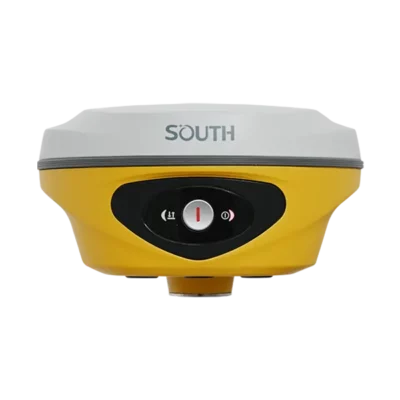

South ALPS2 Laser RTK GNSS Receiver with Camera and IMU
This product is Available
Contact our experts for the best possible price and configuration.
The South ALPS2 is a professional laser RTK GNSS receiver designed for surveyors, construction teams, GIS crews and engineers who need reliable positioning in difficult field conditions. With laser measurement, dual-camera visual stakeout and IMU tilt compensation, it helps capture points that are hard, unsafe or inconvenient to reach directly.
Use the ALPS2 for topographic surveys, construction layout, road work, utilities, cadastral jobs, site measurements and general RTK fieldwork where speed and flexibility matter.
South ALPS2 Highlights
| Laser Measurement | 3R green laser with up to 30 m working range |
|---|---|
| Visual Stakeout | Front 8 MP camera and bottom 2 MP camera for AR stakeout |
| GNSS Channels | 1698 channels |
| Satellite Support | GPS, GLONASS, BeiDou, Galileo, SBAS, IRNSS and QZSS |
| RTK Accuracy | 8 mm + 1 ppm horizontal and 15 mm + 1 ppm vertical via UHF RTK |
| Field Durability | IP68 waterproof and dustproof housing with 2 m pole-drop resistance |


Valued customers:









Find RTK Networks
Search NTRIP providers and connect to reliable RTK correction services.
Description
South ALPS2 Laser RTK GNSS Receiver for Flexible Field Surveying
The South ALPS2 is a laser RTK GNSS receiver built for field crews who need accurate positioning without being limited by every obstruction, corner, wall, ditch or unsafe access point. It combines multi-constellation GNSS tracking, laser point measurement, camera-assisted stakeout and IMU tilt compensation in one compact receiver.
For surveyors, construction workers, GIS teams, engineers and drone mapping crews, this means fewer workarounds in the field. Instead of always placing the pole directly on the point, the ALPS2 can help measure or stake points from a safer and more practical position. This is useful around traffic, water, fences, roof edges, building corners, piles, walls, trees and other locations where traditional RTK work can become slow or unsafe.
Laser Measurement for Hard-to-Reach Points
The built-in green laser gives the South ALPS2 a practical advantage on sites where the target point cannot easily be occupied with a pole. It can be used for laser distance measurement, laser point collection and laser stakeout workflows. In real fieldwork, this helps when measuring points under roofs, near obstacles, beside roads, along walls, in small spaces or in semi-indoor areas where direct GNSS occupation is difficult.
Laser measurement does not replace good survey practice, but it gives crews another way to keep working when the site layout is not ideal. For construction layout and topographic surveying, it can reduce the need to climb, stretch, step into unsafe areas or spend extra time finding a direct pole position.
Dual Cameras for Visual Stakeout
The ALPS2 uses a front camera and a bottom camera to support live-view AR stakeout. The front camera helps with general direction and site awareness when approaching a target. The bottom camera helps with more precise visual guidance when the operator is close to the point.
This is especially useful for construction crews and surveyors who work from CAD drawings or need to stake out many points across a busy site. Visual guidance makes the stakeout process easier to understand, even for less experienced operators, because the field software can show the target position in relation to the real scene.
IMU Tilt Compensation for Faster Point Collection
With calibration-free IMU tilt compensation, the South ALPS2 allows users to measure points without carefully levelling the pole every time. This can save time on repetitive surveys, uneven ground, slopes, trenches, road edges and places where keeping the pole perfectly vertical is difficult.
For everyday RTK users, this means smoother workflows and fewer delays. Crews can keep moving while still collecting accurate GNSS data, provided they follow correct field procedures and work within the receiver’s operating conditions.
Multi-Constellation GNSS Performance
The South ALPS2 tracks 1698 channels and supports major satellite constellations including GPS, GLONASS, BeiDou, Galileo, SBAS, IRNSS and QZSS. This wide satellite support is important for field crews working in mixed environments such as construction sites, urban areas, tree-lined roads, open fields and infrastructure corridors.
For RTK work, the receiver supports both UHF and NTRIP correction workflows. The internal UHF radio works in the 410–470 MHz range and supports commonly used radio protocols. NTRIP support allows the ALPS2 to connect to correction networks when mobile internet coverage is available.
Built for Surveying and Construction Sites
The ALPS2 has a magnesium aluminium alloy housing, IP68 waterproof and dustproof protection, and resistance against a 2 metre pole drop onto cement under specified conditions. This makes it suitable for demanding outdoor use where equipment is exposed to dust, rain, mud, vibration and daily handling by field crews.
Battery life depends on the working mode. Static operation can run up to 25 hours under controlled conditions, while rover, laser, visual stakeout and base modes use more power. Charging is handled through a Type-C connection, which is practical for modern field kits and vehicle-based workflows.
Who Uses the South ALPS2?
The South ALPS2 is suited to professionals who need accurate GNSS measurements but also want more flexibility than a standard RTK rover. Land surveyors can use it for topographic surveys, control work, cadastral work, site checks and stakeout. Construction teams can use it for layout, earthworks, road projects, utilities and general site measurement.
GIS users and mapping teams can benefit from fast field data collection, while drone pilots can use the receiver for ground control points and check points. Engineering firms working on roads, rail, marine edges, utilities, buildings and infrastructure can use the laser and camera functions to handle awkward points more efficiently.
Practical Advantages in the Field
- Measure difficult or unsafe points from a more convenient position using laser measurement.
- Use camera-assisted AR stakeout to make layout work clearer and easier to follow.
- Work faster on slopes, uneven ground and repetitive point collection with IMU tilt compensation.
- Connect through UHF or NTRIP depending on your correction source and project location.
- Use a rugged IP68 receiver designed for daily outdoor surveying and construction work.
Buying the South ALPS2 from Global GPS Systems
Global GPS Systems supplies the South ALPS2 to surveyors, construction professionals, GIS users, drone pilots and engineering teams worldwide. Our team can help you choose the right configuration for your workflow, including rover use, base and rover setups, controller options, software and RTK correction needs.
If you are comparing laser RTK GNSS receivers, the South ALPS2 is a strong option for users who want accurate GNSS positioning with the added flexibility of laser measurement and visual stakeout in one field-ready receiver.
Datasheets & Manuals
Datasheets and manuals
Datasheet
Specifications
South ALPS2 Specifications
Product Overview
| Product Name | South ALPS2 |
|---|---|
| Product Type | Laser RTK GNSS receiver |
| Primary Applications | Land surveying, RTK GNSS measurement, stakeout, laser measurement, AR stakeout, remote measurement of hard-to-reach points |
| Key Technologies | GNSS RTK, laser measurement, IMU tilt compensation, dual-camera live-view AR stakeout, CAD AR stakeout, internal UHF radio |
| Operating System | Linux |
GNSS Features
| Channels | 1698 |
|---|---|
| GPS | L1C, L1C/A, L2C, L2P(Y), L5 |
| GLONASS | G1, G2, G3 |
| BeiDou / BDS | B1I, B2I, B3I, B1C, B2a, B2b |
| Galileo | E1, E5a, E5b, E6, AltBOC* |
| SBAS | L1* |
| IRNSS | L5* |
| QZSS | L1, L2C, L5* |
| MSS L-Band | Reserved |
| Positioning Output Rate | 1 Hz to 20 Hz |
| Initialization Time | < 10 seconds |
| Initialization Reliability | > 99.99% |
Positioning Precision
| Mode | Horizontal Accuracy | Vertical Accuracy |
|---|---|---|
| Code Differential GNSS | 0.25 m + 1 ppm RMS | 0.50 m + 1 ppm RMS |
| GNSS Static | 2.5 mm + 0.5 ppm RMS | 3.5 mm + 0.5 ppm RMS |
| Static Long Observation | 2.5 mm + 0.1 ppm RMS | 3 mm + 0.4 ppm RMS |
| Rapid Static | 2.5 mm + 0.5 ppm RMS | 5 mm + 0.5 ppm RMS |
| PPK | 3 mm + 1 ppm RMS | 5 mm + 1 ppm RMS |
| RTK UHF | 8 mm + 1 ppm RMS | 15 mm + 1 ppm RMS |
| RTK NTRIP | 8 mm + 0.5 ppm RMS | 15 mm + 0.5 ppm RMS |
| SBAS Positioning | Typically < 5 m 3DRMS | |
Laser, IMU and Camera
| Laser Type | Class 3R green laser |
|---|---|
| Laser Working Range | 30 m |
| Laser Accuracy | 3 cm within 10 m; 5 cm within 20 m; or 1 cm + 2 mm/m |
| Laser Functions | Laser distance survey, laser point survey, Laser AR, laser intersection, laser stakeout |
| IMU | Built-in calibration-free IMU |
| IMU Accuracy | 8 mm + 0.7 mm/° tilt |
| IMU Tilt Compensation | Manufacturer datasheet/manual list 60°; current SOUTH product page lists optimal accuracy within 120°. Verify current configuration before ordering. |
| IMU Initialization | Approx. 2–5 seconds of shaking or walking, according to user manual |
| Front Camera | 8 MP |
| Bottom Camera | 2 MP |
| Camera Functions | Live-view AR stakeout, CAD AR stakeout, visual guidance and target locating |
| Electronic Bubble | Controller software can display electronic bubble and check pole leveling status in real time |
| Thermometer | Built-in thermometer sensor with intelligent temperature control technology |
Hardware Performance
| Dimensions | 134 mm diameter × 79 mm height |
|---|---|
| Weight | 860 g, battery included |
| Housing Material | Magnesium-aluminum alloy shell |
| Operating Temperature | -45°C to +75°C |
| Storage Temperature | -55°C to +85°C |
| Humidity | 100% non-condensing |
| Waterproof / Dustproof Rating | IP68 |
| Shock / Drop Resistance | Withstands natural 2 m pole drop onto cement ground |
Power and Battery
| Power Supply | 6–28 V DC with overvoltage protection |
|---|---|
| Battery | Built-in 7.4 V 6800 mAh rechargeable lithium-ion battery |
| Charging | Type-C cable with PD adapter |
| Battery Life – Static | Up to 25 hours |
| Battery Life – UHF RTK Rover without Camera | Up to 20 hours |
| Battery Life – Laser Survey | Up to 15 hours |
| Battery Life – Visual Stakeout | Up to 15 hours |
| Battery Life – UHF RTK Base | Up to 12 hours |
Communications
| I/O Ports | 5-pin LEMO interface, Type-C interface, UHF antenna interface |
|---|---|
| 5-Pin LEMO Interface | External power port, RS232, differential transmission / external radio connection |
| Type-C Interface | Charging, OTG, Ethernet, static data download, Web UI access and firmware update |
| Internal UHF | 2 W radio transmit and receive |
| UHF Frequency Range | 410–470 MHz |
| UHF Protocols | Farlink, Trimtalk, SOUTH, HUACE, Hi-Target, Satel |
| UHF Communication Range | Typically 8–10 km with Farlink protocol; 12–15 km in optimal conditions |
| Bluetooth | Bluetooth 5.0; Bluetooth 3.0/4.2 standard; Bluetooth 2.1 + EDR |
| NFC Communication | Supported |
| Wi-Fi | 802.11 b/g/n standard |
| Wi-Fi Modes | Access point mode and client mode |
| Web UI Access | Via Wi-Fi or USB connection |
| Cellular / SIM Support | Manual states ALPS2 does not support SIM card; verify regional configuration if cellular modem is required. |
Data Storage and Transmission
| Internal Storage | 16 GB SSD internal storage |
|---|---|
| External Storage | Supports external USB storage via OTG |
| Automatic Cycling Storage | Supported |
| Custom Sample Interval | Up to 20 Hz |
| Static Recording Interval | User manual indicates 50 Hz / 0.02 s sampling interval is available for ALPS2 static recording settings |
| USB Data Transmission | Plug-and-play USB data transmission |
| FTP / HTTP Download | Supported |
| Track Recording | Supported, with data download and server upload options through Web UI |
| NTRIP | Supports NTRIP Client, NTRIP Server and NTRIP Caster |
| Multiple NTRIP | Supports transmitting corrections to different servers at the same time through NTRIP protocol |
Data Formats
| Static Data Formats | STH, RINEX 2.01, RINEX 3.02 and other supported formats |
|---|---|
| Differential Data Formats | RTCM 2.1, RTCM 2.3, RTCM 3.0, RTCM 3.1, RTCM 3.2 |
| GPS Output Data Formats | NMEA 0183, PJK plane coordinate, binary code |
| Network RTK Formats | VRS, FKP, MAC, full NTRIP protocol support |
| Other Data Streams | Raw observation data, correction data, navigation data, SIC observation data, OpenSIC observation data, external sensor input, user-defined data stream, UAV data format |
User Interaction and Software Functions
| Buttons | Single button operation |
|---|---|
| Indicators | Data and power indicators |
| Voice Guidance Languages | Chinese, English, Korean, Spanish, Arabic, Portuguese, Russian, Turkish, French, Italian |
| Web UI Management | Monitor receiver status, configure receiver settings, manage data, update firmware and download logs via Web UI |
| Default Wi-Fi Web UI Address | 10.1.1.1 |
| USB Network Web UI Address | 192.168.155.155 |
| Firmware Update | Online firmware update and local firmware update through Web UI |
| Secondary Development | Provides secondary development package; opens OpenSIC observation data format and interaction interface definition |
| Cloud Service | Supports online services such as remote management, firmware updates and online registration |
| Self-Check | Supports self-check of OEM board, UHF module, sensors, Wi-Fi module, Bluetooth module and EEPROM |
| Factory Reset | Supported by button operation and Web UI receiver operation controls |
Measurement and Stakeout Functions
| AR Stakeout | Real-scene augmented reality stakeout using visual and voice guidance |
|---|---|
| Dual-Camera Stakeout Workflow | Uses rear/front camera for orientation from longer distance and bottom camera for precise target finding when close to the target |
| Laser Survey | Point acquisition based on laser point position |
| Laser Distance Survey | Supported for indoor and outdoor distance measurement |
| Laser Point Survey | Supported |
| Laser AR | Supported via ALPS2 Wi-Fi connection |
| Laser Intersection | Supported; includes direct rendezvous and point library rendezvous methods |
| Laser Stakeout | Supported |
| BDPPP | Supports BDS B2b and Galileo E6-B signals; manual states 10–20 cm horizontal and 20–40 cm vertical accuracy after approximately 20 minutes in open environment, where available |
Package / Included Items
| Item | Quantity | Notes |
|---|---|---|
| South ALPS2 Receiver | 1 | Main GNSS laser RTK receiver |
| Instrument Case | 1 | Hard case with inner anti-collision foam |
| Rechargeable Internal Battery | Built-in | 7.4 V 6800 mAh lithium-ion battery |
| PD Charging Adapter | Configuration-dependent | Used with Type-C cable for charging |
| Type-C Cable | Configuration-dependent | Used for charging, static data transmission, Web UI access and firmware update |
| UHF Differential Antenna | Configuration-dependent | Required when using internal UHF mode |
| Carbon Fiber Pole | Configuration-dependent | Listed as an accessory in the user manual |
| Controller Bracket | Configuration-dependent | Listed as an accessory in the user manual |
| Connector / Adapter Accessories | Configuration-dependent | Accessory type may vary by kit configuration |
| Tribrach | Configuration-dependent | Listed as an optional/accessory item in the user manual |
Specifications and package contents may vary by configuration, region or manufacturer update. Always check the current configuration before ordering.
FAQ
South ALPS2 FAQ
Product Overview
What is the South ALPS2?
The South ALPS2 is a professional RTK GNSS receiver designed for land surveying, construction layout, mapping, and engineering fieldwork. It combines GNSS positioning with laser measurement, IMU tilt compensation, and camera-assisted stakeout features.
Who is the South ALPS2 designed for?
The South ALPS2 is designed for surveyors, construction professionals, engineers, GIS teams, infrastructure contractors, and mapping specialists who need accurate GNSS measurements in demanding field conditions.
What makes the South ALPS2 different from a standard RTK GNSS receiver?
The South ALPS2 adds laser measurement, laser stakeout, live-view AR stakeout, dual cameras, and IMU tilt compensation to a professional RTK GNSS workflow. These features help users measure and stake out points that may be difficult, unsafe, or impossible to access with a traditional GNSS pole setup.
Is the South ALPS2 suitable for construction surveying?
Yes. The South ALPS2 is suitable for construction surveying tasks such as site layout, as-built surveys, stakeout, roadworks, earthworks, utility positioning, and general engineering measurement workflows.
Can the South ALPS2 be used for land surveying?
Yes. The South ALPS2 is built for professional land surveying and supports RTK GNSS workflows, static survey, PPK, NTRIP corrections, UHF radio operation, and high-precision field data collection.
What GNSS satellite systems does the South ALPS2 support?
The South ALPS2 supports multiple GNSS constellations, including GPS, GLONASS, BeiDou, Galileo, SBAS, IRNSS, QZSS, and MSS L-Band reserve support. This wide satellite tracking capability helps improve positioning availability in the field.
Accuracy, Laser Measurement and Stakeout
What is the RTK accuracy of the South ALPS2?
The South ALPS2 offers RTK accuracy of up to 8 mm + 1 ppm horizontal and 15 mm + 1 ppm vertical when using UHF corrections, and up to 8 mm + 0.5 ppm horizontal and 15 mm + 0.5 ppm vertical when using NTRIP corrections under suitable field conditions.
What is the laser measurement range of the South ALPS2?
The South ALPS2 uses a 3R green laser with a working range of up to 30 meters. This allows users to capture points remotely without placing the receiver directly on every target point.
What is laser measurement used for?
Laser measurement is used to capture points that are hard to access with a traditional GNSS pole, such as points near walls, under rooftops, close to obstacles, across small gaps, near traffic, or in areas where it is unsafe or inconvenient to stand.
Can the South ALPS2 measure points under rooftops or near obstacles?
Yes. The laser measurement function helps reduce GNSS blind spots by allowing users to measure points remotely in areas where satellite visibility may be limited, such as under rooftops, near buildings, or around physical obstructions.
Can the South ALPS2 be used for laser stakeout?
Yes. The South ALPS2 supports laser stakeout, allowing users to stake out points from a distance when the target location is difficult to reach or when obstacles block direct access.
Does the South ALPS2 support CAD AR stakeout?
Yes. The South ALPS2 supports CAD AR stakeout, helping users connect design data with real-world field views for a more visual and intuitive stakeout workflow.
Can the South ALPS2 be used at night or in dark environments?
Yes. The laser measurement function can help users collect target points in dark environments, at night, or in semi-indoor areas where normal visual targeting or GNSS-only measurement may be more difficult.
IMU, Cameras and Field Workflow
Does the South ALPS2 have IMU tilt compensation?
Yes. The South ALPS2 has a built-in calibration-free IMU tilt sensor. This allows users to measure accurately without needing to keep the pole perfectly level for every observation.
What is the IMU tilt angle of the South ALPS2?
The South ALPS2 product specification lists IMU tilt compensation with optimal accuracy within 60 degrees, helping surveyors work faster in field conditions where vertical pole positioning is difficult.
Why is IMU tilt compensation useful for surveyors?
IMU tilt compensation improves productivity by allowing measurements when the pole is tilted. This is useful near walls, fences, corners, slopes, trenches, road edges, and other locations where keeping the pole fully vertical is difficult.
Does the South ALPS2 have built-in cameras?
Yes. The South ALPS2 has a front camera and a bottom camera. The front camera helps with general direction and field context, while the bottom camera supports precise close-range stakeout as the user approaches the target.
What are the camera specifications of the South ALPS2?
The South ALPS2 includes an 8 MP front camera and a 2 MP bottom camera for live-view AR stakeout and CAD AR stakeout workflows.
How does live-view AR stakeout help in the field?
Live-view AR stakeout gives the user visual guidance on the controller screen, making it easier to understand direction, target location, and surrounding features during stakeout work.
Is the South ALPS2 useful for hazardous survey locations?
Yes. Because the South ALPS2 can measure and stake out points remotely with its laser, it can help keep surveyors farther away from hazards such as busy roads, water edges, unstable ground, or restricted-access locations.
Connectivity, Data and Durability
Does the South ALPS2 support NTRIP corrections?
Yes. The South ALPS2 supports NTRIP and correction formats such as VRS, FKP, and MAC, allowing users to connect to compatible RTK correction networks for high-precision positioning.
Does the South ALPS2 have a built-in UHF radio?
Yes. The South ALPS2 has an internal 2W UHF radio with a 410–470 MHz frequency range. It supports radio protocols including Farlink, Trimtalk, SOUTH, HUACE, Hi-target, and Satel.
What is the UHF communication range of the South ALPS2?
The South ALPS2 offers a typical UHF communication range of 8–10 km with Farlink protocol, with longer range possible under optimal field conditions.
What data formats does the South ALPS2 support?
The South ALPS2 supports common survey data formats including STH, RINEX 2.01, RINEX 3.02, RTCM 2.1, RTCM 2.3, RTCM 3.0, RTCM 3.1, RTCM 3.2, NMEA 0183, PJK plane coordinate, and binary code.
How much internal storage does the South ALPS2 have?
The South ALPS2 has 16 GB of internal SSD storage and supports external USB storage through OTG, making it suitable for professional field data collection and transfer workflows.
Is the South ALPS2 waterproof and dustproof?
Yes. The South ALPS2 is rated to IP68 standard for water and dust resistance, making it suitable for demanding outdoor survey environments.
What is the battery life of the South ALPS2?
The South ALPS2 has a built-in 7.4V 6800mAh rechargeable lithium-ion battery. Battery life depends on the workflow, with listed operation times including up to 25 hours for static use, up to 20 hours in rover mode under optimal conditions, and up to 15 hours for laser survey or visual stakeout.
Reviews (0)
Only logged in customers who have purchased this product may leave a review.
 GPS & GNSS
 Total Stations
 Data collectors
 Software
 Correction services
 Machine control
 External radio
 Lasers & levellers
 Marine
 Accessories
Reviews
There are no reviews yet