

 GPS & GNSS
 Lidar scanning
 Total Station
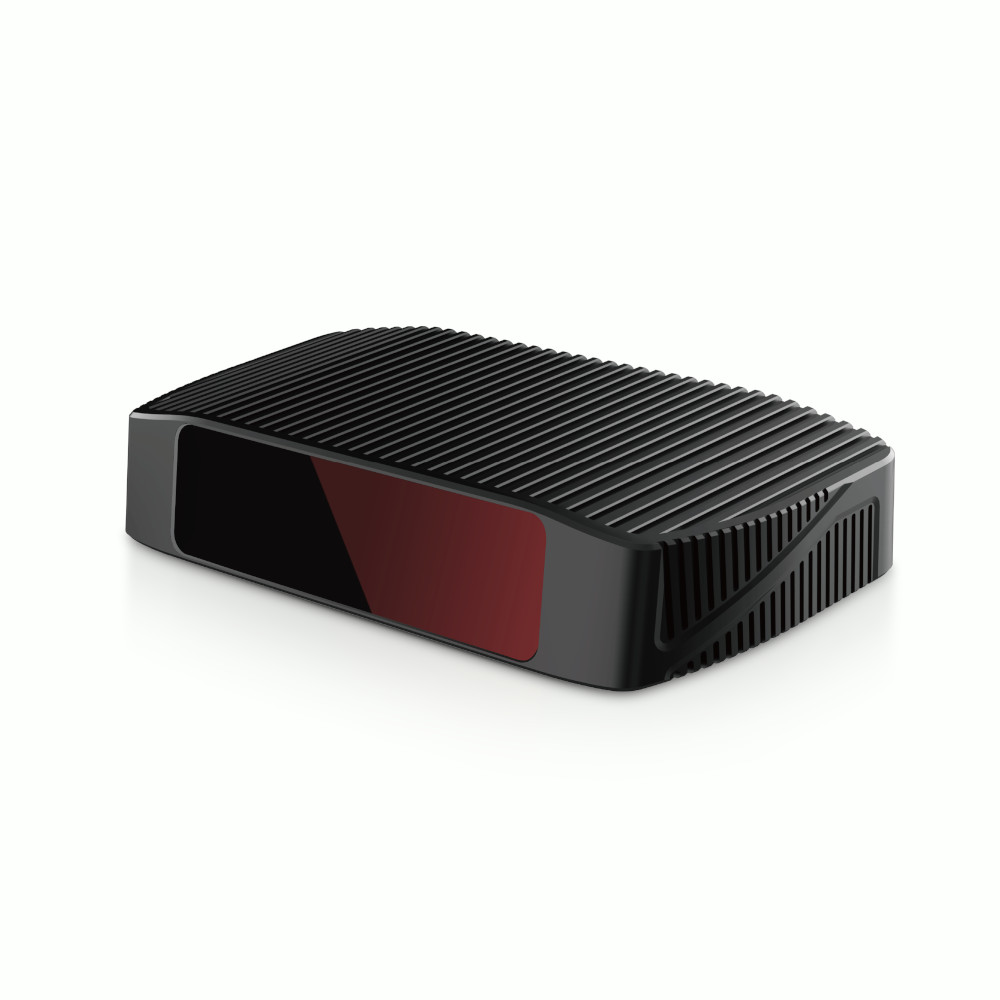
LS Lidar Terminator 1 500m 1550nm Automotive 3D LiDAR
Get the best price for your setup
Contact our experts for the best possible price and configuration.
- Fast response
- Expert configuration advice
- No overpaying for features you do not need
The LS Lidar Terminator 1 is a long-range 1550 nm hybrid solid-state LiDAR developed for autonomous vehicles, advanced perception systems and high-speed object detection. It combines a 120° × 25° field of view with 250 m detection at 10% reflectivity and a maximum range of up to 500 m. With ±2 cm range accuracy, up to 1.85 million points per second and configurable Region of Interest scanning, Terminator 1 provides dense 3D point clouds for detecting vehicles, pedestrians and small objects at long distances.
LS Lidar Terminator 1 Highlights
| LiDAR type | 1550 nm hybrid solid-state 3D LiDAR |
|---|---|
| Detection range | 250 m at 10% reflectivity, up to 500 m maximum |
| Range accuracy | ±2 cm |
| Field of view | 120° horizontal × 25° vertical |
| Point rate | Approx. 1.65–1.85 million points/sec depending on configuration |
| Frame rate | 10 Hz |
| Protection | IP6K9K |
Valued customers:










Find RTK Networks
Search NTRIP providers and connect to reliable RTK correction services.
Description
Long Range 1550 nm LiDAR for Advanced 3D Perception
The LS Lidar Terminator 1 is an image-grade hybrid solid-state LiDAR designed for autonomous vehicles, ADAS development and other perception systems that need to identify objects at long range. Using a 1550 nm fiber laser, the sensor combines extended detection distance with dense point-cloud output and configurable scanning patterns to provide detailed information about vehicles, pedestrians, road infrastructure and smaller objects ahead of the platform.
Its combination of 250 m detection at 10% reflectivity, up to 500 m maximum range and a wide 120° × 25° field of view makes Terminator 1 particularly suitable for forward-facing perception where early object detection is important.
250 Metres at 10 Percent Reflectivity
Terminator 1 is specified for approximately 250 metres at 10% target reflectivity, with maximum detection extending to approximately 500 metres under suitable conditions. The 10% reflectivity figure is particularly relevant for automotive and machine-perception applications because dark vehicles, tyres, clothing and road materials reflect less laser energy than brighter objects.
For autonomous driving and high-speed vehicle applications, long-range detection gives the perception system more distance over which to identify an object and determine its position. Actual range will still depend on target reflectivity, weather, installation angle and environmental conditions.
1550 nm Fiber Laser Technology
The Terminator 1 uses a 1550 nm Class 1 fiber laser. LS Lidar developed this architecture to support long-range measurement, fine beam control and strong resistance to optical interference while maintaining the required eye-safety classification under specified operating conditions.
The 1550 nm wavelength is particularly useful for long-range automotive LiDAR because it allows the sensor to work with higher optical power than many conventional near-infrared systems while remaining within Class 1 safety limits when properly engineered.
High Density Point Cloud Output
Depending on the selected configuration, Terminator 1 generates approximately 1.65 to 1.85 million measurement points per second. This dense point cloud allows perception software to represent object contours and road geometry in considerably more detail than a simple distance sensor or low-channel LiDAR.
For real-world autonomous driving, the additional measurement density helps the system detect smaller targets and maintain a clearer representation of distant vehicles, pedestrians, roadside structures and other features.
120 Degree by 25 Degree Field of View
The sensor provides a 120° horizontal field of view combined with approximately 25° vertical coverage. This creates a broad forward-facing measurement area suitable for mounting in the front or roofline of a vehicle.
The wide horizontal angle provides good coverage across several lanes and surrounding road edges, while the vertical field of view captures objects at different heights and road gradients. This makes the sensor suitable for both highway and urban perception systems.
Configurable Region of Interest Scanning
A major feature of Terminator 1 is its support for different Region of Interest scanning patterns. LS Lidar describes uniform scanning, fixed ROI scanning and non-uniform or dynamic ROI options depending on the configuration.
ROI scanning allows additional measurement density to be concentrated in the parts of the field of view that matter most. For example, a perception system can place higher resolution around the road ahead or another long-distance target area rather than distributing all points evenly across the entire scene.
Better Small Object Detection at Distance
Fine angular resolution and dense ROI scanning help Terminator 1 place more laser measurements on relatively small distant objects. This is valuable for detecting pedestrians, road debris and other targets that may occupy only a small portion of the sensor’s field of view at long range.
LS Lidar specifically highlights pedestrian and dark-vehicle detection at approximately 250 m as a key use case. For autonomous-driving developers, the practical benefit is a longer observation distance for objects that can be difficult to detect with lower-resolution LiDAR systems.
±2 cm Range Accuracy
The current Terminator 1 specification gives a range accuracy of ±2 cm. This provides consistent distance measurements for locating objects within the 3D point cloud and supporting object tracking, localisation and perception algorithms.
Final system performance will also depend on sensor calibration, vehicle movement, software processing and any camera, radar, GNSS or IMU data fused with the LiDAR measurements.
10 Hz Real Time Environmental Updates
The sensor operates at a 10 Hz frame rate, refreshing the complete point-cloud scene ten times per second. This is designed for real-time vehicle perception rather than static surveying.
At vehicle speeds, a consistent 10 Hz LiDAR feed provides perception software with regularly updated information about moving vehicles, pedestrians and changes in the road environment while keeping the point density high.
Ultra Thin Vehicle Integration
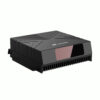
Terminator 1 uses an ultra-thin housing measuring approximately 231 × 132 × 46 mm according to the current manufacturer page. This low-profile design makes it easier to integrate the LiDAR into vehicle bodywork, roof modules or dedicated perception housings without requiring a tall rotating sensor.
The hybrid solid-state architecture is intended for integrated vehicle installations where dimensions, aerodynamics and appearance are important alongside measurement performance.
Automotive and Industrial Ethernet
The LS-S3 platform supports Automotive Ethernet and Industrial Ethernet configurations. This allows the high-rate point-cloud stream to be transferred to an autonomous-driving computer, perception controller or other embedded processing platform.
The exact network interface and temperature specification depend on the supplied configuration, so engineers should match the selected Terminator 1 variant to the vehicle network and processing architecture before integration.
Low Power for a Long Range LiDAR
The LS-S3 platform is specified with power consumption of 25 W or less and an input voltage range of approximately 9–36 VDC. This provides flexibility when integrating the sensor into vehicle electrical systems and other mobile platforms.
Keeping power consumption relatively low is important because modern autonomous vehicles may operate several LiDAR sensors, cameras, radars and high-performance computers at the same time.
Designed for Demanding Vehicle Environments
Terminator 1 carries an IP6K9K environmental protection rating. The LS-S3 technical sheet also specifies resistance to vibration and mechanical shock for use in vehicle applications.
Operating temperature depends on interface configuration. The technical sheet lists approximately -40°C to +85°C for Automotive Ethernet versions and approximately -20°C to +65°C for Industrial Ethernet versions. This distinction is important when selecting a variant for automotive or industrial development.
Typical Terminator 1 Applications
- Autonomous vehicles and Level 3+ driving development
- ADAS perception and validation systems
- Highway and urban forward object detection
- Pedestrian and dark-vehicle detection
- Robotaxi and autonomous shuttle platforms
- Autonomous truck and heavy-vehicle perception
- Multi-sensor systems combining LiDAR cameras radar GNSS and IMU
LiDAR for Sensor Fusion
Terminator 1 is designed to work as part of a complete perception system rather than as a standalone navigation device. Its 3D measurements can be combined with cameras, radar, GNSS and IMU sensors to create a more complete understanding of the vehicle environment.
LiDAR provides accurate 3D distance and geometry, cameras provide colour and visual information, radar performs well for object speed and certain weather conditions, while GNSS and IMU sensors provide vehicle position and movement. Combining these data sources allows perception software to use the strengths of each technology.
Choosing the Correct Terminator 1 Configuration
The Terminator 1 platform is available in several LS-S3 configurations with different channel counts, angular resolutions and ROI patterns. The exact choice depends on the required point density, target region and vehicle integration requirements.
For applications that need more detail in a specific long-range area, an ROI-focused configuration can provide higher measurement density where it is most useful. Projects requiring more uniform environmental coverage may be better suited to a configuration that distributes points more evenly across the field of view.
Buying the LS Lidar Terminator 1 from Global GPS Systems
Global GPS Systems supplies professional LiDAR, GNSS and positioning equipment for autonomous systems, mapping, robotics and industrial applications. Our team can help determine which Terminator 1 configuration best matches the required detection range, point density, interface and Region of Interest setup.
For projects combining LiDAR with GNSS, IMU, cameras or other perception sensors, Global GPS Systems can also help evaluate the wider system requirements so the selected hardware fits the intended platform and integration workflow.
Datasheets & Manuals
Specifications
LSLiDAR Terminator 1 LS-S3 Series 1550 nm Hybrid Solid-State LiDAR Specifications
Product Overview
| Product name | LSLiDAR Terminator 1 |
|---|---|
| Manufacturer series | LS-S3 Series |
| Product type | Image-grade automotive-grade hybrid solid-state 3D LiDAR |
| Measurement principle | Time of Flight (ToF) |
| Laser technology | LSLiDAR self-developed 1550 nm fiber laser |
| Primary purpose | Long-range, high-resolution 3D environmental perception for autonomous-driving and advanced perception systems |
| Seller-listed models | LS144S3-A, LS144S3-B, LS180S3-A, LS180S3-B and LS160S3-T |
| Horizontal field of view | 120° |
| Frame rate | 10 FPS / 10 Hz |
| Range accuracy | ±2 cm |
| Ingress protection | IP6K9K |
| Primary applications | Autonomous vehicles, ADAS, Level 3 and higher automated-driving development, intelligent transportation, robotaxis, autonomous shuttles, sensor fusion and high-resolution long-range perception |
Current Terminator 1 Key Specifications
| Laser wavelength | 1550 nm; model manuals specify 1550 ±25 nm |
|---|---|
| Laser class | Class 1 eye-safe |
| Maximum field of view | 120° × 25° (H × V) |
| Detection range at 10% reflectivity | Up to 250 m on the current seller-listed LS144S3, LS180S3 and LS160S3-T model manuals |
| Maximum manufacturer-published detection range | Up to 500 m under applicable target and operating conditions |
| Long-range pedestrian / black-vehicle detection | Up to 250 m in manufacturer-described testing |
| Range accuracy | ±2 cm |
| Point generation rate | Approximately 1.65–1.85 million points/second across Terminator 1 / LS-S3 configurations |
| Frame rate | 10 Hz |
| Power consumption | ≤25 W |
| Ingress protection | IP6K9K |
| Current product-page dimensions | Approximately 231 × 132 × 46 mm |
| Model-manual dimensions | 229 × 132 × 46 mm for the reviewed LS144S3, LS180S3 and LS160S3-T hardware manuals |
Seller-Listed Model Comparison
| Model | Channels / Beams | Vertical FOV | Angular Resolution | Point Rate |
|---|---|---|---|---|
| LS144S3-A | 144 channels per frame | 23° | 0.103° H × 0.143° V | 1,650,000 pts/s |
| LS144S3-B | 144 channels per frame | 24° | 0.103° H × 0.2° V non-ROI; 0.103° H × 0.091° V in 4° ROI | 1,650,000 pts/s |
| LS180S3-A | 180 channels per frame / 1,800 beams per second | 22.5° | 0.129° H × 0.11° V | 1,650,000 pts/s |
| LS180S3-B | 180 channels per frame / 1,800 beams per second | 25° | 0.13° H × 0.1° V at ROI | 1,650,000 pts/s |
| LS160S3-T | 160 or 144 beams depending on scanning mode | 8°, 25° or 24° depending on mode | 0.10368° H with mode-dependent vertical resolution | Not separately specified in the reviewed LS160S3-T model specification table |
LS144S3-A / LS144S3-B Specifications
| Specification | LS144S3-A | LS144S3-B |
|---|---|---|
| Detection method | ToF | ToF |
| Laser wavelength | 1550 ±25 nm | 1550 ±25 nm |
| Laser class | Class 1 | Class 1 |
| Detection range | 1.5–250 m at 10% reflectivity | 1.5–250 m at 10% reflectivity |
| Range accuracy | ±2 cm | ±2 cm |
| Channels per frame | 144 | 144 |
| Horizontal FOV | 120° | 120° |
| Vertical FOV | 23° | 24° |
| Horizontal angular resolution | 0.103° | 0.103° |
| Vertical angular resolution | 0.143° | 0.2° non-ROI; 0.091° within 4° ROI |
| Point generation rate | 1,650,000 pts/s | 1,650,000 pts/s |
| Frame rate | 10 FPS | 10 FPS |
LS180S3-A / LS180S3-B Specifications
| Specification | LS180S3-A | LS180S3-B |
|---|---|---|
| Detection method | ToF | ToF |
| Laser wavelength | 1550 ±25 nm | 1550 ±25 nm |
| Laser class | Class 1 | Class 1 |
| Detection range | 1.5–250 m at 10% reflectivity | 1.5–250 m at 10% reflectivity |
| Range accuracy | ±2 cm | ±2 cm |
| Channels per frame | 180 | 180 |
| Laser beams per second | 1,800 | 1,800 |
| Horizontal FOV | 120° | 120° |
| Vertical FOV | 22.5° | 25° |
| Angular resolution | 0.129° H × 0.11° V | 0.13° H × 0.1° V at ROI |
| Point generation rate | 1,650,000 pts/s | 1,650,000 pts/s |
| Frame rate | 10 FPS | 10 FPS |
LS160S3-T Scanning Modes
| Specification | Mode 1 | Mode 2 | Mode 3 |
|---|---|---|---|
| Laser beams | 160 | 160 | 144 |
| Horizontal FOV | 120° | 120° | 120° |
| Vertical FOV | 8° | 25° with 4° ROI | 24° with 4° ROI |
| Horizontal angular resolution | 0.10368° | 0.10368° | 0.10368° |
| Vertical angular resolution | 0.055° | 0.055° at ROI; 0.33° outside ROI | 0.0909° at ROI; 0.2° outside ROI |
| Frame rate | 10 FPS | 10 FPS | 10 FPS |
LS160S3-T General Specifications
| Detection method | ToF |
|---|---|
| Laser wavelength | 1550 ±25 nm |
| Laser class | Class 1 eye-safe |
| Detection range | 1.5–250 m at 10% reflectivity in the automotive-Ethernet manual; industrial-Ethernet manual specifies 250 m at 10% |
| Range accuracy | ±2 cm |
| Horizontal field of view | 120° |
| Frame rate | 10 FPS |
| Clock sources | GPS, PTP and gPTP |
| Industrial-Ethernet version | Available |
| Automotive-Ethernet version | Available |
| Power consumption | ≤25 W |
| Ingress protection | IP6K9K |
ROI Scanning Functions
| ROI support | Yes |
|---|---|
| Uniform scanning | Supported on applicable configurations |
| Fixed ROI scanning | Supported |
| Non-uniform ROI scanning | Supported on applicable Terminator 1 configurations |
| Dynamic / customizable ROI | Manufacturer describes customizable vertical ROI placement for matching the required perception area |
| ROI purpose | Concentrates higher vertical point density on critical areas to improve long-distance detection of small objects |
| LS144S3-B ROI | 4° ROI with 0.091° vertical resolution |
| LS180S3-B ROI | 0.1° vertical resolution within the ROI |
| LS160S3-T ROI | 4° ROI in Modes 2 and 3 |
Long-Range Perception Features
| Maximum manufacturer-published range | 500 m |
|---|---|
| 10% reflectivity range options | Manufacturer LS-S3 literature documents 180 m, 210 m and 250 m configurations depending on hardware configuration |
| Current seller-listed model manuals | LS144S3, LS180S3 and LS160S3-T manuals reviewed specify up to 250 m at 10% reflectivity |
| Pedestrian detection | Manufacturer describes detection up to approximately 250 m under applicable test conditions |
| Black-vehicle detection | Manufacturer describes detection up to approximately 250 m under applicable test conditions |
| Small-object perception | High-density ROI scanning is designed to improve long-range detection of small objects |
| Low-reflectivity target performance | 1550 nm fiber-laser architecture is designed for long-range detection of dark and low-reflectivity targets |
Target and Environmental Perception
| People | Supported target-detection application |
|---|---|
| Vehicles | Supported target-detection application |
| Animals | Supported target-detection application |
| Tires | Documented target type for LS160S3-T |
| Falling objects / road debris | Supported target-detection application |
| 3D profile output | Supported |
| Distance output | Supported |
| Intensity data | Included in applicable point-cloud protocol output |
| Strong-light resistance | 1550 nm fiber-laser architecture is designed for high resistance to optical interference |
| Multi-LiDAR interference mitigation | Anti-interference functionality is a documented LS-S3 design feature |
Communication Interfaces
| Configuration | Interface | Typical Physical Connection |
|---|---|---|
| Industrial Ethernet | 1000BASE-T Gigabit Ethernet | M12 X-coded 8-pin LiDAR connector to shielded RJ45 Cat.6 |
| Automotive Ethernet | 1000BASE-T1 on applicable LS-S3 configurations | Automotive Ethernet interface through the model-specific combined harness |
| GPS synchronization | PPS plus serial GNSS time / position data | Model-specific power / synchronization harness |
Industrial Ethernet Connectors
| Ethernet sensor connector | M12 X-coded 8-pin |
|---|---|
| Ethernet standard | 1000BASE-T |
| Host-side Ethernet connector | Shielded RJ45 8P8C Cat.6 on the documented adapter cable |
| Power / GPS sensor connector | M12 A-coded 12-pin |
| Power conductors | Multiple VCC and power-ground connections |
| GPS PPS input | Dedicated |
| GPS serial input | Dedicated |
| Protective earth / shield | Provided through the cable shield / connector shell |
Automotive Ethernet Integration
| Automotive Ethernet | 1000BASE-T1 documented for applicable LS160S3-T and LS-S3 automotive configurations |
|---|---|
| Power supply | Integrated through the model-specific wiring harness |
| GPS synchronization | PPS and serial GPS data supported |
| Wake input | Documented on the LS160S3-T automotive wiring interface |
| Development interface box | Documented for applicable automotive-Ethernet versions to simplify bench testing and host connection |
| Interface-box connections | Automotive Ethernet, automotive power, DC input, indicator, RJ45 Ethernet and GPS connection |
Network Configuration
| Default LiDAR IP address | 192.168.1.200 |
|---|---|
| Default host / destination IP | 192.168.1.102 |
| Default LiDAR device-packet port | 2368 |
| Default LiDAR data-packet port | 2369 |
| Default computer device-packet port | 2369 |
| Default computer data-packet port | 2368 |
| Typical subnet mask | 255.255.255.0 |
| IP configuration | Configurable through the documented device-configuration protocol |
| Multicast support | Supported subject to the documented network configuration requirements |
Communication Protocol
| Protocol | Function | Documented Packet Length |
|---|---|---|
| MSOP | Main Stream Output Protocol for point-cloud measurements and timestamps | 1248 bytes |
| DIFOP | Device Information Output Protocol for configuration, operating status and diagnostics | 1248-byte network packet structure documented |
| UCWP | User Configuration Write Protocol | Configuration packet |
Point Cloud Protocol Data
| Transport | UDP/IP |
|---|---|
| Byte order | Big-endian in the reviewed LS-S3 industrial protocol |
| Distance | Included |
| Horizontal angle | Included |
| Vertical beam / angle information | Used to calculate the 3D position of each point |
| Intensity | Included |
| Timestamp | Included |
| UTC / Unix time | Included in applicable synchronized packet output |
| Cartesian output | X, Y and Z coordinates can be calculated from range and angular information |
| Echo mode | The reviewed LS144S3 and LS160S3-T industrial manuals document single-echo operation measuring the most recent echo value |
| LS144S3 points per MSOP packet | 149 measured points |
| LS144S3 point-data payload | 1192 bytes plus 14 bytes of additional timing / model information |
Time Synchronization
| GPS synchronization | Supported |
|---|---|
| PTP | Supported |
| gPTP | Supported |
| Internal timing | Used when an external clock source is unavailable |
| GNSS NMEA message | $GPRMC |
| GNSS serial baud rate | 9600 baud |
| GNSS serial format | 8 data bits, no parity, 1 stop bit |
| GPS serial electrical interfaces | TTL and RS-232 variants documented depending on configuration |
| RS-232 PPS level | 3.0–15.0 V in the LS144S3 industrial manual |
| Minimum PPS high pulse width | Greater than 1 ms in the LS144S3 industrial synchronization specification |
| PTP precision class | Sub-microsecond synchronization is documented |
| PTP transport | MAC or IPv4 on applicable LS-S3 implementations |
| GNSS / INS integration | Point-cloud timestamps can be matched with external pitch, roll, yaw, latitude, longitude and height data |
Electrical Specifications
| Input voltage range | 9–36 VDC |
|---|---|
| Recommended automotive supply | 19 VDC or 24 VDC is recommended in the LS160S3-T automotive manual when an external DC supply is used |
| Extreme voltage note | 9 V and 36 V are documented as short-term extreme supply limits rather than preferred continuous operating voltages |
| Power consumption | ≤25 W |
| Power interface | Model- and communication-interface-dependent |
Environmental Specifications
| Specification | Industrial Ethernet Configuration | Automotive Ethernet Configuration |
|---|---|---|
| Ingress protection | IP6K9K | IP6K9K |
| Operating temperature | -20°C to +65°C in the reviewed LS144S3, LS180S3 and LS160S3-T industrial manuals | -40°C to +85°C in the reviewed LS160S3-T automotive manual and LS-S3 automotive documentation |
| Storage temperature | -40°C to +85°C | Up to -40°C to +105°C in applicable automotive LS-S3 documentation |
| Vibration | 5–2000 Hz, 3 g RMS | 5–2000 Hz, 3 g RMS |
| Shock | 500 m/s² for 11 ms | 500 m/s² for 11 ms |
| Approximate shock acceleration | Approximately 51 g | Approximately 51 g |
All-Weather Perception
| Rain operation | Designed for automotive perception in adverse weather within specified environmental limits |
|---|---|
| Fog operation | Designed for challenging perception conditions |
| Snow operation | Designed for challenging perception conditions |
| Day / night operation | Active 1550 nm laser ranging does not depend on visible ambient illumination |
| High-pressure water protection | IP6K9K enclosure rating |
| Dust protection | Protected according to the specified IP6K9K enclosure rating |
Physical Specifications
| Model-manual dimensions | 229 × 132 × 46 mm |
|---|---|
| Current Terminator 1 product-page dimensions | Approximately 231 × 132 × 46 mm |
| Housing height | 46 mm |
| Weight | ≤1.6 kg |
| Design | Ultra-thin, compact automotive integration form factor |
| Mounting location holes | 2 × Ø3 mm dowel-pin location holes documented on reviewed models |
| Mounting screws | 4 × M5 × 6 mm hexagon socket-head cap screws documented for reviewed models |
| Optical center | Defined in the manufacturer mechanical drawings for vehicle and sensor-fusion integration |
Laser Safety
| Laser classification | Class 1 |
|---|---|
| Eye-safe design | Yes, when operated according to manufacturer requirements |
| IEC laser-safety standard | IEC 60825-1:2014 |
| US laser-safety reference | 21 CFR 1040.10 and 1040.11, subject to the applicable manufacturer-listed deviations |
| Optical viewing precaution | Do not directly observe the transmitting laser using magnifying optical devices |
| Housing requirement | Do not operate the LiDAR with a damaged or unsecured housing |
| User disassembly | Not permitted by the manufacturer |
Windows Software Support
| Manufacturer software | LSLiDAR Upper Computer Platform / Windows Client |
|---|---|
| Windows architecture | 64-bit Windows |
| Live point-cloud display | Supported |
| Parameter configuration | Supported |
| LiDAR testing | Supported |
| Fault diagnosis | Supported |
| Network discovery / diagnostics | Wireshark can be used for ARP and Ethernet packet analysis |
| Windows packet-capture dependency | Npcap is documented for the current Windows client |
Host Computer Requirements
| Component | Manufacturer Requirement / Recommendation |
|---|---|
| Operating system | 64-bit Windows for the manufacturer Upper Computer Platform |
| Processor | Intel Core i5 or higher |
| Graphics card | NVIDIA GeForce GTX 750 or higher recommended for point-cloud display |
| Graphics API | OpenGL 2.0 or higher |
| Network interface | Compatible Gigabit Ethernet or automotive-Ethernet interface as required by the LiDAR configuration |
Linux and ROS Support
| Linux support | Supported |
|---|---|
| Manufacturer ROS driver | Available |
| Point-cloud visualization | RViz-compatible workflow documented |
| ROS launch configuration | LS-S3 driver launch configuration provided in applicable manufacturer service packages |
| Linux network diagnostics | ifconfig, ping and tcpdump workflows documented |
| Driver matching | Driver configuration should match the exact destination port, Ethernet interface, scanning mode and firmware revision |
Automotive and Autonomous-Driving Applications
| Application | Typical Terminator 1 Function |
|---|---|
| Autonomous driving | Primary long-range 3D perception sensor |
| Level 3+ automated driving | Manufacturer positions the LS-S3 family for advanced autonomous-driving perception |
| ADAS development | Long-range vehicle, pedestrian and obstacle detection |
| Robotaxis | Long-range environmental perception and sensor-fusion input |
| Autonomous shuttles | 3D obstacle and road-user perception |
| Small-object detection | High-density ROI enables increased sampling of small distant targets |
| Sensor fusion | Timestamped 3D data can be synchronized with GNSS, IMU, cameras, radar and other perception sensors |
Documentation and Configuration Differences
| Current Terminator 1 web specification | 120° × 25° maximum FOV, 250 m at 10% reflectivity, up to 500 m maximum, ±2 cm accuracy, 1.65–1.85 million pts/s, ≤25 W and IP6K9K |
|---|---|
| Seller-listed model manuals researched | LS144S3 User Manual V1.0.4, LS180S3 User Manual V1.0.4 and LS160S3-T User Manual V1.0.2, December 2024 revisions |
| Detection-range options | General LS-S3 manufacturer literature documents 180 m, 210 m and 250 m range configurations at 10% reflectivity; the reviewed current seller-listed model manuals specify 250 m |
| Maximum 500 m range | The current manufacturer Terminator 1 page specifies a maximum range up to 500 m; this is distinct from the 250 m rating at 10% reflectivity |
| Dimension difference | Current manufacturer / seller web material describes approximately 231 × 132 × 46 mm, while the December 2024 model manuals specify 229 × 132 × 46 mm |
| Temperature difference | Industrial-Ethernet model manuals specify -20°C to +65°C operation, while automotive-Ethernet configurations document -40°C to +85°C |
| Interface difference | Industrial Ethernet and automotive Ethernet variants use different connectors, cables and environmental specifications |
| LS160S3-T point-rate note | The reviewed LS160S3-T manuals define beam count, angular resolution and frame rate but do not provide a dedicated model-specific data-point-generating-rate value in the main specification table |
| Configuration verification | Confirm exact range option, A/B/T scanning configuration, Ethernet interface, temperature rating, cable harness and firmware revision for the supplied production unit |
Specifications and package contents may vary by configuration, region or manufacturer update. Always check the current configuration before ordering.
Additional information
| Model | LS144S3-A, LS144S3-B, LS180S3-A, LS180S3-B, LS160S3-T |
|---|
Reviews (0)
Only logged in customers who have purchased this product may leave a review.
FAQ
LS LiDAR Terminator 1 FAQ
Terminator 1 LiDAR & Applications
What is the LS LiDAR Terminator 1?
The LS LiDAR Terminator 1 is an image-grade 1550 nm hybrid solid-state 3D LiDAR designed for long-range environmental perception. It combines a wide 120° horizontal field of view, centimetre-level ranging accuracy and a high-density point cloud in an ultra-thin housing intended for integration into autonomous vehicles, intelligent machines and advanced perception systems.
Is the LS LiDAR Terminator 1 a 3D LiDAR?
Yes. Terminator 1 measures objects across both horizontal and vertical angles to create a dense three-dimensional point cloud. The point cloud provides distance and 3D profile information about vehicles, pedestrians, animals, tyres, road features, debris and other objects within the sensor's field of view.
What applications is Terminator 1 designed for?
Terminator 1 is primarily designed for autonomous driving, ADAS, robotaxis, autonomous shuttles and other applications requiring long-range high-resolution perception. It can also be integrated into advanced robotics, intelligent transportation, industrial vehicles and mobile mapping systems where its range, field of view and point density suit the application.
Why does Terminator 1 use a 1550 nm fibre laser?
The 1550 nm fibre-laser architecture is designed to provide long detection range, high-resolution small-object perception, strong resistance to ambient-light interference and Class 1 eye safety. These characteristics make it particularly suitable for long-range automotive perception where objects need to be detected early and reliably.
What Terminator 1 models and configurations are available?
The Terminator 1 belongs to LS LiDAR's LS-S3 family and is available in multiple channel and scanning configurations. The available product configurations include variants such as LS144S3, LS180S3 and LS160S3-T, with additional LS-S3 configurations available for specialised applications. Channel count, point density, ROI pattern and interface can vary between versions, so the exact specification should be matched to the intended system.
Can Terminator 1 be used for mobile mapping?
Yes. Terminator 1 can supply high-density 3D measurements for a mobile mapping system. To produce accurately georeferenced point clouds from a moving vehicle or platform, the LiDAR normally needs to be combined with suitable GNSS and inertial navigation equipment, accurate time synchronization, boresight calibration and mapping software.
Range, Accuracy & Point Cloud Performance
What is the maximum detection range of Terminator 1?
LS LiDAR specifies detection of targets with approximately 10% reflectivity at distances up to 250 metres on applicable Terminator 1 configurations, with a maximum detection capability of up to approximately 500 metres under suitable target and environmental conditions. Actual range depends on the selected model, target reflectivity, object size, weather and installation.
Can Terminator 1 detect dark vehicles and pedestrians at long range?
Yes. LS LiDAR reports testing in which Terminator 1 detected pedestrians and black vehicles at distances up to approximately 250 metres. Long-range detection is one of the main purposes of the 1550 nm sensor architecture, although practical detection performance depends on the object, environment and perception software used with the LiDAR.
How accurate is the LS LiDAR Terminator 1?
The Terminator 1 has a specified range accuracy of approximately ±2 cm under suitable operating conditions. This refers to the LiDAR's distance measurement itself. Overall positioning or mapping accuracy also depends on calibration, synchronization, platform motion and any GNSS or inertial navigation system used with the sensor.
What is the field of view of Terminator 1?
Terminator 1 provides a maximum horizontal field of view of 120° and a vertical field of view of approximately 25°, typically extending from -12.5° to +12.5° on applicable configurations. This provides broad forward-looking coverage for vehicle and machine perception.
How many points per second does Terminator 1 generate?
Depending on the selected LS-S3 configuration and scanning pattern, Terminator 1 can generate approximately 1.65 to 1.85 million measurement points per second. The high point density is designed to improve object contours and the detection of relatively small targets at longer distances.
What is the frame rate of Terminator 1?
Terminator 1 operates at a specified frame rate of 10 Hz. This means the sensor repeatedly refreshes its 3D perception data ten times per second, supporting real-time detection of changing road and environmental conditions.
What are the ROI scanning modes on Terminator 1?
ROI stands for Region of Interest. Terminator 1 supports scanning patterns designed to concentrate higher point-cloud resolution in selected vertical regions where additional detail is required. Available LS-S3 configurations include uniform scanning, fixed ROI and customised or non-uniform ROI approaches, depending on the model and firmware configuration.
Laser, Interfaces & System Integration
How does Terminator 1 measure distance?
Terminator 1 uses Time of Flight technology. The sensor transmits laser pulses and measures how long the reflected light takes to return from an object. The measured travel time is converted into distance and combined with the known scanning direction to create three-dimensional point-cloud coordinates.
Is the LS LiDAR Terminator 1 eye-safe?
Yes. Terminator 1 uses a 1550 nm laser and is specified as a Class 1 laser product. Class 1 classification is intended for normal operation under the applicable laser-safety requirements. The sensor should still be installed and used according to the manufacturer's safety instructions and should not be disassembled or optically modified.
What communication interfaces does Terminator 1 support?
The LS-S3 Terminator 1 family supports high-speed Ethernet communication, with Automotive Ethernet and Industrial Ethernet configurations available. The appropriate interface depends on the exact model and intended integration platform.
Can Terminator 1 be integrated with cameras, radar, GNSS and an IMU?
Yes. Terminator 1 can be used as part of a multi-sensor perception or mapping system containing cameras, radar, GNSS and an IMU or INS. Accurate synchronization and calibration between the sensors are important when combining their measurements for autonomous navigation, positioning or mobile mapping.
Does Terminator 1 support time synchronization?
LS-S3 configurations support external synchronization methods suitable for multi-sensor systems, including GPS-based timing and network timing such as PTP or gPTP on applicable versions. The exact synchronization interfaces depend on the selected Terminator 1 configuration.
Does Terminator 1 classify pedestrians and vehicles by itself?
Terminator 1 generates detailed 3D point-cloud, distance and reflection information. Identification and classification of pedestrians, vehicles, animals or other objects are normally performed by perception algorithms running on the connected vehicle or computer system using the LiDAR data as an input.
Power, Durability & Vehicle Installation
What power supply does Terminator 1 require?
The LS-S3 Terminator 1 family supports approximately 9 to 36 VDC input power on applicable configurations. Power consumption is specified at no more than approximately 25 W, making the sensor suitable for permanent integration into vehicle and machine electrical systems.
Is Terminator 1 waterproof and dustproof?
Yes. Terminator 1 has an IP6K9K environmental protection rating. This provides a high level of resistance to dust and high-pressure, high-temperature water exposure under the applicable test conditions, supporting installation on vehicles and equipment used outdoors.
Can Terminator 1 operate in rain, fog and snow?
Terminator 1 is designed for automotive perception in challenging outdoor environments, and its 1550 nm architecture, anti-interference design and IP6K9K enclosure are intended to support operation in conditions such as rain, fog and snow. As with any optical sensor, severe precipitation, dense fog, contamination or other visibility restrictions can still reduce effective detection performance.
What temperature range can Terminator 1 operate in?
The operating temperature specification depends on the communication and hardware configuration. LS-S3 documentation specifies ranges as wide as approximately -40°C to +85°C for applicable Automotive Ethernet versions, while some Industrial Ethernet configurations have a narrower specified range. The exact environmental specification should therefore be confirmed for the selected model.
Is Terminator 1 resistant to shock and vibration?
Yes. LS-S3 documentation specifies vibration testing from approximately 5 Hz to 2000 Hz at 3G RMS and shock testing of approximately 500 m/s² for 11 ms. These specifications are intended to support permanent use on vehicles and other moving platforms.
How large and heavy is the LS LiDAR Terminator 1?
Terminator 1 has an ultra-thin housing measuring approximately 229 to 231 mm long, 132 mm wide and 46 mm high depending on the documented configuration. LS-S3 documentation specifies a weight of up to approximately 1.6 kg. The low-profile design allows the sensor to be integrated into locations such as a vehicle roofline or front bodywork.
 GPS & GNSS
 Total Stations
 Data collectors
 Software
 Correction services
 Machine control
 External radio
 Marine
 Accessories
Reviews
There are no reviews yet