

 GPS & GNSS
 Lidar scanning
 Total Station
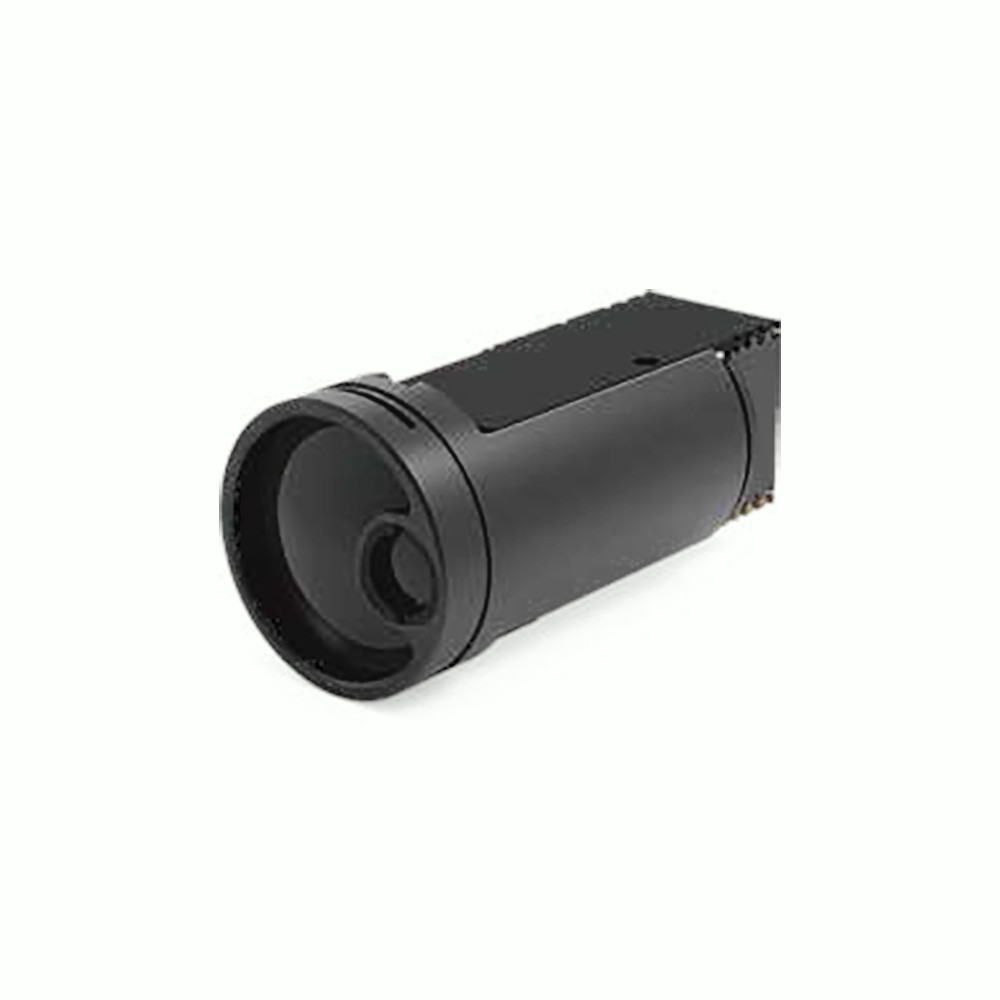
LS Lidar LS74A Long Range 1500m Laser Distance Sensor
Get the best price for your setup
Contact our experts for the best possible price and configuration.
- Fast response
- Expert configuration advice
- No overpaying for features you do not need
The LS Lidar LS74A is a compact long-range single-point laser distance sensor designed for fixed-angle distance measurement. Using 905 nm Time of Flight (TOF) technology, it provides measurements with ±1 m ranging accuracy and a range of up to 1500 m depending on target reflectivity. Its small, lightweight design and TTL serial interface make it suitable for integration into UAVs, optoelectronic systems, rangefinders, thermal imaging systems and other equipment requiring reliable long-distance measurements.
LS Lidar LS74A Highlights
| Sensor type | Single-point TOF laser distance sensor |
|---|---|
| Maximum range | Up to 1500 m depending on target reflectivity |
| Ranging accuracy | ±1 m (1σ) |
| Laser wavelength | 905 nm |
| Measurement frequency | 1–10 Hz adjustable |
| Communication | Serial Port TTL |
| Power consumption | ≤1.5 W |
| Operating temperature | -20°C to +65°C |
Valued customers:










Find RTK Networks
Search NTRIP providers and connect to reliable RTK correction services.
Description
Long-Range Distance Measurement in a Compact Sensor
The LS Lidar LS74A is a long-range single-point laser distance sensor developed for applications where equipment needs to determine the distance to an object along a fixed measurement direction. Instead of producing a 2D or 3D point cloud like a scanning LiDAR, the LS74A concentrates on one task: providing continuous distance measurements to a target in a compact and lightweight module.
Its combination of long measuring range, low power consumption and small dimensions makes the LS74A particularly useful for integration into UAVs, optoelectronic equipment, rangefinders, monitoring systems and custom measurement platforms. For engineers and system integrators, this provides a practical way to add long-range laser distance measurement without installing a complete scanning LiDAR system.
905 nm Time of Flight Distance Measurement
The LS74A uses Time of Flight (TOF) technology. The sensor emits a laser pulse towards the target and measures the time required for the reflected signal to return. Because the speed of light is known, this travel time can be converted into the distance between the sensor and the object.
In practical use, this allows equipment to monitor the distance to terrain, structures, obstacles or other targets without physical contact. The sensor operates at a 905 nm wavelength and provides a ranging accuracy of ±1 m (1σ). Measurement output can be configured from 1 to 10 Hz, allowing the update rate to be adapted to the application.
Long Measuring Range
The LS74A is designed specifically for long-distance measurements. Depending on target reflectivity and operating conditions, the sensor can measure over distances extending to approximately 1500 metres. As with any laser distance sensor, achievable range depends on factors including the reflectivity of the target, atmospheric conditions, installation and the measurement environment.
This long-range capability makes the sensor useful where conventional short-range proximity sensors cannot provide sufficient reach. Potential applications include terrain and structure distance measurement, UAV obstacle detection, optoelectronic systems and remote monitoring equipment.
Designed for UAV and Equipment Integration
At only a few centimetres in size and roughly 20 grams in weight depending on product revision, the LS74A can be integrated into systems where space and payload are limited. This is particularly relevant for drones and other airborne platforms, where every additional component affects payload capacity and flight performance.
The sensor is also suitable for fixed equipment and custom engineering projects. Applications can include electro-optical pods, laser rangefinders, infrared thermal imaging systems, scopes and other optical or monitoring equipment that needs an independent distance measurement input.
TTL Serial Communication
The LS74A communicates through a TTL serial interface. This enables the sensor to be connected to an external controller or embedded system for real-time measurement data and device control. The communication protocol provides access to ranging information, device information and operating modes, making the sensor suitable for OEM integration and custom hardware development.
Its adjustable 1–10 Hz output frequency means integrators can choose an update rate appropriate for the application rather than processing more measurements than the system requires.
Low Power Requirements
With power consumption of approximately 1.5 W or less, the LS74A is suitable for battery-powered and mobile platforms. Low power consumption is especially valuable on UAVs, portable measurement equipment and remotely deployed systems where available electrical power is limited.
The sensor is designed to operate across temperatures from approximately -20°C to +65°C, allowing integration into equipment intended for a wide variety of outdoor and industrial environments. The final installation should still provide appropriate mechanical and environmental protection for the intended working conditions.
Typical LS74A Applications
- UAV and aircraft distance or obstacle measurement
- Optoelectronic and electro-optical systems
- Laser rangefinder integration
- Infrared and thermal imaging equipment
- Terrain and structure distance measurement
- Environmental and remote monitoring systems
- Custom OEM measurement equipment
Single-Point LiDAR or Scanning LiDAR?
The LS74A should not be confused with a 3D laser scanner. A scanning LiDAR measures many points across an area to create profiles or point clouds. The LS74A measures distance along a single fixed direction. This makes it a more focused solution when an application needs to know how far away a particular surface or object is rather than capture its complete geometry.
For UAV developers, engineers and equipment manufacturers, that distinction can simplify both hardware and data processing. When only distance information is required, a compact single-point sensor can avoid the additional size, power consumption and processing requirements associated with a full scanning LiDAR system.
Buying the LS Lidar LS74A from Global GPS Systems
Global GPS Systems supplies professional positioning, surveying and LiDAR equipment to customers worldwide. Our team can help determine whether the LS74A is appropriate for your measurement application and assist with product selection and integration requirements. This is particularly useful when selecting a distance sensor for a UAV, surveying platform or custom engineering project where measurement range, target characteristics, communication and installation requirements need to be considered together.
Datasheets & Manuals
Specifications
LSLiDAR LS74A Long-Range Single-Point Distance Sensor Specifications
Product Overview
| Product name | LSLiDAR LS74A |
|---|---|
| Product type | Long-range single-point laser distance sensor |
| Measurement architecture | Single-point, fixed-angle distance measurement |
| Measurement principle | Time of Flight (TOF) |
| Primary function | Non-contact long-range distance measurement |
| Maximum published range | Up to 1200 m at 30% target reflectivity |
| Typical applications | Optoelectronic systems, electro-optical pods, rangefinders, infrared thermal imaging systems, scopes, aircraft obstacle avoidance, building surveying, topographic mapping and environmental monitoring |
| Scanning type | Fixed-angle ranging sensor; not a multi-line or 360° scanning LiDAR |
Optical and Ranging Specifications
| Laser wavelength | 905 nm |
|---|---|
| Detection method | TOF (Time of Flight) |
| Published ranging distance | 10–1200 m at 30% reflectivity according to the LS74A User Manual |
| Maximum detection range | 1200 m at 30% reflectivity |
| Ranging accuracy – User Manual | ±1 m (1σ) |
| Ranging accuracy – manufacturer product brochure | ±0.5 m (1σ) |
| Frame / ranging frequency | 1–10 Hz, adjustable |
| Echo mode | Single / dual echo according to the manufacturer product brochure |
| Measurement direction | Fixed angle |
| Distance calculation | Calculated from the round-trip travel time of the emitted laser pulse |
Laser Safety
| Laser class | Class 1 |
|---|---|
| Eye-safety classification | Class 1 eye-safe product when used according to manufacturer instructions |
| Laser safety standard | IEC 60825-1:2014 |
| US laser safety standard | 21 CFR 1040.10 and 1040.11, subject to the deviations stated in applicable FDA Laser Notice documentation |
| Optical viewing precaution | The manufacturer instructs users not to view the transmitting laser directly through magnifying optical devices |
Electrical Specifications
| Operating voltage | 5–12 VDC |
|---|---|
| Power consumption – User Manual | ≤1.5 W |
| Power consumption – manufacturer product brochure | 2 W |
| Communication interface | TTL serial port |
| Serial baud rate | 115200 baud |
| Connector designation | XH-4P according to the LS74A User Manual |
Electrical Wiring
| Signal | Wire Color | Function |
|---|---|---|
| CONTROLS | Brown | Control signal |
| RXD | Blue | Serial receive data |
| TXD | Green | Serial transmit data |
| I/O | Yellow | Input / output signal |
| VCC | Red | Power supply |
| GND | Black | Ground |
Communication Protocol
| Protocol interface | TTL serial communication |
|---|---|
| Baud rate | 115200 |
| Real-time distance output | Supported |
| Device information output | Supported |
| Device status output | Supported |
| Work-mode configuration | Supported through the serial protocol |
| Data packet length | 56 bytes according to the documented output-frame structure |
| Packet header | 0xA5, 0x5A |
| Configuration flag | 0x01 |
| LiDAR output-data flag | 0x03 |
| Packet tail | 0xFA, 0xFB |
| Distance integer unit | Centimeters |
| Distance fractional resolution in protocol | 1/256 cm for the fractional distance byte |
| Intensity field | Included in the protocol; documented value is fixed at 0xFF / 255 |
| APD temperature output | Supported |
| High-voltage readback | Supported |
| Firmware / version information | Included in the output data structure |
Output Frequency Configuration
| Specified operating frequency | 1–10 Hz adjustable |
|---|---|
| Manufacturer display software range | 1–10 Hz |
| Protocol frequency field | The protocol definition allocates values from 1–150 Hz; the published LS74A operating specification and manufacturer display software specify 1–10 Hz operation |
Manufacturer Data Display Software
| Real-time distance display | Supported |
|---|---|
| Distance graph / curve | Supported |
| Parameter display | Supported |
| Parameter configuration | Supported for permitted settings |
| Status / prompt messages | Supported |
| Language switching | Supported |
| Distance-data saving | Supported |
| Software frequency setting | 1–10 Hz |
Physical Specifications
| Length | 47 mm |
|---|---|
| Width | 24 mm |
| Height | 24 mm |
| Overall dimensions | 24 × 24 × 47 mm |
| Weight | Approximately 20 g |
| Installation method | Mechanical mounting through the holes provided on both sides of the sensor |
| Mounting requirement | Use correctly specified fixing screws and provide adequate heat dissipation at the mounting base |
| Optical protection during installation | Manufacturer recommends powder-free clean gloves to prevent contamination or mechanical damage to the optical cover |
Environmental Specifications
| Operating temperature – User Manual | -20°C to +65°C |
|---|---|
| Operating temperature – manufacturer product brochure | -40°C to +65°C |
| Storage temperature – User Manual | -20°C to +85°C |
| Recommended storage environment | 23 ±5°C |
| Recommended storage relative humidity | 30%–70% |
| Recommended storage conditions | Ventilated and dry environment |
| Ingress protection rating | Not specified for the LS74A in the reviewed manufacturer brochure or User Manual |
| Shock / vibration rating | Not numerically specified in the reviewed User Manual; manufacturer advises avoiding strong vibration |
Installation and Integration
| Embedded-system integration | Supported through TTL serial communication and 5–12 VDC power input |
|---|---|
| Real-time host-system integration | External systems can receive ranging data, status information and device information through the documented serial protocol |
| Configuration from host system | Supported for permitted operating parameters |
| Cooling requirement | Mounting base should provide good heat dissipation |
| Optical window cleanliness | Important for maintaining ranging performance |
Maintenance
| User disassembly | Not recommended; manufacturer instructs users not to disassemble or modify the sensor without authorization |
|---|---|
| Optical cover cleaning | Clean with a dust-free cloth or dry air for light contamination |
| Stubborn contamination | Manufacturer specifies cleaning with a dustless cloth and absolute ethanol where required |
| Recommended cleaning ethanol | 99% absolute ethanol |
| Cleaning environment | Ventilated, dry and away from fire |
| Transport packaging | Manufacturer recommends using the dedicated protective packaging for long-distance transportation |
Typical Applications
| Long-range distance measurement | Supported |
|---|---|
| Optoelectronic systems | Supported application |
| Electro-optical pods | Supported application |
| Laser rangefinders | Supported application |
| Infrared thermal imaging systems | Supported application |
| Optical scopes | Supported application |
| Aircraft obstacle avoidance | Supported application |
| Drone / UAV integration | Applicable where the sensor's range, output frequency, power and interface meet the aircraft-system requirements |
| eVTOL integration | Applicable to compatible distance-measurement and obstacle-avoidance systems |
| Building surveying | Documented in the LS74A User Manual |
| Topographic mapping | Documented in the LS74A User Manual |
| Environmental detection / monitoring | Documented in the LS74A User Manual |
Published Specification Differences
| Specification | LS74A User Manual V1.0.0 | LSLiDAR Product Brochure |
|---|---|---|
| Maximum range | 1200 m at 30% reflectivity | 1200 m at 30% reflectivity |
| Minimum published range | 10 m | Not specified |
| Ranging accuracy | ±1 m (1σ) | ±0.5 m (1σ) |
| Frame frequency | 1–10 Hz adjustable | 1–10 Hz adjustable |
| Power consumption | ≤1.5 W | 2 W |
| Operating voltage | 5–12 V | 5–12 V |
| Operating temperature | -20°C to +65°C | -40°C to +65°C |
| Storage temperature | -20°C to +85°C | Not specified |
| Communication | TTL serial port | TTL serial port |
| Echo specification | Not listed in the main specification table | Single / dual echo |
| Dimensions | 24 × 24 × 47 mm | 24 × 24 × 47 mm |
| Weight | About 20 g | 20 g |
Documentation Notes
| User Manual version researched | LS74A User Manual V1.0.0 |
|---|---|
| User Manual revision date | October 25, 2024 |
| Manufacturer brochure revision researched | LSLiDAR Product Brochure EN-V2.2-24.10.23 |
| Accuracy documentation note | Manufacturer publications currently contain conflicting accuracy figures. The User Manual specifies ±1 m (1σ), while the manufacturer product brochure specifies ±0.5 m (1σ). The exact production revision should be confirmed before system integration. |
| Power documentation note | The User Manual specifies ≤1.5 W while the manufacturer brochure specifies 2 W; power-system design should allow for the current production specification supplied with the sensor. |
| Temperature documentation note | The User Manual specifies -20°C to +65°C operating temperature while the manufacturer brochure specifies -40°C to +65°C; confirm the applicable hardware revision for extreme-temperature use. |
Specifications and package contents may vary by configuration, region or manufacturer update. Always check the current configuration before ordering.
Reviews (0)
Only logged in customers who have purchased this product may leave a review.
FAQ
LS LiDAR LS74A FAQ
LS74A LiDAR Sensor & Applications
What is the LS LiDAR LS74A?
The LS LiDAR LS74A is a compact single-point laser distance sensor designed for long-range distance measurement. It uses Time of Flight technology to measure the distance between the sensor and a target at a fixed angle and provides real-time ranging data for integration into surveying, mapping, monitoring and automated measurement systems.
Is the LS74A a LiDAR scanner or a single-point distance sensor?
The LS74A is a single-point distance sensor rather than a 2D or 3D scanning LiDAR. It measures distance along a fixed laser direction and does not independently sweep its beam across an area. Applications requiring a complete 2D or 3D point cloud therefore need additional positioning or scanning hardware.
What can the LS LiDAR LS74A be used for?
The LS74A is designed for applications requiring long-range non-contact distance measurement. Manufacturer documentation lists applications including building surveying, topographic mapping, environmental detection and monitoring, as well as specialised industrial and defence-related systems.
How does the LS74A measure distance?
The LS74A uses Time of Flight, or TOF, technology. It transmits a modulated laser pulse toward a target and measures the time required for the reflected light to return to the sensor. Because the speed of light is known, the sensor can use this travel time to calculate the distance to the target.
Does the LS74A create a 3D point cloud?
Not by itself. The LS74A measures one distance along its fixed measurement direction. A complete point cloud would require the LS74A to be combined with an external scanning, positioning or motion system that records the direction and position associated with multiple distance measurements.
Can the LS74A be integrated into custom equipment?
Yes. Its compact dimensions, low weight, low power consumption and TTL serial communication interface make the LS74A suitable for integration into custom measurement systems, monitoring equipment, robotics, positioning platforms and other OEM applications that require long-range distance data.
Range, Accuracy & Laser Performance
What is the maximum measurement range of the LS LiDAR LS74A?
The LS74A has a specified ranging distance of approximately 10 to 1200 metres when measuring a target with approximately 30% reflectivity. Actual achievable range depends on factors including target reflectivity, atmospheric conditions, installation, target angle and environmental light.
What is the minimum measurement distance of the LS74A?
The manufacturer's specification lists a ranging distance starting at approximately 10 metres. The LS74A is therefore primarily intended for medium- and long-range applications rather than short-range proximity sensing.
How accurate is the LS LiDAR LS74A?
The LS74A has a specified ranging accuracy of ±1 metre at 1 sigma. It is intended for applications where long-range detection and distance measurement are more important than millimetre- or centimetre-level surveying accuracy.
Is the LS74A suitable for centimetre-accuracy land surveying?
No. The specified LS74A ranging accuracy is ±1 metre, so it should not be confused with a survey-grade total station or centimetre-level RTK GNSS receiver. It can support surveying and mapping systems where its range and measurement characteristics meet the project requirements, but it is not a centimetre-precision survey instrument by itself.
What measurement frequency does the LS74A support?
The LS74A has an adjustable specified frame frequency of 1 to 10 Hz. This means the measurement update rate can be configured to suit different monitoring and integration requirements.
What laser wavelength does the LS74A use?
The LS74A uses a 905 nm laser wavelength. This near-infrared wavelength is commonly used for Time of Flight distance measurement and LiDAR sensing.
Is the LS74A laser eye-safe?
Yes. According to the manufacturer, the LS74A is designed to comply with Class 1 laser eye-safety requirements and relevant IEC 60825-1 standards. Users should still follow the operating instructions and should not look directly into the operating laser through magnifying devices such as microscopes or optical magnifiers.
Integration, Communication & Data
What communication interface does the LS74A use?
The LS74A communicates through a serial TTL interface. This allows the sensor to be connected to an external controller, embedded computer or other compatible system for receiving real-time distance measurements, sensor status information and configuration data.
What baud rate does the LS74A use?
The LS74A communication protocol uses a baud rate of 115200 for its TTL serial connection. Integrating equipment should be configured according to the manufacturer's communication protocol and electrical requirements.
What information can be obtained from the LS74A communication protocol?
The LS74A can provide real-time ranging information together with device and status data. The documented data packet includes distance information, device configuration information, APD temperature, version information and other internal status values used by the sensor and integration software.
Does the LS74A include software for viewing distance measurements?
Yes. LS LiDAR provides data display software for the LS74A. The software can show the current measured distance in real time, display measurements as a changing graph, show configurable parameters and provide system messages.
Can LS74A measurement data be saved?
Yes. The manufacturer's data display software includes a save-data function for recording distance measurement information. Developers can also obtain ranging data directly through the TTL serial interface when integrating the LS74A into their own hardware or software.
What connector does the LS74A use?
The LS74A documentation specifies an XH-4P connector interface together with wiring for power, ground, transmit, receive, control and I/O connections. Installation and wiring should follow the manufacturer's pin definitions to prevent incorrect operation or damage.
Power, Dimensions & Installation
What power supply does the LS LiDAR LS74A require?
The LS74A supports an operating voltage of approximately 5 to 12 V. The manufacturer specifies power consumption of no more than approximately 1.5 W, making it suitable for integration into compact and power-sensitive systems.
How large is the LS74A?
The LS74A measures approximately 24 × 24 × 47 mm. Its compact form factor allows it to be incorporated into equipment where installation space is limited.
How much does the LS74A weigh?
The LS74A weighs approximately 20 grams. Its low weight makes it suitable for integration into portable equipment, robotics and other systems where sensor mass needs to be kept low.
What is the operating temperature range of the LS74A?
The specified operating temperature range is approximately -20°C to +65°C. The specified storage temperature range is approximately -20°C to +85°C. The sensor should still be installed and operated according to the environmental requirements in the manufacturer documentation.
How is the LS74A mounted?
The manufacturer specifies that the LS74A should be secured using the mounting holes on both sides of the sensor. The mounting base should hold the unit securely and provide suitable heat dissipation while keeping the optical window clean and unobstructed.
Does dirt on the LS74A optical window affect measurements?
Yes. Fingerprints, mud, dust, leaves, insects and other contamination on the optical surface can affect ranging performance. The optical window should be kept clean and handled carefully according to the manufacturer's maintenance instructions.
 GPS & GNSS
 Total Stations
 Data collectors
 Software
 Correction services
 Machine control
 External radio
 Marine
 Accessories
Reviews
There are no reviews yet