

 GPS & GNSS
 Lidar scanning
 Total Station
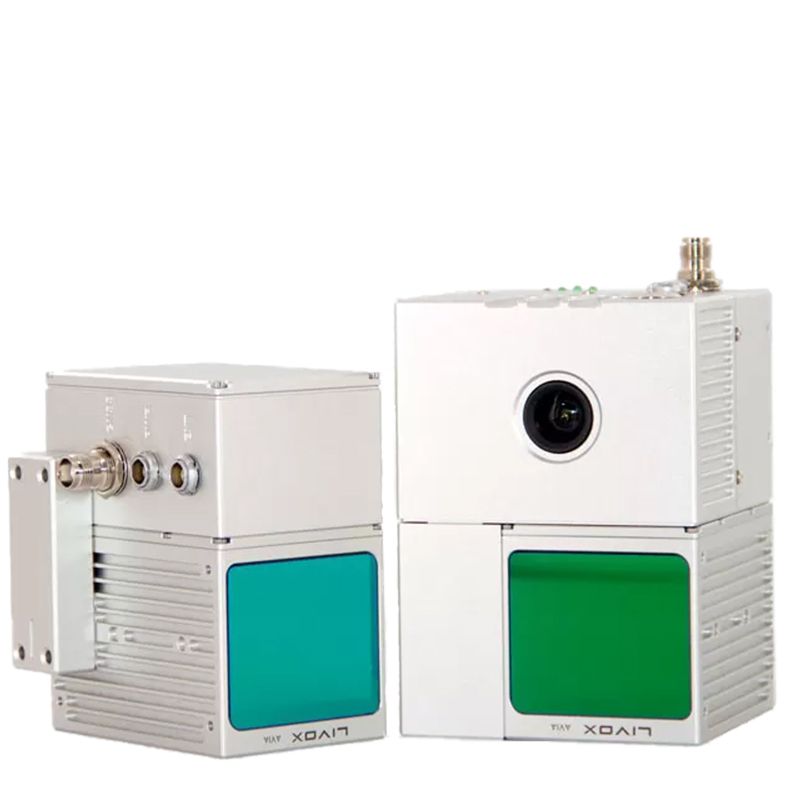
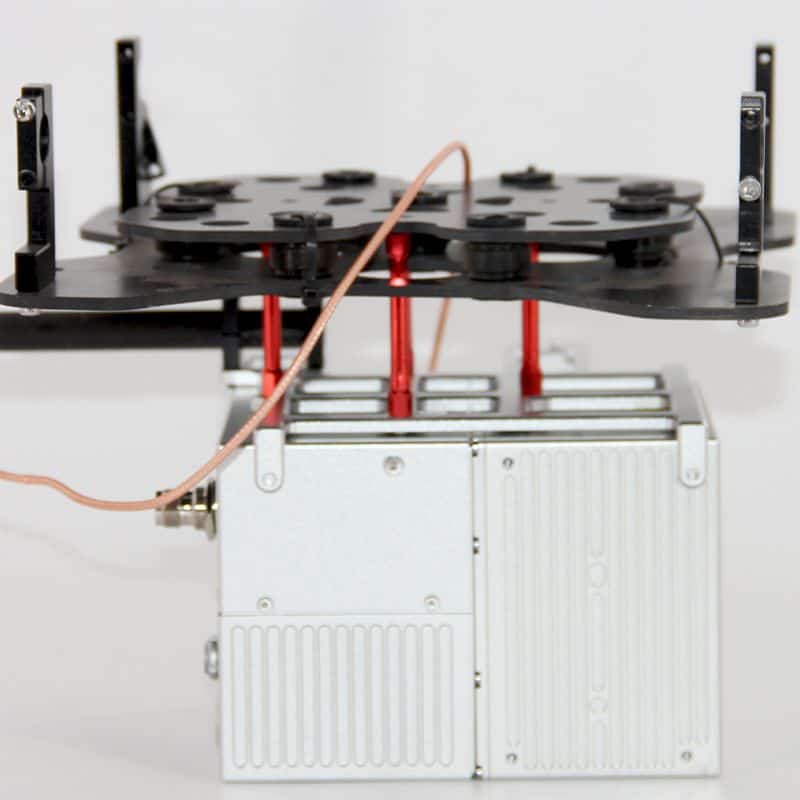
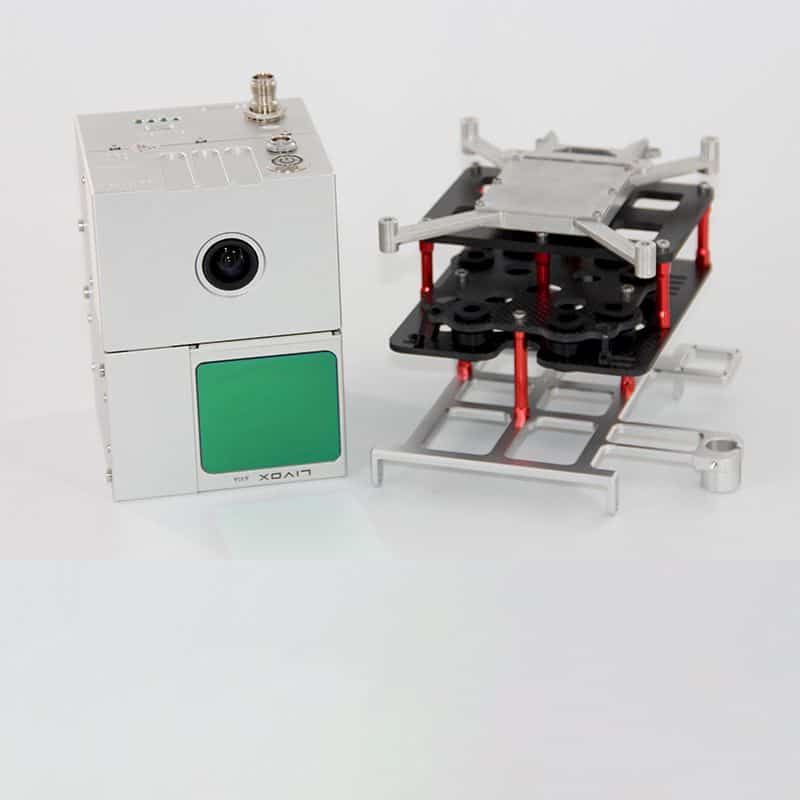
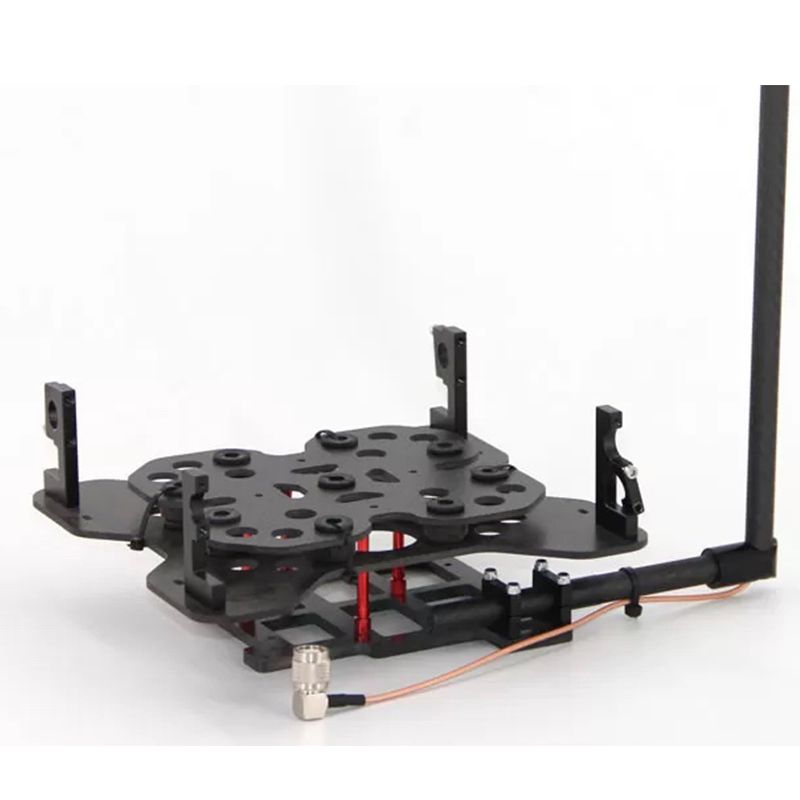
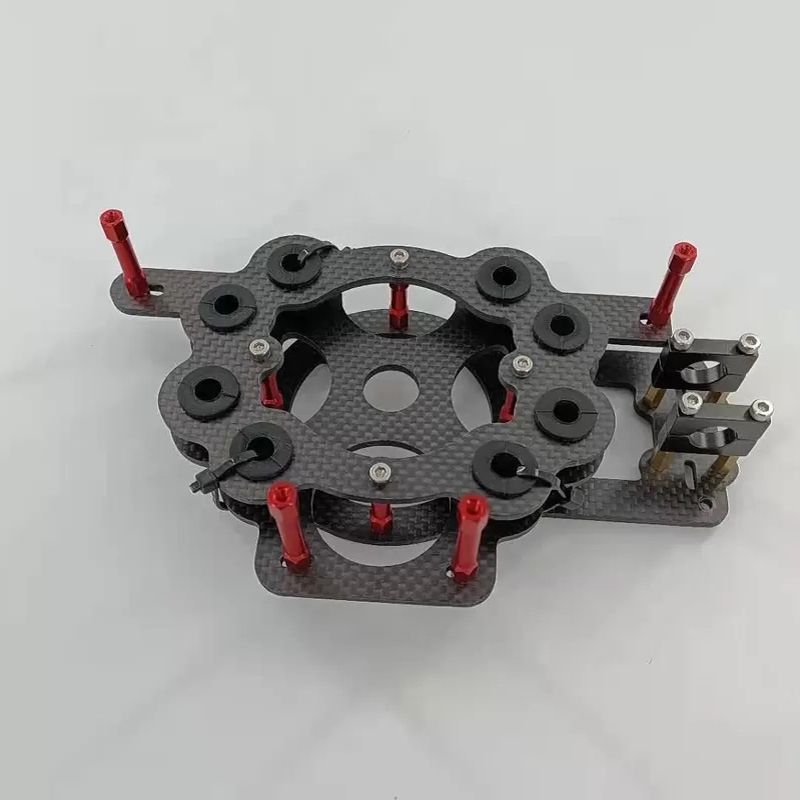
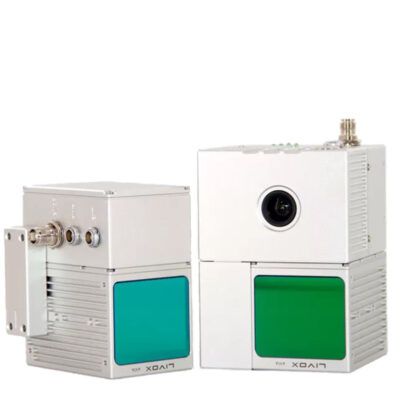
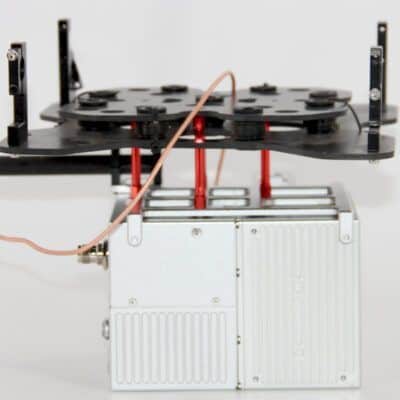
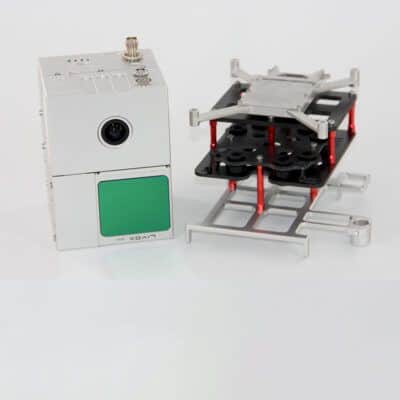
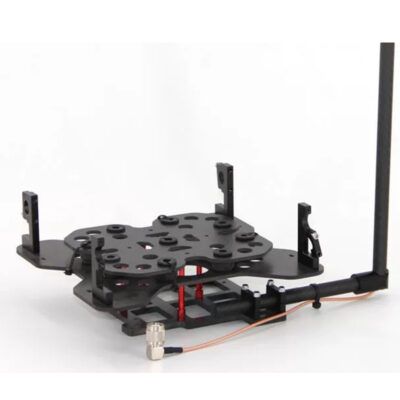
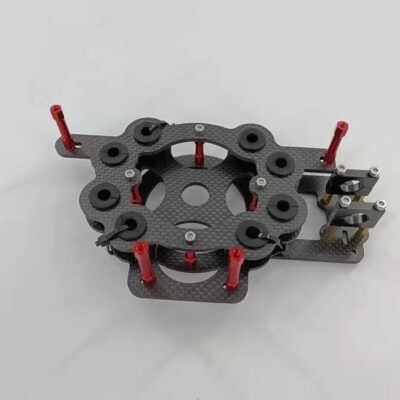
Geosun GS 100C Plus Compact UAV LiDAR Mapping System
Get the best price for your setup
Contact our experts for the best possible price and configuration.
- Fast response
- Expert configuration advice
- No overpaying for features you do not need
The Geosun GS-100C+ is a lightweight UAV LiDAR mapping system designed for surveyors, drone operators, engineers and GIS professionals who need detailed 3D data without carrying a heavy payload. It combines a Livox Avia laser scanner, GNSS/INS positioning and a 26 MP RGB camera in a compact system weighing around 1 kg. With a measuring range of 190 m at 10% reflectivity, up to 450 m on highly reflective targets, triple returns and up to 720,000 points per second, the GS-100C+ is well suited to topographic surveys, construction sites, forestry, power-line corridors, mining and general UAV mapping.
Geosun GS-100C+ Highlights
| LiDAR sensor | Livox Avia equivalent to 64 beams |
|---|---|
| Measuring range | 190 m at 10% reflectivity, up to 450 m maximum |
| Point rate | Up to 720,000 points/sec |
| Laser returns | Triple echo |
| System accuracy | Up to 10 cm at approximately 100–110 m |
| Camera | 26 MP RGB camera |
| GNSS / INS | 200 Hz positioning and attitude system |
| Weight | Approx. 1 kg |
You may also like…
Lidar & 3D scanning
Lidar & 3D scanning

Lidar & 3D scanning
Lidar & 3D scanning
Valued customers:









Find RTK Networks
Search NTRIP providers and connect to reliable RTK correction services.
Description
Lightweight UAV LiDAR for professional mapping
The Geosun GS-100C+ is a compact airborne LiDAR mapping system developed for surveyors, engineers, drone operators, GIS professionals and construction teams that need accurate 3D data without moving to a large or heavy sensor payload. The system combines a Livox Avia laser scanner, GNSS positioning, an inertial navigation system and a high-resolution RGB camera in one integrated unit that can be mounted on professional multi-rotor drones and VTOL platforms.
At around 1 kg, the GS-100C+ is particularly attractive for UAV operators who want to keep aircraft weight low while still collecting dense georeferenced point clouds. This makes it useful for routine topographic work, construction surveys, forestry, utility corridors, mining and land-management projects.
Livox Avia LiDAR with flexible measuring range
The GS-100C+ uses the Livox Avia laser scanner. Its usable measuring distance depends on the reflectivity of the surface being scanned. The published specifications give approximately 190 m at 10% reflectivity, with longer ranges available from more reflective targets and a maximum detection range of up to 450 m under suitable conditions.
In practical fieldwork, this means dark vegetation, asphalt or other low-reflectivity surfaces may be detected at shorter distances than bright buildings, rock or other reflective surfaces. Survey flight height should therefore be chosen according to the actual terrain, required point density and expected surface reflectivity rather than the maximum stated range alone.
Up to 720,000 points per second
The scanner can record up to 720,000 points per second in triple-echo operation. A high point rate helps produce dense 3D datasets while the drone moves across the project area, allowing terrain, structures, vegetation and infrastructure to be represented in detail.
The Livox Avia also supports different scanning behaviour that can be useful for different mapping tasks. Its non-repetitive scanning pattern progressively fills the field of view as the sensor remains over an area, while repetitive scanning can provide a more regular pattern for applications where consistent coverage is preferred.
Triple returns for vegetation and complex environments
The GS-100C+ supports triple laser echoes. Multiple returns are useful when a laser pulse interacts with several objects along its path, such as the upper canopy, branches and the ground below vegetation.
For forestry and terrain mapping, this can provide more information for distinguishing vegetation from ground surfaces. Multiple returns are also useful around power lines, poles and other infrastructure where several objects can appear within the same vertical space.
Integrated GNSS and INS positioning
Airborne LiDAR requires accurate information about the position and orientation of the scanner at the moment each laser point is measured. The GS-100C+ therefore integrates GNSS positioning with an inertial measurement system operating at 200 Hz.
The current positioning configuration supports multiple satellite constellations including GPS, GLONASS, BeiDou and Galileo. During processing, the calculated aircraft trajectory is combined with the LiDAR measurements to position each point correctly in three-dimensional space.
Accuracy for UAV surveying
The GS-100C+ is specified at approximately 10 cm absolute system accuracy around a 100 m flight height under the manufacturer’s stated conditions. Individual laser ranging accuracy is approximately ±2 cm.
Final project accuracy depends on more than the scanner itself. GNSS conditions, base-station or correction data, flight height, aircraft movement, trajectory processing, boresight calibration, ground control and the geometry of the survey all affect the final point cloud. For engineering or construction projects with strict tolerances, the complete workflow should therefore be planned around the required deliverable.
26 MP RGB camera for colourised point clouds
An integrated 26 MP RGB camera records imagery alongside the LiDAR measurements. These photographs can be used to add colour to the point cloud and provide visual context for objects that may be difficult to identify from geometry alone.
For surveyors, construction teams and GIS users, colourised point clouds are useful when identifying roads, buildings, vegetation, utility structures and other site features. Collecting imagery and LiDAR during the same flight also avoids the need for a completely separate visual documentation mission in many projects.
Compact payload for multi-rotor and VTOL drones
The GS-100C+ weighs approximately 1 kg and is designed for professional multi-rotor and VTOL aircraft. Its compact size allows it to be integrated with smaller mapping platforms than many traditional airborne LiDAR sensors.
A multi-rotor UAV is useful for construction sites, smaller survey areas and locations where precise vertical take-off and landing are required. VTOL platforms can be more efficient for longer corridors and larger sites where flight endurance and area coverage are important.
Topographic surveying and construction
For topographic and construction surveys, the GS-100C+ can rapidly collect terrain and surface data across a project area. The resulting point cloud can support digital terrain models, site surveys, earthwork analysis, design preparation, progress documentation and other engineering workflows.
Compared with collecting large numbers of individual ground points, airborne LiDAR can provide a much more complete representation of the site. Ground surveying and control points can still be used where required to verify or strengthen the final dataset.
Forestry and vegetation mapping
The combination of dense point-cloud acquisition and triple returns makes the GS-100C+ suitable for forestry and vegetation-related surveys. Laser pulses can record information from different canopy levels and, under suitable conditions, reach gaps through to the ground below.
This information can support terrain modelling, vegetation clearance studies, forest structure analysis and other GIS or forestry workflows where both the vegetation and underlying ground surface are important.
Power-line and corridor surveys
Airborne LiDAR is particularly useful for long or difficult-to-access infrastructure corridors. The GS-100C+ can capture power lines, poles, surrounding vegetation and terrain from the air, allowing operators to create a three-dimensional representation of the corridor without measuring every object individually from the ground.
Similar workflows can be used for roads, railways, pipelines, waterways and other linear infrastructure where efficient data collection over distance is important.
Mining and earthworks
Mining, quarrying and large earthworks projects can use UAV LiDAR to document changing terrain, excavation areas, slopes and stockpiles. Repeated surveys provide comparable 3D datasets that can be used in compatible software for surface analysis, volume calculations and progress monitoring.
The lightweight payload makes the GS-100C+ practical for projects where frequent UAV flights are preferred over occasional surveys with much heavier airborne equipment.
Point-cloud processing workflow
The GS-100C+ works with Geosun’s Shuttle software for GNSS and trajectory processing and gAirHawk for LiDAR point-cloud processing. The trajectory information is combined with the laser measurements to generate georeferenced point-cloud data, including standard LAS output for use in further processing.
After processing, the point cloud can be brought into compatible surveying, CAD, GIS, forestry, mining or engineering software depending on the project requirements. This allows the GS-100C+ to fit into existing professional geospatial workflows rather than locking users into a single final-data environment.
Who is the GS-100C+ designed for?
The GS-100C+ is especially suitable for survey companies, construction professionals, UAV service providers, civil engineers, GIS teams, forestry specialists, utility companies and mining operators that want to introduce airborne LiDAR without using a large long-range payload. Its combination of low weight, high point rate, triple returns and integrated imaging makes it a practical system for low- to medium-altitude professional mapping.
Buying the Geosun GS-100C+ from Global GPS Systems
The right LiDAR configuration depends on the UAV, survey altitude, required point density, terrain, vegetation, accuracy requirements and final deliverables. Global GPS Systems can help determine whether the Geosun GS-100C+ matches your aircraft and workflow and advise on the supporting GNSS, flight-planning and point-cloud processing setup required for professional LiDAR surveying.
Specifications
GeoSun gAirHawk GS-100C / GS-100C+ UAV LiDAR Scanning System Specifications
Product Overview
| Product family | GeoSun gAirHawk GS-100C Series |
|---|---|
| Current upgraded model | GS-100C+ |
| Product type | Compact UAV LiDAR scanning and mapping system |
| System architecture | Integrated LiDAR scanner, multi-constellation GNSS, INS/IMU positioning and attitude system, data-storage/control unit and RGB mapping camera |
| LiDAR sensor | Livox Avia |
| Current POS / IMU | GeoSun gSpin 210 |
| Primary carrier platforms | Multi-rotor UAV and VTOL fixed-wing UAV |
| Primary applications | Topographic surveying, power-line inspection, forestry, agriculture, land surveying, mining, smart-city mapping, water-conservancy projects, construction and 3D spatial-data acquisition |
GS-100C+ System Performance
| Absolute system accuracy | Approximately 10 cm at 100 m in current GeoSun documentation |
|---|---|
| Alternative published system accuracy | ≤10 cm at 110 m AGL in earlier GS-100C+ documentation |
| Real-time point cloud | Supported |
| Maximum LiDAR detection range | Up to 450 m depending on target reflectivity and ambient-light conditions |
| Maximum point output | 720,000 points/second in triple-echo operation |
| Equivalent scan-line configuration | Equivalent to 64 beams |
| Range precision | ±2 cm |
| Point-cloud colorization | Supported using the integrated RGB camera |
Livox Avia LiDAR Specifications
| LiDAR model | Livox Avia |
|---|---|
| Laser wavelength | 905 nm |
| Laser class | Class 1 |
| Laser safety standard | IEC 60825-1:2014 |
| Detection range at 10% reflectivity | 190 m |
| Detection range at 20% reflectivity | 260 m |
| Detection range at 80% reflectivity | 450 m |
| Range accuracy / precision | ±2 cm |
| Equivalent laser-line count | 64-beam equivalent |
| Maximum return count | Triple echo / 3 returns |
| Maximum triple-return point rate | 720,000 points/second |
| Single-return native Livox Avia point rate | Up to approximately 240,000 points/second |
LiDAR Scanning Modes
| Mode | Function |
|---|---|
| Repetitive scanning | Repeatable scan pattern suitable for applications requiring consistent spatial sampling |
| Non-repetitive scanning | Progressively fills the field of view to create denser spatial coverage over time |
| Multi-return acquisition | Up to three returns per laser pulse for improved vegetation and complex-scene data collection |
Field of View
| Current GeoSun documented LiDAR FOV | Approximately 70° × 4.5° depending on scanning mode |
|---|---|
| Earlier manufacturer description | 70° circular-view terminology is used in earlier GS-100C+ documentation |
| Scanning characteristic | Livox non-repetitive and repetitive scan patterns provide different spatial-coverage characteristics within the available FOV |
GNSS / INS Position and Orientation System
| Current POS model | GeoSun gSpin 210 |
|---|---|
| IMU / POS update rate | 200 Hz |
| Horizontal position accuracy | 0.020 m |
| Vertical position accuracy | 0.030 m |
| Alternative combined position specification | ≤0.05 m in earlier GS-100C+ documentation |
| Pitch accuracy | 0.015° |
| Roll accuracy | 0.015° |
| Heading accuracy | 0.040° |
| Trajectory information | Position, velocity and attitude |
GNSS Signal Support
| GPS | L1 / L2 / L5 |
|---|---|
| GLONASS | L1 / L2 |
| Galileo | E1 / E5a / E5b |
| BeiDou | B1C / B1 / B2 / B2a / B2b / B3 in current gSpin 210 documentation |
| Earlier GS-100C+ BeiDou specification | B1 / B2 / B3 |
| Supported constellations | GPS, GLONASS, Galileo and BeiDou |
| Post-processed positioning | Supported through GeoSun trajectory-processing software |
Integrated RGB Camera
| Camera type | Integrated RGB mapping camera |
|---|---|
| Resolution | 26 MP |
| Lens focal length | 16 mm in the Global GPS Systems / GeoSun GS-100C+ documentation |
| Camera field of view | Approximately 80° in current GeoSun documentation |
| Alternative published camera FOV | 83° in earlier GS-100C+ documentation |
| Image synchronization | Camera imagery is synchronized with the trajectory and LiDAR data for colorized point-cloud processing |
| Color point-cloud output | Supported |
Survey Accuracy and Operation Efficiency
| Flight Height | Published Accuracy | Published Single-Flight Coverage |
|---|---|---|
| 50 m | ≤5 cm | 0.88 km² |
| 100 m | ≤7 cm | 1.28 km² |
| 150 m | ≤10 cm | 1.92 km² |
Earlier GS-100C+ Operation Efficiency Publication
| Flight Height | Published Accuracy | Single-Flight Coverage |
|---|---|---|
| 50 m | ≤5 cm | 0.88 km² |
| 70 m | ≤7 cm | 1.28 km² |
| 110 m | ≤10 cm | 1.92 km² |
Point Cloud Density
| Current published density example | Approximately 140 points/m² at 100 m flight height and 10 m/s |
|---|---|
| Maximum LiDAR data rate | 720,000 points/second with triple returns |
| Density dependency | Actual point density varies with flight altitude, aircraft speed, scan mode, return mode, overlap, terrain geometry and target reflectivity |
Storage Specifications
| Internal storage | 64 GB |
|---|---|
| Removable storage | TF / microSD card |
| Maximum documented TF card capacity | 128 GB |
| Global GPS Systems supplied memory card | 128 GB microSD card in the current GS-100C+ package listing |
Electrical Specifications
| Current manufacturer input voltage | 12–24 VDC |
|---|---|
| Earlier GS-100C+ input voltage | 12–16 VDC |
| Average power consumption | 20 W |
| Power source | External UAV / aircraft DC power supply |
| Integration note | Use the electrical specification supplied with the exact production unit when sizing aircraft wiring and power capacity |
Physical Specifications
| Current manufacturer weight | Approximately 1.0 kg |
|---|---|
| Published production weights | Approximately 1015–1025 g depending on enclosure / hardware revision |
| Earlier datasheet weight | 1020 g |
| Current manufacturer dimensions | Approximately 136 × 94 × 91 mm |
| Earlier GS-100C+ datasheet dimensions | 155 × 92 × 93 mm |
| Alternative production dimensions | Approximately 138 × 91 × 94 mm in some manufacturer listings |
| Housing material | Aluminum-alloy body |
| Payload class | Lightweight compact UAV LiDAR payload |
Environmental Specifications
| Operating temperature | -20°C to +55°C |
|---|---|
| Ingress protection | No dedicated complete-system IP rating is specified in the reviewed GS-100C+ datasheet |
| Outdoor operation | Designed for aerial surveying within the stated operating-temperature and platform limitations |
| Environmental integration | UAV installation should provide any additional weather and contamination protection required by the operating environment |
Supported UAV Platforms
| Multi-rotor UAV | Supported |
|---|---|
| VTOL fixed-wing UAV | Supported |
| DJI Matrice 300 / M300 | Documented by GeoSun |
| DJI Matrice 600 Pro | Documented in earlier GeoSun GS-100C+ integration information |
| DJI M210 | Documented in earlier GeoSun GS-100C+ integration information |
| Other UAV platforms | Compatible where payload capacity, mounting, electrical supply and integration requirements are satisfied |
GeoSun Shuttle Trajectory Software
| Software | GeoSun Shuttle |
|---|---|
| Primary function | High-precision GNSS/INS trajectory post-processing |
| Position processing | Supported |
| Velocity processing | Supported |
| Attitude processing | Supported |
| GNSS/INS integration | Combines satellite observations and inertial measurements for accurate sensor trajectory generation |
| Trajectory output | Position, speed / velocity and attitude information |
GeoSun gAirHawk Point Cloud Software
| Software | GeoSun gAirHawk |
|---|---|
| Purpose | LiDAR acquisition monitoring, point-cloud calculation and preprocessing |
| Field acquisition monitoring | Supported |
| Real-time configuration | Supported |
| Real-time LiDAR decoding | Supported |
| Post-process LiDAR decoding | Supported |
| Point-cloud calculation | Supported |
| Point-cloud display | Supported |
| Color point-cloud workflow | Supported using synchronized RGB imagery |
| LAS output | Supported |
| Custom TXT output | Supported in applicable GeoSun processing workflows |
Point Cloud Automata
| Software | GeoSun Point Cloud Automata |
|---|---|
| Purpose | Point-cloud classification and post-processing |
| Point-cloud classification | Supported |
| Post-processing | Supported |
| Availability | Software availability depends on supplied system configuration and license |
Mission Planning Software
| Software | GeoSun WayPoint Master |
|---|---|
| Availability | Optional |
| Primary function | Customized UAV LiDAR route and mission planning |
| Topographic mission planning | Supported |
| Corridor survey planning | Suitable for power lines, roads, waterways and other linear mapping projects |
Typical Applications
| Application | Typical GS-100C+ Function |
|---|---|
| Topographic surveying | High-density airborne terrain and surface mapping |
| Power-line inspection | Power-line corridor, tower, terrain and vegetation point-cloud acquisition |
| Forestry | Canopy, vegetation and underlying terrain mapping using multi-return LiDAR |
| Agriculture | Terrain, crop and vegetation mapping |
| Land surveying | Georeferenced 3D point-cloud acquisition |
| Land planning | Spatial-data acquisition for planning and design |
| Smart-city mapping | Urban 3D mapping and colorized point-cloud generation |
| Mine surveying | Pit, terrain and stockpile mapping |
| Water conservancy | Reservoir, channel, embankment and terrain mapping |
| Construction | Site mapping, progress documentation and existing-condition acquisition |
GS-100C and GS-100C+ Generation Comparison
| Specification | Earlier GS-100C | Current / Upgraded GS-100C+ |
|---|---|---|
| LiDAR | Livox Avia | Livox Avia |
| POS generation | AGS301 documented on the earlier seller configuration | gSpin 210 in current GeoSun documentation |
| Position accuracy | Approximately 0.02–0.05 m | 0.020 m horizontal / 0.030 m vertical |
| Pitch / roll accuracy | 0.025° | 0.015° |
| Heading accuracy | 0.080° | 0.040° |
| Camera | Sony α6000 24 MP listed as a non-standard option in earlier seller information | Integrated 26 MP mapping camera |
| Point rate | Up to 720,000 pts/s with triple returns | Up to 720,000 pts/s with triple returns |
| Current availability | Earlier generation | Global GPS Systems identifies GS-100C+ as the upgraded version currently offered on the product page |
Global GPS Systems GS-100C+ Package Contents
| Item | Quantity | Notes |
|---|---|---|
| GS-100C+ UAV LiDAR scanning system | 1 | Integrated POS unit and Livox Avia LiDAR |
| Power connection cable | 1 | For compatible UAV / aircraft integration |
| GNSS aerial antenna | 1 | External GNSS antenna |
| GNSS antenna cable | 1 | Connects the GNSS antenna to the LiDAR scanning system |
| 128 GB microSD card | 1 | Removable data storage |
| GeoSun Shuttle software | 1 software package | High-precision GNSS positioning and orientation trajectory processing |
| GeoSun gAirHawk software | 1 software package | LiDAR processing and LAS point-cloud output |
| Carrying case | 1 | Protective transport case |
| USB drive | 1 | Software / documentation media depending on supplied configuration |
| Built-in RGB camera | Integrated | 26 MP class camera; approximately 80–83° FOV depending on documentation revision |
Transport Packaging
| Protective case | Suitcase-style transport case |
|---|---|
| Published case dimensions | Approximately 450 × 365 × 200 mm |
| Protective interior | EVA liner documented by GeoSun |
| Transport suitability | Designed for protected transport of the LiDAR payload and accessories |
Published Specification Differences
| Specification | Earlier GS-100C+ Documentation | Later GeoSun GS-100C+ Documentation |
|---|---|---|
| System accuracy | ≤10 cm at 110 m | Approximately 10 cm at 100 m |
| Dimensions | 155 × 92 × 93 mm | Approximately 136 × 94 × 91 mm |
| Weight | 1020 g | Approximately 1 kg; individual product listings show approximately 1015–1025 g |
| Input voltage | 12–16 VDC | 12–24 VDC |
| Camera FOV | 83° | Approximately 80° |
| POS position accuracy | ≤0.05 m | 0.020 m horizontal / 0.030 m vertical |
| Flight-height efficiency table | 50 / 70 / 110 m | 50 / 100 / 150 m in the later manufacturer solution document |
| LiDAR point rate | 720,000 pts/s triple echo | 720,000 pts/s triple echo |
| LiDAR range | 190 m at 10% reflectivity | Up to 450 m maximum depending on reflectivity and ambient conditions |
Documentation and Configuration Notes
| Manufacturer | Wuhan GeoSun Navigation Technology Co., Ltd. |
|---|---|
| Manufacturer product family | gAirHawk |
| Seller product status | The Global GPS Systems GS-100C Series page identifies GS-100C+ as the upgraded version currently available |
| Current manufacturer documentation basis | GeoSun GS-100C+ LiDAR Solution documentation |
| LiDAR configuration | Livox Avia with equivalent 64-beam scanning and up to triple-return output |
| Revision note | GeoSun has published multiple GS-100C / GS-100C+ hardware and POS revisions with differences in enclosure dimensions, input-voltage range, camera FOV, system accuracy and operation-efficiency examples |
| Survey-planning note | Actual range, point density, usable flight altitude and final mapping accuracy depend on target reflectivity, ambient conditions, UAV speed, scan mode, GNSS conditions, trajectory quality, calibration and processing workflow |
| Integration requirement | Use the serial-number-specific datasheet, calibration report and mechanical / electrical information supplied with the exact production unit for final UAV integration and survey design |
Specifications and package contents may vary by configuration, region or manufacturer update. Always check the current configuration before ordering.
Additional information
| Weight | 13 kg |
|---|---|
| Dimensions | 60 × 50 × 25 cm |
| Model | GS-100C, GS-100C+ |
Reviews (0)
Only logged in customers who have purchased this product may leave a review.
FAQ
GeoSun GS-100C Series LiDAR Scanning System FAQ
GS-100C Series, Applications & Platforms
What is the GeoSun GS-100C Series?
The GeoSun GS-100C Series is a compact UAV LiDAR mapping system that integrates a Livox Avia laser scanner, multi-constellation GNSS, an inertial navigation system, onboard storage and a camera. It is designed to collect georeferenced 3D point clouds and imagery for professional surveying, mapping and inspection projects.
What is the difference between the GeoSun GS-100C and GS-100C+?
The GS-100C+ is the upgraded version of the GS-100C platform. It retains the compact Livox Avia-based architecture while providing an updated positioning system and improved overall mapping performance. Current GS-100C+ specifications list approximately 10 cm absolute accuracy at 100 m under reference conditions, a 200 Hz GNSS/INS solution and support for multi-rotor and VTOL platforms.
What is the GeoSun GS-100C used for?
Typical applications include topographic surveying, land surveying, forestry, agriculture, power-line inspection, infrastructure mapping, construction surveys, land planning, digital-city mapping and other projects where accurate 3D spatial information needs to be collected efficiently from the air.
Is the GS-100C designed for drone LiDAR surveying?
Yes. The GS-100C Series is primarily designed as a UAV LiDAR payload. The compact system combines the laser scanner, positioning sensors, storage and camera required to collect airborne point-cloud data from compatible professional drones.
Can the GS-100C+ be used on both multi-rotor and VTOL drones?
Yes. GeoSun specifies multi-rotor and VTOL platforms for the GS-100C+. This gives operators flexibility to use a multi-rotor aircraft for smaller or more complex sites and a suitable VTOL platform for larger-area mapping projects.
Who is the GeoSun GS-100C Series designed for?
The system is designed for professional survey companies, UAV mapping operators, geospatial service providers, engineers, forestry specialists, utility inspection teams and other organisations that need a lightweight airborne LiDAR solution for producing georeferenced 3D data.
LiDAR Range, Accuracy & Point Cloud Performance
Which laser scanner is used in the GeoSun GS-100C?
The GS-100C Series uses the Livox Avia laser scanner. It is a compact 905 nm Class 1 LiDAR that uses multi-line scanning and supports both repetitive and non-repetitive scanning patterns for different mapping requirements.
What is the maximum measurement range of the GS-100C+?
The Livox Avia used in the GS-100C+ can reach a maximum detection distance of approximately 450 m on highly reflective targets under favourable low-light conditions. Reference specifications list approximately 190 m on a target with 10% reflectivity. Actual usable survey range depends on target reflectivity, ambient light, atmospheric conditions and the required accuracy.
How accurate is the GeoSun GS-100C+?
Current GeoSun GS-100C+ specifications list absolute system accuracy of approximately 10 cm at a 100 m survey distance under suitable conditions. The Livox Avia itself has a specified range accuracy of approximately ±2 cm. Final point-cloud accuracy also depends on GNSS conditions, INS performance, flight geometry, calibration and post-processing.
What is the difference between LiDAR range accuracy and system accuracy?
Range accuracy describes how accurately the laser scanner measures the distance from the sensor to a target. System accuracy refers to the accuracy of the final georeferenced point coordinates and also includes GNSS position, aircraft attitude, timing, mounting calibration and trajectory-processing errors.
How many points per second can the GS-100C collect?
The GS-100C Series supports up to approximately 720,000 point measurements per second when using triple-echo data. The high measurement rate helps produce dense point clouds for terrain, structures, vegetation and other survey features.
Does the GS-100C support multiple LiDAR returns?
Yes. The system supports triple-echo measurements. Multiple returns can be especially useful in vegetation because a laser pulse may record information from different parts of the canopy and from surfaces beneath gaps in the vegetation.
What field of view does the GS-100C LiDAR provide?
The Livox Avia provides an approximately 70.4° circular field of view in its non-repetitive scanning mode. Its wide scan pattern allows the UAV to capture a useful swath of terrain and surrounding objects during flight.
GNSS, INS, Camera & Data Processing
Does the GeoSun GS-100C include GNSS and an IMU?
Yes. The GS-100C Series integrates multi-frequency GNSS with an inertial navigation system. These sensors continuously record the position and orientation of the LiDAR so individual laser measurements can be transformed into georeferenced 3D coordinates.
Which GNSS constellations does the GS-100C+ support?
The current GS-100C+ positioning system supports GPS, GLONASS, Galileo and BeiDou. Supported signals include multiple frequencies such as GPS L1/L2/L5, GLONASS L1/L2, Galileo E1/E5a/E5b and multiple BeiDou signals.
What is the positioning accuracy of the GS-100C+ GNSS/INS?
The current GS-100C+ gSpin 210 positioning system is specified at approximately 0.020 m horizontal and 0.030 m vertical position accuracy under suitable processing conditions. Pitch and roll accuracy are approximately 0.015°, while heading accuracy is approximately 0.040°.
What is the GNSS/INS update rate of the GS-100C+?
The integrated positioning and orientation system operates at an update frequency of up to 200 Hz. The high update rate helps record rapid changes in the position and attitude of the UAV during flight.
Does the GeoSun GS-100C+ include a camera?
Yes. Current GS-100C+ configurations include a built-in 26 MP camera with an approximately 80° field of view. The imagery can be combined with the LiDAR measurements to produce colourised point clouds and provide additional visual information for mapping and inspection projects.
What software is used to process GS-100C data?
GeoSun provides Shuttle software for high-precision GNSS/INS trajectory processing and gAirHawk software for LiDAR processing. The processed trajectory is combined with the laser measurements to calculate the final georeferenced point cloud.
Which point cloud file formats can the GS-100C produce?
The GeoSun processing workflow supports standard LAS point-cloud output as well as custom TXT point-cloud data. LAS files can be imported into many professional surveying, CAD, GIS and point-cloud processing applications.
Flight Performance, Hardware & Field Operation
What point density can the GS-100C+ achieve?
GeoSun's reference specifications list approximately 140 points/m² when flying at about 100 m above ground level at approximately 10 m/s. Actual point density depends on flight height, speed, scan mode, overlap, terrain and mission design.
How much area can the GS-100C+ survey in one flight?
GeoSun's reference efficiency figures list approximately 0.88 km² at 50 m flight height, 1.28 km² at 100 m and 1.92 km² at 150 m under the stated test conditions. Actual coverage depends on the UAV, flight endurance, speed, overlap, terrain, regulations and required data density.
How much does the GeoSun GS-100C+ weigh?
The current GS-100C+ weighs approximately 1 kg. Its lightweight design makes it suitable for professional multi-rotor and VTOL UAV platforms with sufficient payload capacity.
How much onboard storage does the GS-100C+ provide?
The system includes 64 GB of internal storage and supports a TF or microSD card up to 128 GB. Required storage capacity depends on flight duration, LiDAR data rate and the amount of camera imagery being recorded.
What power supply does the GS-100C+ require?
The GS-100C+ operates from approximately 12 to 24 VDC according to the current manufacturer specification and consumes around 20 W during normal operation. The UAV power system must be able to provide a stable supply throughout the mission.
What is the operating temperature range of the GS-100C+?
The specified operating temperature range is approximately -20°C to +55°C. The UAV, batteries and all other components of the mapping platform must also remain within their own environmental operating limits.
 GPS & GNSS
 Total Stations
 Data collectors
 Software
 Correction services
 Machine control
 External radio
 Marine
 Accessories
Reviews
There are no reviews yet