

 GPS & GNSS
 Lidar scanning
 Total Station
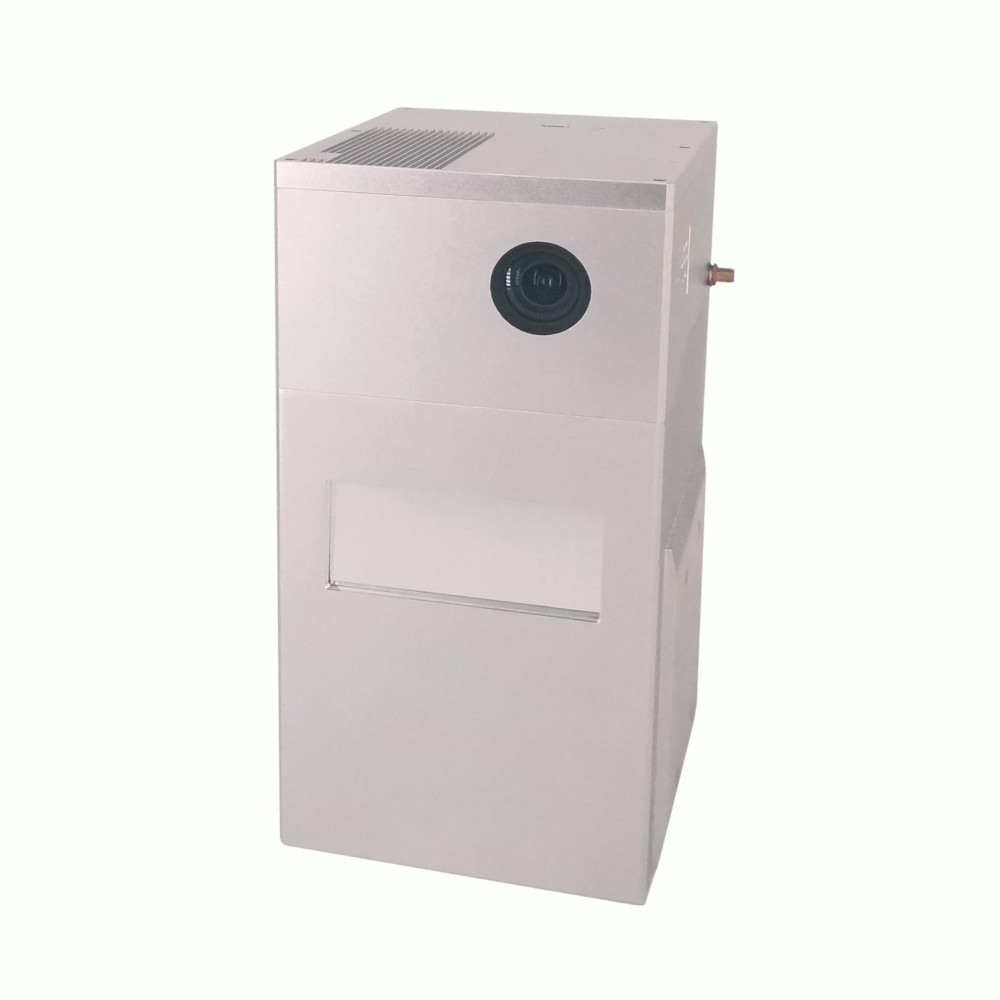
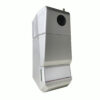
Geosun GS 2000N 2000m Long Range UAV LiDAR Scanner
Get the best price for your setup
Contact our experts for the best possible price and configuration.
- Fast response
- Expert configuration advice
- No overpaying for features you do not need
The Geosun GS-2000N is a long-range airborne LiDAR scanning system designed for efficient mapping from multi-rotor drones and VTOL platforms. It combines a long-range laser scanner, high-precision GNSS/IMU positioning and a 45 MP full-frame camera in one compact payload. With a maximum measuring range of 2,000 m, seven laser returns and a system accuracy of up to 10 cm at 600 m, the GS-2000N is well suited to large-area topographic surveys, power-line corridors, forestry, infrastructure and other projects where flying higher can improve coverage and field efficiency.
Geosun GS-2000N Highlights
| LiDAR range | Up to 2,000 m |
|---|---|
| System accuracy | Up to 10 cm at 600 m |
| Laser returns | Up to 7 returns |
| Camera | 45 MP full-frame RGB camera |
| GNSS / IMU | gSpin 410 with 200 Hz update rate |
| Supported platforms | Multi-rotor UAV and VTOL |
| Weight | Approx. 3.3 kg |
Valued customers:










Find RTK Networks
Search NTRIP providers and connect to reliable RTK correction services.
Description
Long-range UAV LiDAR for large-area mapping
The Geosun GS-2000N is an integrated airborne LiDAR mapping system developed for surveyors, engineers, drone operators and geospatial professionals who need to collect accurate 3D data efficiently over large areas. By combining a long-range laser scanner, GNSS positioning, an inertial measurement unit and a high-resolution RGB camera in a single payload, the system records the information required to create georeferenced point clouds and imagery during one survey flight.
Its maximum LiDAR measuring range of 2,000 m makes the GS-2000N especially useful for projects where higher flight altitudes or greater stand-off distances are required. In practical fieldwork this can help operators cover larger areas with fewer flight lines while keeping the aircraft away from terrain, vegetation, power infrastructure or other difficult-to-access objects.
Designed for demanding aerial survey work
The GS-2000N uses Geosun’s FT-1500H single-beam laser scanner together with the gSpin 410 GNSS/IMU positioning system. The positioning unit operates at 200 Hz and continuously records the position and attitude of the sensor while the aircraft is moving. This information is combined with the laser measurements during processing to produce accurately positioned 3D point-cloud data.
System accuracy reaches approximately 10 cm at a 600 m working distance under the stated operating conditions. For survey teams, this makes the GS-2000N suitable for large-scale terrain mapping and corridor surveys where a balance between coverage, flying height and point-cloud accuracy is required.
Seven returns for terrain and vegetation surveys
The laser scanner can record up to seven returns from a single laser pulse. Multiple returns are particularly valuable when working around vegetation because one pulse can interact with several levels of the canopy before reaching lower vegetation or the ground. This gives forestry specialists, land surveyors and GIS teams more information for separating vegetation from terrain and generating ground models in suitable conditions.
This capability is also useful for mapping power-line corridors, embankments, transport infrastructure and other environments containing objects at different heights.
Integrated 45 MP full-frame camera
Alongside the LiDAR sensor, the GS-2000N includes a 45 MP full-frame RGB camera. The camera provides high-resolution imagery that can be used alongside the point cloud for visual interpretation, colourised point clouds, mapping documentation and feature identification.
Collecting laser and image data from the same integrated system reduces the need to operate separate payloads and gives field crews complementary geometric and visual information from the same mission.
Built for UAV and VTOL platforms
At approximately 3.3 kg, the GS-2000N is designed for integration with professional multi-rotor UAVs and VTOL aircraft. VTOL platforms can be especially useful for long corridor projects and large-area mapping, while multi-rotor aircraft remain practical for smaller sites and locations where precise take-off and landing are important.
The system is designed to operate in temperatures from approximately -20°C to +55°C, supporting professional fieldwork across a broad range of environments. Actual flight time and coverage will depend on the aircraft, payload configuration, flight altitude, speed, required point density and site conditions.
Typical GS-2000N applications
The combination of long measuring range, multiple laser returns, precise positioning and high-resolution imagery makes the GS-2000N suitable for a broad range of professional geospatial projects.
- Topographic surveying: collect 3D terrain information over large construction, engineering and land-development sites.
- Power-line and utility corridors: capture conductors, towers, vegetation and surrounding terrain while reducing the need to work close to infrastructure.
- Forestry: collect information from different vegetation layers and terrain beneath suitable canopy conditions.
- Infrastructure mapping: survey roads, rail corridors, earthworks and other linear assets from the air.
- Land planning and GIS: create georeferenced spatial datasets for mapping, analysis and asset-management workflows.
Efficient data collection from higher altitudes
A key reason to choose a long-range LiDAR payload such as the GS-2000N is survey efficiency. Flying higher increases the ground footprint visible to the sensor and can reduce the number of flight lines needed for a project. This is particularly relevant for long corridors, large terrain surveys and locations where maintaining greater clearance from the ground is desirable.
Point density still depends on flight height, aircraft speed, scan settings and overlap, so mission parameters should be selected according to the required final deliverables rather than simply using the maximum possible altitude.
Complete LiDAR workflow for professional users
The GS-2000N is intended as more than a standalone laser scanner. Its integrated GNSS/INS positioning, laser data and camera imagery support a complete airborne mapping workflow from field acquisition through trajectory processing and point-cloud generation. Resulting point-cloud data can then be used in surveying, GIS, CAD, engineering, forestry and 3D mapping workflows according to the software used by the project team.
Buying the Geosun GS-2000N from Global GPS Systems
Choosing the correct LiDAR system depends on more than maximum range alone. Aircraft payload capacity, required point density, terrain, vegetation, flight altitude, project accuracy and processing workflow should all be considered before selecting a configuration. Global GPS Systems can help determine whether the Geosun GS-2000N fits your UAV, survey requirements and intended deliverables, and can provide support with system configuration and integration for professional mapping projects.
Datasheets & Manuals
Specifications
GeoSun gAirHawk GS-2000N Long-Range UAV LiDAR Scanning System Specifications
Product Overview
| Product name | GeoSun gAirHawk GS-2000N |
|---|---|
| Product type | Professional long-range airborne / mobile LiDAR scanning and mapping system |
| System architecture | Integrated LiDAR scanner, GNSS positioning, INS inertial navigation, storage/control unit and optional / configuration-dependent full-frame RGB camera |
| LiDAR scanner | FT-1500H long-range single-beam laser scanner |
| POS / IMU | GeoSun gSpin 410 |
| Positioning workflows | RTK and PPK supported by the GeoSun system platform |
| Primary carrier platforms | Multi-rotor UAV, VTOL fixed-wing aircraft and vehicle / mobile platforms depending on integration |
| Primary applications | Topographic surveying, power-line inspection, forestry, vegetation monitoring, mining, land surveying, agriculture, land planning, construction, smart-city mapping, archaeology and 3D spatial-data acquisition |
System Performance
| System accuracy at 300 m | 5 cm according to the current GeoSun product specification |
|---|---|
| System accuracy at 600 m | 10 cm |
| Current published point density at 600 m | 34 points/m² at 10 m/s according to the current GeoSun product page |
| Linked datasheet point density at 600 m | 10 points/m² at 10 m/s in the GS-2000N datasheet linked by Global GPS Systems |
| Maximum LiDAR range | 2000 m |
| Maximum-range target condition | Some GeoSun documentation specifies 2000 m at approximately 80% target reflectivity |
| LiDAR range accuracy | Current GeoSun product page specifies ±1 cm; other manufacturer GS-2000N documentation specifies approximately 3 mm at 100 m |
LiDAR Unit
| LiDAR model | FT-1500H |
|---|---|
| Scanner type | Single-beam mechanical scanning LiDAR |
| Laser wavelength | 1550 nm |
| Laser safety class | Class 1; IEC 60825-1:2014 is referenced in GeoSun documentation |
| Maximum range | 2000 m |
| Current manufacturer measuring accuracy | ±1 cm |
| Alternative published range accuracy | 3 mm at 100 m in GS-2000N manufacturer datasheet / product documentation |
| Scan frequency | 10–200 Hz according to the current GeoSun GS-2000N specification |
| Alternative published pulse / scan frequency | 50–2000 Hz appears in some GeoSun GS-2000N product documentation; confirm the exact FT-1500H hardware revision and operating mode |
| Field of view | Up to 90° |
| Adjustable FOV | 75°–90° in detailed GeoSun GS-2000N documentation |
| Echo / return count | Up to 7 echoes / returns |
| Beam divergence | 0.3 mrad in detailed GS-2000N manufacturer documentation |
GNSS / INS Position and Orientation System
| IMU | gSpin 410 |
|---|---|
| POS update frequency | 200 Hz |
| Current horizontal position accuracy | 0.02 m |
| Current vertical position accuracy | 0.03 m |
| Alternative datasheet position accuracy | ≤0.05 m combined position accuracy in the GS-2000N datasheet linked by Global GPS Systems |
| Pitch accuracy | 0.003° |
| Roll accuracy | 0.003° |
| Heading accuracy | 0.010° |
| GNSS constellations | GPS, GLONASS, Galileo and BeiDou |
| GPS signals – current product page | L1 / L2 |
| GLONASS signals | L1 / L2 |
| Galileo signals – current product page | E1 / E5b |
| BeiDou signals – current product page | B1 / B3 / B2a |
| Expanded GNSS support in earlier GS-2000N documentation | GPS L1/L2/L5, GLONASS L1/L2, BeiDou B1/B2/B3 and Galileo E1/E5a/E5b |
Built-In / Integrated Camera
| Camera type | Full-frame RGB camera |
|---|---|
| Effective resolution | 45 MP |
| Current manufacturer camera FOV | 79° |
| Linked datasheet camera FOV options | 57° or 79° |
| Linked datasheet focal length | 40 mm |
| Alternative camera configuration | Some GeoSun GS-2000N documentation lists a 16 mm lens with approximately 48° × 33° FOV, indicating that camera configuration can vary |
| Colorized point cloud | Supported through GeoSun point-cloud processing when compatible camera imagery is available |
Airborne Survey Performance
| Flight Height | Point Density at 10 m/s | Published Single-Flight Coverage |
|---|---|---|
| 200 m | 135 points/m² | 2.8 km² |
| 400 m | 40 points/m² | 5.6 km² |
| 600 m | 10 points/m² in the linked GS-2000N datasheet | 8.4 km² |
Current Point-Density Publication Difference
| Current GeoSun specification | 34 points/m² at 600 m and 10 m/s |
|---|---|
| Global GPS Systems linked GS-2000N datasheet | 10 points/m² at 600 m and 10 m/s |
| Reason for verification | Point density depends on scanner settings, scan frequency, aircraft speed, flight geometry and production configuration; confirm mission-specific density with the exact supplied system |
Example Fixed-Wing / VTOL Mapping Configuration
| Documented mapping platform | Manned aircraft or VTOL fixed-wing platform |
|---|---|
| Documented example flight speed | 20–35 m/s |
| Mission type | Topographic mapping |
| Multi-rotor support | Yes |
| VTOL support | Yes |
| Vehicle / mobile mapping support | Documented for the GS-2000N system platform |
Data Storage
| Current GeoSun product-page storage | 64 GB internal storage |
|---|---|
| TF card expansion | Up to 128 GB |
| Global GPS Systems linked datasheet storage | 512 GB solid-state drive plus support for up to 128 GB TF card |
| Storage configuration note | Published internal-storage capacity differs between GS-2000N hardware revisions; verify whether the supplied unit uses 64 GB internal storage or the 512 GB SSD configuration |
Power Specifications
| Current manufacturer nominal power input | 24 VDC |
|---|---|
| Alternative published input range | 12–24 VDC in other GeoSun GS-2000N product documentation |
| Current manufacturer power consumption | 70 W |
| Alternative published power consumption | 65 W in some GS-2000N documentation |
| Integration requirement | Power supply and aircraft payload wiring should be sized for the exact GS-2000N hardware revision supplied |
Physical Specifications
| Current manufacturer dimensions | 254 × 133 × 125 mm |
|---|---|
| Global GPS Systems linked datasheet dimensions | 254 × 133 × 125 mm |
| Alternative GeoSun commercial specification | 245 × 140.5 × 125 mm |
| Current manufacturer weight | 3.3 kg |
| Alternative published weight | 3.2 kg in some GeoSun GS-2000N listings |
| Housing material | Aluminum-alloy body in GeoSun GS-2000N product documentation |
| Payload category | Professional airborne / mobile mapping payload |
Environmental Specifications
| Current manufacturer operating temperature | -20°C to +55°C |
|---|---|
| Alternative published operating temperature | -20°C to +60°C in some GeoSun GS-2000N product documentation |
| Ingress protection | No dedicated IP rating is stated in the reviewed model-specific GS-2000N specification material |
| Outdoor use | Designed for airborne and mobile mapping; aircraft / vehicle integration should provide any additional environmental protection required by the mission |
Trajectory Processing Software
| Trajectory software | GeoSun Shuttle |
|---|---|
| Purpose | High-precision GNSS/INS trajectory, positioning and attitude post-processing |
| GNSS processing | GPS, GLONASS, BeiDou and Galileo processing supported by the Shuttle platform |
| GNSS/INS integration | Combined positioning and attitude determination |
| Filtering | Forward filtering, backward filtering and smoothing workflows supported |
| Coordinate systems | Common and user-defined coordinate systems with coordinate transformation support |
| Output configuration | User-definable output content, units and formats |
Point Cloud Processing Software
| GS-2000N datasheet software | gAirHawk point-cloud processing software |
|---|---|
| GeoSun current preprocessing platform | PointCreater / GeoSun point-cloud preprocessing workflow |
| One-key processing | Supported in GeoSun processing workflows |
| Trajectory integration | GNSS base, rover GNSS, IMU and LiDAR data can be combined during processing |
| Point-cloud optimization | Supported |
| Strip adjustment | Supported in the current PointCreater workflow |
| Colored point cloud | Supported when compatible camera imagery is available |
| Coordinate transformation | Supported |
| Flight-strip output | Point clouds can be processed / exported by flight strip in applicable GeoSun workflows |
Point Cloud Output Formats
| LAS | Supported |
|---|---|
| TXT | Supported through customizable text output workflows |
| Colorized point cloud output | Supported when RGB imagery and camera calibration data are available |
| Trajectory output | Position, velocity and attitude information available through the GeoSun POS processing workflow |
Mission Planning Software
| Mission-planning software | GeoSun WaypointMaster |
|---|---|
| Availability | Optional in the GS-2000N datasheet |
| LiDAR route planning | Supported |
| Terrain-following routes | Supported |
| Power-line routes | Supported |
| Orbit routes | Supported |
| Surface-following routes | Supported |
| Strip / corridor planning | Supported for linear mapping applications such as roads, rivers and infrastructure corridors |
Platform Compatibility
| Multi-rotor UAV | Supported |
|---|---|
| VTOL fixed-wing UAV | Supported |
| Manned aircraft | Documented in GeoSun GS-2000N application examples |
| Vehicle / mobile platform | Supported by GS-2000N system documentation |
| RTK operation | Supported by the GeoSun LiDAR platform architecture |
| PPK operation | Supported |
Typical Applications
| Application | Typical GS-2000N Function |
|---|---|
| Topographic surveying | Long-range airborne terrain and elevation mapping |
| Power-line inspection | Corridor, conductor, tower, terrain and vegetation point-cloud acquisition |
| Forestry | Canopy, terrain and vegetation-structure measurement |
| Vegetation monitoring | High-density 3D vegetation and ground-surface acquisition |
| Mining | Terrain, pit, stockpile and site mapping |
| Smart cities | Large-area 3D spatial-data acquisition |
| Construction | Existing-condition mapping and site documentation |
| Agriculture | Terrain and crop / vegetation mapping |
| Land planning | Large-area terrain and spatial-data acquisition |
| Archaeology | High-resolution surface and terrain mapping |
System Components
| Long-range laser scanner | FT-1500H |
|---|---|
| GNSS receiver | Integrated multi-constellation GNSS |
| INS / IMU | gSpin 410 |
| Storage / control unit | Integrated |
| RGB camera | 45 MP full-frame camera; configuration-dependent |
| Trajectory-processing software | Shuttle |
| Point-cloud processing software | gAirHawk / applicable GeoSun PointCreater workflow depending on supplied software generation |
| Flight-planning software | WaypointMaster optional |
Transport and Packaging
| Protective packaging | GeoSun documentation describes a protective suitcase with EVA liner inside an external hard carton |
|---|---|
| Transport suitability | Manufacturer documentation identifies the packaging as suitable for air and sea shipment |
| Exact included accessories | Configuration-dependent; confirm the supplied mounting hardware, cables, camera, storage media and software licenses before ordering |
Published Specification Differences
| Specification | Current GeoSun Product Page | Global GPS Systems Linked Datasheet / Other GeoSun Documentation |
|---|---|---|
| System accuracy | 5 cm at 300 m; 10 cm at 600 m | 10 cm at 600 m |
| Point density at 600 m / 10 m/s | 34 pts/m² | 10 pts/m² in linked datasheet |
| Internal storage | 64 GB + up to 128 GB TF card | 512 GB SSD + up to 128 GB TF card in linked datasheet |
| Weight | 3.3 kg | 3.2–3.3 kg depending on publication |
| Dimensions | 254 × 133 × 125 mm | 254 × 133 × 125 mm in linked datasheet; 245 × 140.5 × 125 mm in some other GeoSun listings |
| Power consumption | 70 W | 65 W in some GeoSun listings |
| Input power | 24 VDC | 12–24 VDC in some GeoSun listings |
| Operating temperature | -20°C to +55°C | -20°C to +60°C in some GeoSun listings |
| LiDAR accuracy | ±1 cm | 3 mm at 100 m in linked / detailed documentation |
| Scanning / pulse frequency | 10–200 Hz | 50–2000 Hz in some detailed product listings |
| POS position accuracy | 0.02 m horizontal / 0.03 m vertical | ≤0.05 m in linked datasheet; some other documents state 0.01 m horizontal / 0.02 m vertical |
| Camera | 45 MP, 79° FOV | 45 MP with 57° or 79° FOV and 40 mm lens in linked datasheet; other configurations list a 16 mm lens |
Documentation and Configuration Notes
| Manufacturer | Wuhan GeoSun Navigation Technology Co., Ltd. |
|---|---|
| Manufacturer product designation | GS-2000N High-Precision Long-Range LiDAR Scanning System / gAirHawk GS-2000N |
| Global GPS Systems datasheet researched | Professional Level Long Range UAV LiDAR Scanning System GS-2000N datasheet |
| Current manufacturer documentation researched | GeoSun GS-2000N product page, GeoSun support documentation and current GeoSun software pages |
| Hardware-revision note | GeoSun has published several GS-2000N specification sets with differences in storage, weight, dimensions, power, POS accuracy, camera lens, point density and scanner-frequency terminology |
| Final integration requirement | For aircraft payload design, survey-density calculations, power design and accuracy guarantees, use the serial-number-specific datasheet, calibration report and hardware configuration supplied with the exact GS-2000N unit |
Specifications and package contents may vary by configuration, region or manufacturer update. Always check the current configuration before ordering.
Reviews (0)
Only logged in customers who have purchased this product may leave a review.
FAQ
GeoSun GS-2000N LiDAR Scanning System FAQ
GS-2000N, Applications & Platforms
What is the GeoSun GS-2000N?
The GeoSun GS-2000N is a professional long-range LiDAR mapping system designed for airborne and vehicle-based surveying. It combines a long-range laser scanner, multi-constellation GNSS, an inertial navigation system, onboard data storage and optional full-frame camera imagery in one integrated payload for collecting georeferenced 3D point clouds.
What is the GeoSun GS-2000N used for?
Typical applications include topographic surveying, corridor mapping, power-line inspection, forestry, agriculture, land planning, digital-city mapping, infrastructure surveys and large-area terrain mapping. Its long measurement range is particularly useful for projects that require data acquisition from higher flight altitudes.
Is the GS-2000N designed for drone LiDAR surveying?
Yes. UAV LiDAR surveying is one of the primary applications of the GS-2000N. GeoSun specifies compatibility with multi-rotor and VTOL platforms, allowing the system to collect LiDAR, GNSS/INS and optional imagery data during automated aerial survey missions.
Can the GS-2000N be mounted on a VTOL drone?
Yes. The GS-2000N is specifically designed for use with suitable VTOL platforms. Its long measurement range makes it especially useful for fixed-wing VTOL projects where higher flight speeds and larger survey areas are required.
Can the GeoSun GS-2000N also be used on a vehicle?
Yes. GeoSun describes the GS-2000N as a UAV and vehicle measurement system. When correctly mounted and calibrated, its LiDAR, GNSS and inertial navigation components can also be used for compatible mobile mapping workflows.
Who is the GS-2000N designed for?
The GS-2000N is designed for professional surveying companies, geospatial service providers, power-line inspection teams, forestry specialists, engineering firms, mapping organisations and UAV operators that need high-density long-range LiDAR data over large areas.
LiDAR Range, Accuracy & Point Cloud Performance
What is the maximum LiDAR range of the GeoSun GS-2000N?
The GS-2000N has a specified maximum laser measurement range of up to 2,000 metres under suitable target and atmospheric conditions. Maximum ranging capability should not be interpreted as the recommended flying altitude for every survey, because achievable accuracy and point density depend on altitude, target reflectivity, terrain and mission settings.
How accurate is the GS-2000N?
GeoSun specifies overall system accuracy of approximately 10 cm at a 600 m survey distance under suitable conditions. The integrated laser scanner itself has a specified range accuracy of approximately 3 mm at 100 m. Overall point-cloud accuracy also depends on GNSS quality, INS performance, flight geometry, calibration and post-processing.
What is the difference between the 3 mm ranging accuracy and 10 cm system accuracy?
The approximately 3 mm specification describes the laser scanner's distance-measurement accuracy at 100 m. The approximately 10 cm at 600 m specification describes the accuracy of the complete georeferenced mapping system. Final coordinates are influenced not only by laser ranging but also by GNSS positioning, aircraft attitude, mounting calibration and flight distance.
How many LiDAR points per second can the GS-2000N collect?
The GS-2000N laser scanner can record up to approximately 2,000,000 measurements per second. This high measurement rate helps maintain useful point density when flying at higher altitudes or surveying terrain at relatively high platform speeds.
What field of view does the GS-2000N LiDAR have?
The GS-2000N provides an adjustable LiDAR field of view of approximately 75° to 90°. The selected field of view influences the width of the surveyed swath and can be configured according to the flight altitude, terrain and required point density.
Does the GS-2000N support multiple LiDAR returns?
Yes. The GS-2000N supports up to seven echoes or returns from a laser pulse. Multiple returns are especially useful in vegetation because a pulse can generate measurements from different parts of the canopy and potentially from the ground beneath it.
What point density can the GS-2000N achieve from the air?
GeoSun's reference mission table specifies approximately 135 points/m² at 200 m, 40 points/m² at 400 m and 10 points/m² at 600 m when flying at approximately 10 m/s. Actual density depends on flight speed, altitude, scan configuration, overlap, terrain and other mission parameters.
GNSS, INS, Camera & Data Processing
Does the GS-2000N include GNSS and an IMU?
Yes. The GS-2000N includes an integrated positioning and orientation system that combines multi-frequency GNSS with an inertial measurement unit. This enables the position and attitude of the LiDAR sensor to be recorded throughout the survey so the laser measurements can be converted into georeferenced 3D coordinates.
Which GNSS constellations does the GS-2000N support?
The integrated positioning system supports multi-frequency observations from GPS, GLONASS, Galileo and BeiDou. Supported signals include GPS L1/L2/L5, GLONASS L1/L2, Galileo E1/E5a/E5b and multiple BeiDou frequencies.
What is the positioning and attitude accuracy of the GS-2000N INS?
The integrated positioning system is specified with position accuracy of up to approximately 0.05 m, pitch and roll accuracy of approximately 0.003° and heading accuracy of approximately 0.010°. The trajectory solution is updated at up to 200 Hz.
Does the GS-2000N include a camera?
A full-frame 45 MP camera is available for the GS-2000N. The documented camera configuration uses a 40 mm focal length and offers approximately 57° or 79° field-of-view options. Camera imagery can be combined with LiDAR data to create colourised point clouds and additional visual survey products.
What software is used to process GS-2000N data?
GeoSun provides Shuttle software for GNSS/INS trajectory processing and gAirHawk software for LiDAR point-cloud processing. The workflow combines the processed trajectory with the laser measurements to produce georeferenced point-cloud data for subsequent mapping and analysis.
Can GS-2000N data be exported as LAS point clouds?
Yes. GeoSun's processing workflow supports standard LAS point-cloud output as well as text-based point-cloud data. LAS files can then be used in compatible surveying, GIS, CAD, forestry and point-cloud processing applications.
Is mission-planning software available for the GS-2000N?
Yes. GeoSun lists WayPoint Master as an optional customised route-planning application. Mission planning can be used to define flight routes according to factors such as project boundaries, flying height, speed, overlap and required data coverage.
Flight Efficiency, Hardware & Field Operation
How much area can the GS-2000N survey in one flight?
GeoSun's reference efficiency table lists approximately 2.8 km² at a 200 m flight height, 5.6 km² at 400 m and 8.4 km² at 600 m for the stated reference mission conditions. Actual survey coverage depends on the UAV, battery endurance, flight speed, overlap, terrain, regulations and required point density.
How much does the GeoSun GS-2000N weigh?
The current GS-2000N datasheet specifies a system weight of approximately 3.3 kg. The payload capacity of the selected UAV must also account for mounting hardware and any additional components required by the complete installation.
How large is the GS-2000N?
The GS-2000N measures approximately 254 × 133 × 125 mm. Its integrated design combines the laser scanner, GNSS/INS, storage and control electronics into a relatively compact airborne mapping payload.
How much onboard storage does the GS-2000N have?
The current GS-2000N datasheet specifies a 512 GB solid-state drive and support for an additional TF card up to 128 GB. Available recording capacity should be considered when planning long missions with high LiDAR measurement rates and camera imagery.
What is the operating temperature range of the GS-2000N?
The specified operating temperature range is approximately -20°C to +55°C. UAV operation must also remain within the environmental limits of the aircraft, batteries, GNSS equipment and other components used in the complete mapping system.
Is the GS-2000N suitable for forestry and power-line surveys?
Yes. Forestry and power-line mapping are key applications of the GS-2000N. Its long measurement range, high measurement rate and support for up to seven returns make it suitable for collecting terrain beneath vegetation, analysing forest structure and mapping transmission corridors and surrounding terrain.
 GPS & GNSS
 Total Stations
 Data collectors
 Software
 Correction services
 Machine control
 External radio
 Marine
 Accessories
Reviews
There are no reviews yet