
 GPS & GNSS
 Lidar scanning
 Total Station
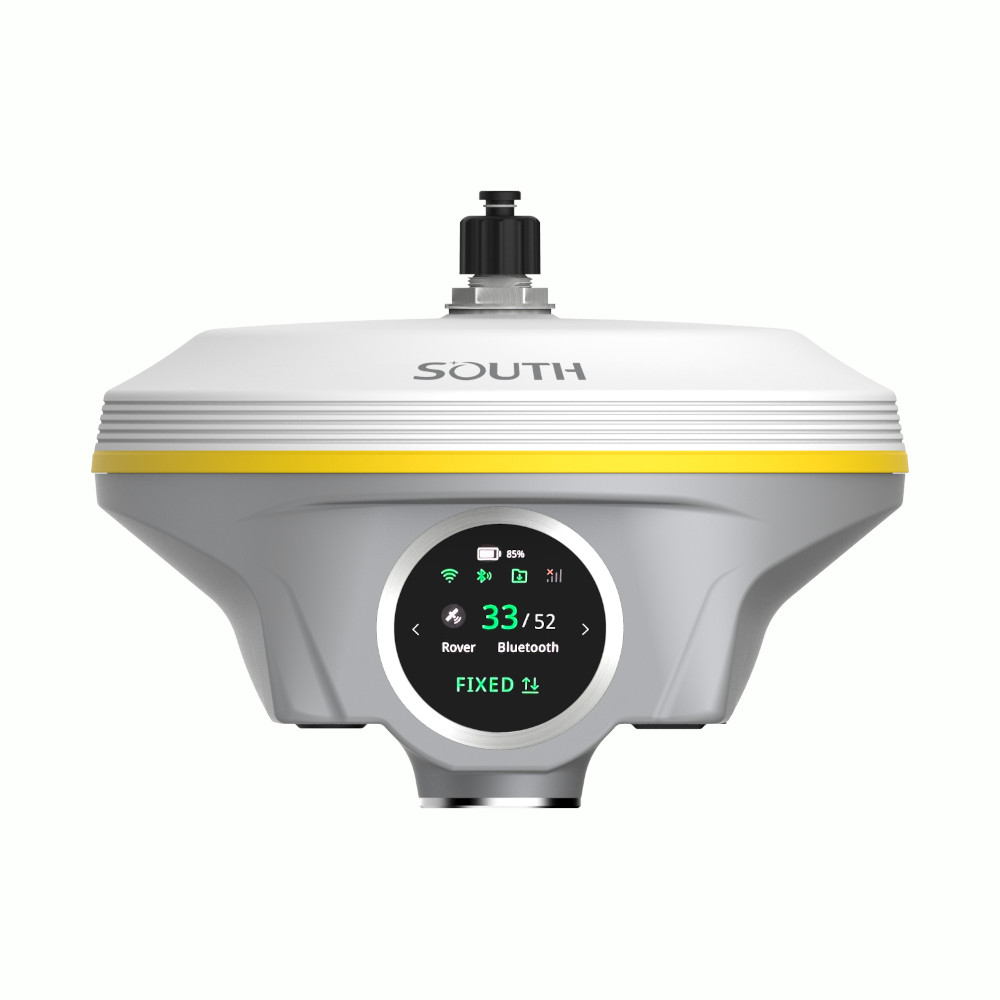
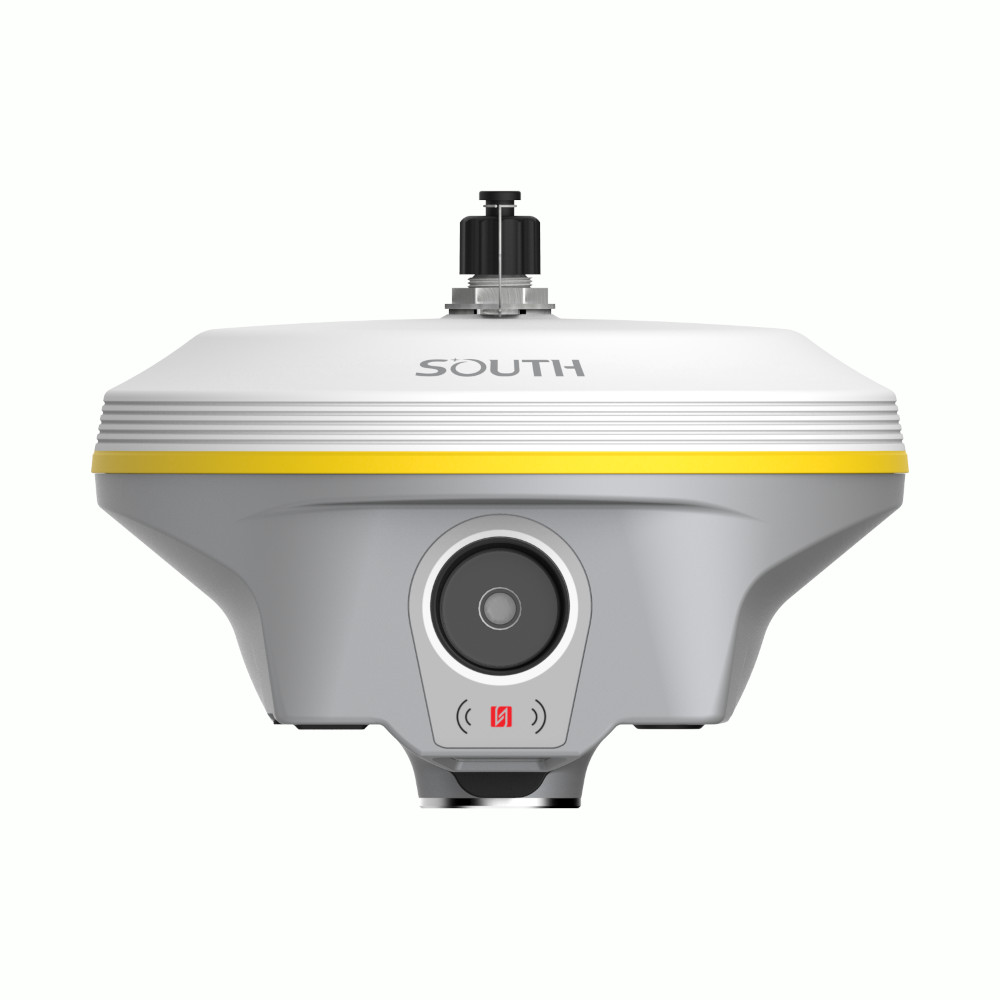

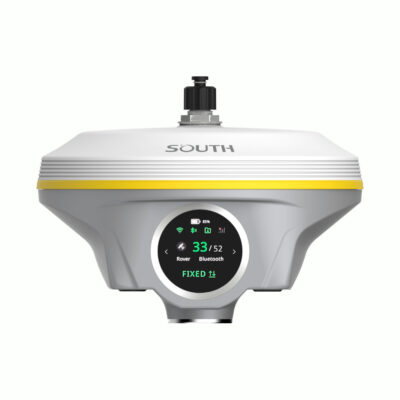
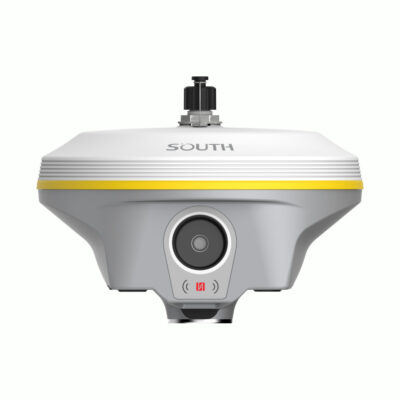
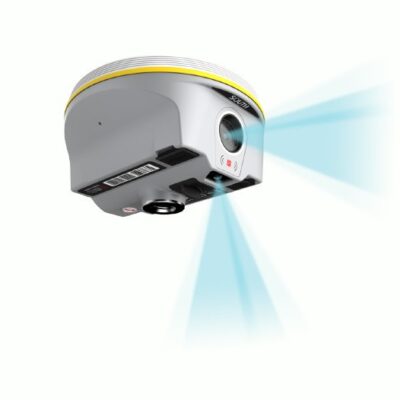
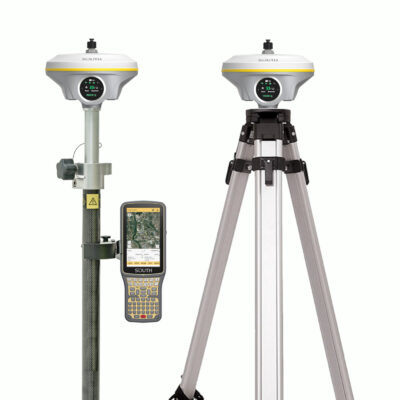
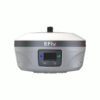
South INNO8 Visual RTK GNSS Receiver With IMU and AR Stakeout
This product is Available
Contact our experts for the best possible price and configuration.
The South INNO8 is a visual RTK GNSS receiver built for surveyors, construction teams, GIS users and drone mapping professionals who need more than standard point measurement. It combines multi-constellation GNSS, IMU tilt compensation, visual positioning, AR stakeout and image-based measurement to help capture points in difficult or unsafe locations.
South INNO8 Highlights
| GNSS Channels | Up to 1760 channels |
|---|---|
| IMU Tilt | 60° IMU tilt compensation |
| Visual Positioning | Image measurement for hard-to-reach points |
| AR Stakeout | Live-view guidance for points, lines and curves |
| Connectivity | 4G modem and 410–470 MHz UHF radio |
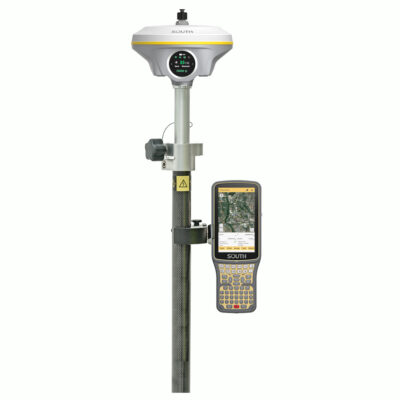
Valued customers:








Find RTK Networks
Search NTRIP providers and connect to reliable RTK correction services.
Description
South INNO8 Visual RTK GNSS Receiver
The South INNO8 is an advanced RTK GNSS receiver designed for field teams that work in construction layout, land surveying, GIS data collection, infrastructure inspection, earthworks and drone mapping support. It is built for users who need accurate GNSS positioning, but also need a practical way to measure points that are difficult, unsafe or impossible to reach with a conventional pole setup.
Alongside standard RTK measurement, the INNO8 adds visual positioning and image-based measurement. This allows surveyors to capture photos or video and calculate coordinates from the imagery. In daily fieldwork, this is useful near traffic, water, fences, rooftops, excavations, tree cover and construction obstacles where standing directly on the point is not always possible.
Visual measurement for difficult field conditions
Traditional RTK works best when the antenna can be placed directly above the measured point with a clear satellite view. The South INNO8 gives the user more flexibility by allowing remote point measurement from a better GNSS position. This can reduce repeat visits and help teams collect more usable data in areas with multipath, limited access or safety risks.
Image data can be processed in different workflows depending on the job. Online processing is suitable when a stable internet connection is available, while offline controller processing can be used when working outside network coverage. For larger or more detailed projects, office-based processing can support a workflow where the field team focuses on fast data capture first.
AR stakeout with live-view guidance
The INNO8 supports AR stakeout, giving users visual guidance on the controller screen instead of relying only on compass direction and distance values. This is especially useful for construction workers and surveyors who need a clearer, more intuitive way to find points, lines and curves on site.
For layout work, the live-view display helps reduce confusion and makes stakeout easier to follow, particularly on busy construction sites or for users who are less experienced with traditional RTK interfaces.
IMU tilt compensation for faster measuring
The built-in 4th generation IMU allows measurements with up to 60° tilt compensation. This helps when working around walls, trenches, vegetation, parked machinery or other obstructions where keeping the pole perfectly vertical is slow or impractical. The IMU is designed for smooth field use during RTK measurement, AR stakeout, visual positioning and 3D modelling workflows.
Useful for survey, construction, GIS and drone workflows
The South INNO8 is suitable for cadastral and topographic survey, road and utility work, construction stakeout, volume checks, urban mapping, excavation documentation and ground data capture for UAV projects. Drone pilots and mapping teams can use INNO8 ground measurements to support incomplete aerial models or collect extra detail in areas that are hidden from the air.
With support for GPS, GLONASS, Galileo and BeiDou signals, plus 4G and UHF communication options, the INNO8 fits both network RTK and base-rover workflows. The integrated touchscreen also helps users check receiver status and change settings directly on the receiver when needed.
Buy the South INNO8 from Global GPS Systems
Global GPS Systems supplies the South INNO8 to surveyors, engineers, construction professionals, GIS teams and drone mapping users worldwide. Our product specialists can help you compare RTK GNSS receivers, check software compatibility and choose the right setup for your field workflow.
Datasheets & Manuals
Datasheets and manuals
Specifications
South INNO8 Specifications
Product Overview
| Product Name | South INNO8 |
|---|---|
| Product Type | RTK GNSS receiver with visual positioning, AR stakeout and IMU tilt compensation |
| Release Year | 2024 |
| Main Applications | Land surveying, construction layout, topographic survey, control survey, CORS applications, stakeout, photogrammetry, 3D modelling and measurement in GNSS-challenged areas |
| Key Functions | Visual positioning, AR stakeout, 3D modelling, photogrammetry measurement, Farlink 2.0 radio communication, calibration-free IMU tilt measurement and Web UI management |
GNSS Tracking
| Tracking Channels | Up to 1760 channels; 1598-channel and 1698-channel configurations may also be available |
|---|---|
| GPS | L1C/A, L1C, L2C, L2P, L5 |
| GLONASS | L1C/A, L2C/A, L2P, L3 CDMA |
| BeiDou / BDS | B1I, B1C, B2I, B2a, B3 |
| Galileo | E1, E5A, E5B, E5AltBOC, E6 |
| SBAS | EGNOS, WAAS, GAGAN, MSAS, SDCM; L1 and L5 support |
| NavIC | L5 |
| QZSS | L1C/A, L1C, L2C, L5, L6 |
| MSS L-Band | BDS-PPP and Galileo HAS support; availability may depend on configuration or firmware |
| Initialization Time | <10 seconds |
| Initialization Reliability | >99.99% |
| Positioning Output Rate | 1 Hz to 20 Hz |
Positioning Accuracy
| Code Differential GNSS Positioning | Horizontal: 0.25 m + 1 ppm RMS; Vertical: 0.50 m + 1 ppm RMS |
|---|---|
| Static, Long Observations | Horizontal: 2.5 mm + 0.1 ppm RMS; Vertical: 3 mm + 0.4 ppm RMS |
| Static | Horizontal: 2.5 mm + 0.5 ppm RMS; Vertical: 3.5 mm + 0.5 ppm RMS |
| Rapid Static | Horizontal: 2.5 mm + 0.5 ppm RMS; Vertical: 5 mm + 0.5 ppm RMS |
| PPK | Horizontal: 3 mm + 1 ppm RMS; Vertical: 5 mm + 1 ppm RMS |
| RTK UHF | Horizontal: 8 mm + 1 ppm RMS; Vertical: 15 mm + 1 ppm RMS |
| RTK NTRIP | Horizontal: 8 mm + 0.5 ppm RMS; Vertical: 15 mm + 0.5 ppm RMS |
| RTK Initialization Time | 2 to 8 seconds |
| SBAS Positioning | Typically <5 m 3DRMS |
| BDS PPP Accuracy | Horizontal: 10 cm; Vertical: 20 cm |
| Galileo HAS Accuracy | Horizontal: 20 cm; Vertical: 40 cm |
Visual Positioning, Photogrammetry and AR Stakeout
| Visual Positioning Camera | 8 MP camera |
|---|---|
| AR Stakeout Camera | 2 MP camera |
| AR Stakeout Camera Visual Angle | 75° |
| Visual Measurement Method | Coordinates can be calculated from images or video using photogrammetry and RTK positioning |
| Remote Measurement Range | Up to 10 m or more in ideal conditions |
| Cloud Image Processing Accuracy | Approximately 2 cm accuracy in suitable conditions |
| Controller Offline Image Processing Accuracy | Approximately 4 cm accuracy, with results available within about 30 seconds in suitable conditions |
| Image Processing Modes | Cloud server online processing, controller offline processing and desktop software post-processing |
| Photogrammetry Capture Modes | Photo mode, video mode and modelling for post-processing |
| 3D Modelling | Supports single-user 3D modelling and integration with UAV survey data |
| AR Stakeout Capability | Live-view visual guidance for point, line and curve stakeout |
IMU Tilt Measurement
| IMU Type | 4th-generation calibration-free IMU |
|---|---|
| Tilt Angle | 0° to 60° |
| IMU Update Rate | 200 Hz |
| Initialization Method | Shake or walk |
| Initialization Time | Typically 2 to 5 seconds |
| Magnetic Interference Resistance | IMU tilt measurement is designed to operate without being affected by magnetic interference |
| Stationary Tilt Availability | Can maintain tilt effect for approximately 40 seconds when the receiver remains on a point without moving |
Communication and Data Links
| Internal UHF Radio Frequency | 410 MHz to 470 MHz |
|---|---|
| Internal UHF Radio Power | 1 W, 2 W or 5 W receiver/transmitter configuration |
| Radio Protocols | Farlink, SOUTH, TrimTalk, Hi-Target, CHC |
| Farlink 2.0 Radio Range | Typical 8 km to 15 km; up to 20 km to 25 km in optimal conditions |
| Radio Functions | Radio router and radio repeater support |
| Cellular Modem | Integrated 4G modem |
| LTE FDD Bands | B1, B2, B3, B4, B5, B7, B8, B20 |
| UMTS / HSPA Bands | B1, B2, B5, B8 |
| 2G Cellular Support | EDGE, GPRS and GSM 850 / 900 / 1800 / 1900 MHz |
| Wi-Fi | 802.11 b/g/n; supports AP mode and client mode |
| Bluetooth | Bluetooth 4.0 standard and Bluetooth 2.1 + EDR |
| NFC | Automatic pairing between receiver and controller when the controller supports NFC |
| NTRIP | Supports NTRIP Client, NTRIP Server and NTRIP Caster |
| Datalink Modes | Internal UHF, cellular network, external radio, dual transmit, Bluetooth/controller network, Wi-Fi, intelligent datalink and no datalink |
Ports and Interfaces
| Touchscreen | 1.39-inch HD colour circular touchscreen |
|---|---|
| Physical Key | Power key |
| LED Indicator | Power indicator |
| Web UI | Supported via Wi-Fi or USB connection |
| Type-C Port | Charging, USB, OTG, Ethernet, static data download, Web UI access and firmware update |
| 5-Pin LEMO Port | External power input and RS-232 data connection |
| UHF Antenna Interface | Supported |
| SIM Card Slot | Supported for cellular network operation |
| Speaker / Voice Guidance | Supported |
| Supported Voice Languages | Chinese, English, Korean, Russian, Spanish, Portuguese, Turkish, French and Italian |
Operating System, Software and Management
| Operating System | Embedded Linux platform |
|---|---|
| Field Software Compatibility | SurvStar Android app |
| Office / Post-Processing Software | SOUTH Geo Office / SGO and compatible third-party post-processing or modelling workflows |
| Web UI Management | Status monitoring, configuration, satellite information, data record, data transfer, network configuration, radio configuration, firmware update, track management and user management |
| Firmware Update | Online update and local firmware update through Web UI |
| Cloud Service | Supports online services such as remote management, firmware update and online registration |
| Secondary Development | Secondary development package and OpenSIC observation data format / interaction interface support |
Data Storage and Data Formats
| Internal Storage | 64 GB SSD internal storage |
|---|---|
| Storage Management | Automatic cycle storage |
| External Storage | Supports external USB storage |
| Static Data Sampling Interval | Customizable sample interval up to 50 Hz |
| Data Transmission | Plug-and-play USB data transmission; FTP and HTTP data download supported |
| Static Data Formats | STH, RINEX 2.01, RINEX 3.02 and other supported formats |
| Differential Data Formats | RTCM 2.1, RTCM 2.3, RTCM 3.0, RTCM 3.1, RTCM 3.2 |
| GNSS Output Data Formats | NMEA 0183, PJK plane coordinate and binary code |
| Network Model Support | VRS, FKP, MAC and full NTRIP protocol support |
| Track Recording | Supported with configurable recording interval and data download through Web UI |
Power and Battery
| Power Input | 6 V to 18 V DC with overvoltage protection |
|---|---|
| Battery Type | Built-in rechargeable lithium battery |
| Battery Capacity | 7.4 V, 10000 mAh |
| Charging | USB Type-C with PD quick-charge protocol |
| Battery Life, UHF Receive / Transmit 5 W | Approximately 10 to 12 hours |
| Battery Life, Static Mode | Up to 25 hours |
| Battery Life, Rover Internet Mode | More than 20 hours |
Physical and Environmental Specifications
| Dimensions | 155 mm diameter x 98.5 mm height |
|---|---|
| Weight | 1.2 kg |
| Housing Material | Magnesium-aluminium alloy shell |
| Operating Temperature | -45°C to +75°C |
| Storage Temperature | -55°C to +85°C |
| Humidity | 100% non-condensing |
| Waterproof / Dustproof Rating | IP68 |
| Shock / Drop Resistance | Designed to withstand a 2 m pole drop onto cement ground naturally |
| Electronic Bubble | Controller software can display electronic bubble and check pole levelling status in real time |
| Thermometer Sensor | Built-in thermometer sensor with intelligent temperature control technology |
Package / Included Items
| Item | Quantity | Notes |
|---|---|---|
| South INNO8 GNSS Receiver | 1 | Main receiver unit |
| Hard Instrument Case | 1 | Protective transport case with internal foam |
| Charger / PD Adapter | 1 | For charging the internal battery |
| USB Type-C Cable | 1 | For charging, data transfer, Web UI access and firmware update |
| UHF Antenna | 1 | Required when using internal UHF radio mode |
| Documentation | 1 set | User manual and product documentation may be supplied digitally or physically depending on region |
Specifications and package contents may vary by configuration, region or manufacturer update. Always check the current configuration before ordering.
FAQ
South INNO8 FAQ
Product Overview
What is the South INNO8?
The South INNO8 is a professional RTK GNSS receiver designed for high-precision surveying, construction layout, mapping, visual positioning, AR stakeout, and 3D modelling workflows.
Who is the South INNO8 designed for?
The South INNO8 is designed for land surveyors, construction professionals, civil engineers, geospatial specialists, mapping companies, UAV survey teams, utility surveyors, and infrastructure measurement teams.
What makes the South INNO8 different from a standard RTK GNSS receiver?
The South INNO8 combines RTK GNSS positioning with visual positioning, photogrammetry, AR stakeout, IMU tilt compensation, 3D modelling support, UHF radio, 4G connectivity, and a smart touchscreen interface.
Which industries commonly use the South INNO8?
The South INNO8 is commonly used in land surveying, construction, civil engineering, road and highway surveying, utilities, infrastructure inspection, UAV mapping, urban surveying, and geospatial data collection.
Is the South INNO8 suitable for construction projects?
Yes. The South INNO8 is suitable for construction layout, stakeout, site measurement, excavation checks, road works, utility mapping, and other construction-related positioning tasks that require accurate GNSS data.
Can the South INNO8 be used by one person?
Yes. The South INNO8 supports efficient one-person workflows, including RTK measurement, visual positioning, AR stakeout, and 3D modelling data collection.
GNSS, RTK and Connectivity
How many GNSS channels does the South INNO8 have?
The South INNO8 is available with 1598, 1698, or up to 1760 GNSS channels, depending on the configuration.
Which satellite constellations does the South INNO8 support?
The South INNO8 supports major GNSS constellations including GPS, GLONASS, Galileo, and BeiDou, giving surveyors reliable satellite tracking for professional positioning work.
Does the South INNO8 support RTK corrections?
Yes. The South INNO8 supports RTK workflows and can be used with correction services such as CORS and NTRIP, as well as base and rover configurations depending on the setup.
Does the South INNO8 have a 4G modem?
Yes. The South INNO8 includes 4G connectivity, allowing the receiver to use network-based correction services where mobile coverage is available.
Does the South INNO8 have an internal UHF radio?
Yes. The South INNO8 includes an internal UHF radio with a 410–470 MHz frequency range for radio-based GNSS correction workflows.
What is Farlink 2.0 on the South INNO8?
Farlink 2.0 is the South INNO8 radio communication technology designed to provide stable UHF data transmission and a long communication range for base and rover surveying workflows.
Can the South INNO8 be used as a base and rover?
Yes. The South INNO8 can be used in base, rover, and static surveying modes, making it suitable for a wide range of GNSS survey setups.
Visual Positioning, IMU and Stakeout
What is visual positioning on the South INNO8?
Visual positioning combines GNSS, IMU, camera data, and photogrammetry to calculate coordinates from images or videos. This helps surveyors measure points that are difficult, unsafe, or impossible to occupy directly with a GNSS pole.
Can the South INNO8 measure points without standing directly on them?
Yes. The South INNO8 can use visual positioning to measure remote points from a nearby location with better satellite visibility, reducing the need to physically reach every target point.
Is the South INNO8 useful in areas with poor GNSS signal?
Yes. Visual positioning helps extend RTK measurement into challenging areas such as under roofs, near bridges, around dense trees, beside water, or on construction sites with obstacles and multipath effects.
What image processing options does the South INNO8 offer?
The South INNO8 supports cloud online processing, desktop post-processing, and offline controller processing, allowing surveyors to choose the best workflow for internet-connected sites, fast field collection, or remote areas.
What accuracy can the South INNO8 achieve with image measurement?
With suitable field conditions and processing mode, the South INNO8 can produce image-measurement coordinate results with centimetre-level accuracy. Online processing can provide high-accuracy results in a few minutes, while offline controller processing is designed for fast field results.
What is the IMU tilt sensor used for?
The IMU tilt sensor allows surveyors to measure with the pole tilted instead of perfectly level. This improves speed and makes it easier to collect points near walls, corners, fences, slopes, obstacles, and hard-to-reach locations.
What tilt angle does the South INNO8 support?
The South INNO8 supports IMU tilt compensation up to 60°, helping surveyors measure accurately while reducing the need for strict pole levelling.
What is AR stakeout on the South INNO8?
AR stakeout uses live-view visual guidance on the data controller to help surveyors navigate to stakeout points, lines, and curves more intuitively than using a traditional compass-style display alone.
Workflow, Data and Accessories
Can the South INNO8 support 3D modelling workflows?
Yes. The South INNO8 can collect image and coordinate data for 3D modelling workflows and can be used alongside SOUTH UAV, SGO, and compatible third-party modelling software.
Can South INNO8 data be combined with UAV survey data?
Yes. Ground image data from the South INNO8 can be used to supplement UAV survey data, helping fill gaps in aerial models and improve the completeness of 3D modelling projects.
What types of data can the South INNO8 output?
The South INNO8 can support outputs such as coordinates, images, 3D model data, point cloud data, and multiple coordinate systems depending on the software and workflow used.
Does the South INNO8 have a touchscreen?
Yes. The South INNO8 includes a smart LCD touchscreen that allows users to check receiver status, switch work modes, configure datalinks, view system information, and launch certain workflows directly from the receiver.
How is the South INNO8 charged?
The South INNO8 uses a rechargeable internal battery and can be charged with a Type-C cable and compatible PD adapter.
What is the Type-C port used for?
The Type-C port can be used for charging, static data transmission, Web UI access, and firmware update workflows.
Videos
Reviews (0)
Only logged in customers who have purchased this product may leave a review.
 GPS & GNSS
 Total Stations
 Data collectors
 Software
 Correction services
 Machine control
 External radio
 Lasers & levellers
 Marine
 Accessories
Reviews
There are no reviews yet